Analysis

Leadership Without a Moral Compass: Who Pays the Price?

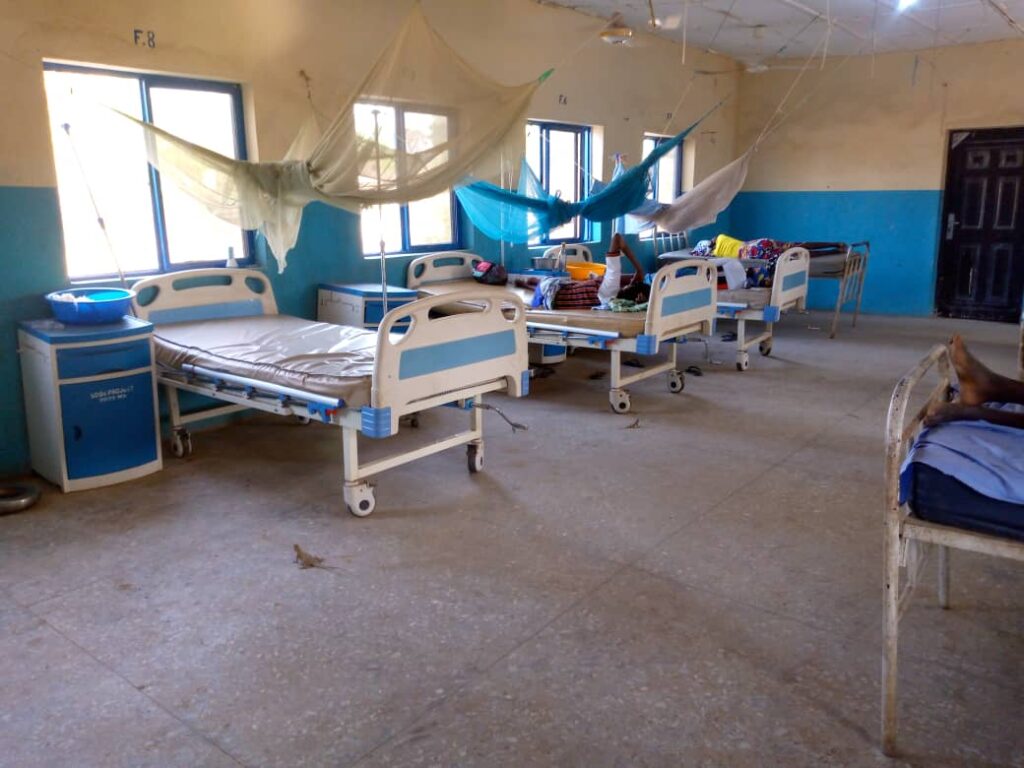
I went to the hospital not as a researcher or policy analyst, but as a priest responding to a pastoral call. A parishioner had been admitted, and my intention was simply to offer prayers and presence. What I encountered was not only illness, but quiet abandonment. The corridor was heavy with heat. Electricity failed intermittently. A nurse apologized repeatedly for delays she clearly did not cause. Essential drugs were unavailable. A young mother sat holding her feverish child, her eyes fixed on the floor—not in protest, but in resignation. Nothing about that hospital suggested the absence of leadership. The building stood. Budgets had been approved. Committees had met. Files had moved. Yet care was absent. The distance between policy and practice revealed something deeper than inefficiency. It revealed moral absence: the severing of power from responsibility, authority from conscience. Suffering had become ordinary. “Leadership without an ethical compass produces institutions that function procedurally while failing humanely.” — — Kizito C. Umennadi This essay argues that Nigeria’s crisis in healthcare is not merely administrative or economic, but fundamentally moral. Leadership without an ethical compass produces institutions that function procedurally while failing humanely. When leadership loses its moral center, structures remain standing, but human dignity collapses within them. The hospital corridor is only one example. In overcrowded classrooms, teachers improvise without resources. In government offices, files move only when conscience is bribed. In markets, inflation steadily erodes livelihoods. In communities plagued by insecurity, citizens adapt to fear as routine. Institutions function, but people are wounded. Leadership remains procedural while ethical direction disappears. The question is unavoidable: When leadership loses its moral compass, who pays the price? At its core, leadership is not simply the possession of power; it is custody over human life. A moral compass refers to the interior capacity to discern right from wrong and to act consistently for justice and the common good. Thomas Aquinas maintained that authority loses legitimacy when it departs from reason and the common good, becoming coercion rather than justice (Summa Theologica, I–II, q. 90). Augustine of Hippo warned that kingdoms without justice are little more than organized robbery (City of God, IV.4). Immanuel Kant insisted that human beings must never be treated merely as means, regardless of efficiency or legality. Modern scholarship explains how moral erosion often occurs quietly. Hannah Arendt described the “banality of evil,” the frightening normalcy with which harm can be carried out through routine bureaucracy. Zygmunt Bauman showed how institutional distance dulls moral responsibility. Ronald Heifetz distinguished technical authority from adaptive leadership, arguing that genuine leadership requires courage to confront ethical complexity rather than hide behind procedure. Nigeria’s healthcare sector gives these insights concrete expression. Preventable suffering becomes routine not only because of limited resources, but because accountability is diffused and moral urgency blunted. Moral leadership in healthcare would mean transparent procurement systems, regular maintenance of equipment, protection for whistleblowers, and investment in staff welfare. It would require leaders who measure success not merely by budget allocation, but by reductions in preventable deaths and restoration of public trust. Leadership failure also leaves psychological scars. Repeated exposure to broken systems fosters what psychologist Martin Seligman described as learned helplessness—a condition in which individuals cease attempting change because effort no longer appears connected to outcome. Closely related is moral disengagement, a concept developed by Albert Bandura, whereby individuals detach ethical standards from behavior in order to survive within corrupt environments. “The greatest danger is not crisis, but normalization—when injustice becomes expected and moral compromise passes for realism.” — Obi Ifeoma E. In counselling encounters, many young Nigerians voice a painful contradiction: they know what is right, yet feel punished for doing it. Over time, conscience weakens. Cynicism replaces hope. Integrity begins to look naïve. The crisis, however, is not only structural; it is interior. Power does not heal psychological wounds; it magnifies them. Unexamined fears—fear of losing office, fear of exposure, fear of inadequacy—can drive leaders toward control and intolerance of dissent. Rather than engage criticism reflectively, fearful leaders silence it. Unresolved trauma may further distort governance. Leaders who have not processed experiences of deprivation or humiliation may unconsciously reenact these wounds through defensive or authoritarian decision-making. Trauma that remains unacknowledged does not disappear; it becomes policy. Unchecked narcissism deepens the distortion. Institutions become extensions of the self. Accountability feels like attack. Empathy diminishes. Erik Erikson described identity diffusion as a failure to integrate values and responsibility coherently. When such fragmentation exists in those who wield authority, leadership lacks direction. As M. Scott Peck observed, avoidance of self-examination often lies at the root of social harm. Scripture underscores the moral gravity of leadership. The Prophet Ezekiel condemned shepherds who fed themselves rather than the flock (Ezek. 34:2–10). The Letter of James warns that leaders will face stricter judgment (James 3:1). Christ redefined authority as service rather than domination (Matt. 20:25–28). Pope John Paul II described the embedding of personal moral failure into institutions as “social sin.” (Sollicitudo Rei Socialis, 1987). So who pays the price? Not primarily those who wield power. It is the poor whose suffering becomes normalized. The youth whose moral imagination is wounded. Families strained by economic instability. Society itself, which gradually replaces hope with cynicism. “Until conscience is restored to public authority, the vulnerable will continue to pay the price.” — Aliyu Adaora E. The greatest danger is not crisis, but normalization—when injustice becomes expected and moral compromise passes for realism. To be sure, moral language alone cannot repair structural deficits. Underfunding, demographic pressures, and institutional complexity constrain even well-intentioned leaders. Not every failure stems from personal vice. Yet structural weaknesses become tragedies when leaders lack the ethical clarity and courage to confront them honestly. Moral courage does not eliminate scarcity; it determines how scarcity is managed and who bears its burden. Sustainable reform therefore requires more than policy change. It demands moral formation and interior integration: leadership education grounded in ethics; transparent accountability mechanisms; psychological self-awareness supported by reflective practice; and cultural norms that reward integrity

Leadership Without a Moral Compass: Who Pays the Price? Read More »
Why Are African Young Men Being Lured to Die in the Russia-Ukraine War?

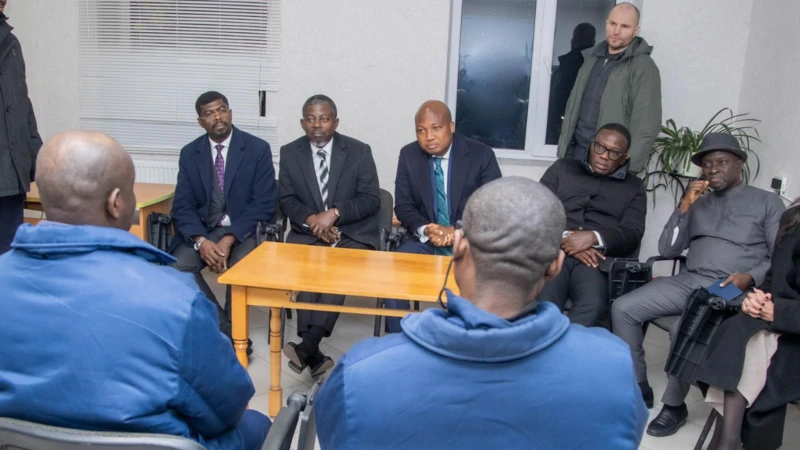
The Foreign Minister of Ghana, Samuel Ablakwa, on a recent visit to Kiev, Ukraine, asked his Ukrainian counterpart to help secure the release of two Ghanaians held as prisoners of war. According to a report by the BBC, of the 272 Ghanaians said to be fighting in the war, more than 55 young men have been killed. Another investigation by TV5 Monde in a special report titled All Eyes on Wagner, Le Business du désespoir estimated that there are currently 1,417 young Africans fighting in the war, of whom 316 have died. From the African Sahel to South Africa, from Nigeria to Ghana, and from Kenya to Ethiopia, hundreds of African young people are being lured to fight in this war through deception, exploitation, and manipulation. The number of African young fighters is not fully known because of the dark world that surrounds the recruitment networks. In South Africa, for instance, the daughter of former President Jacob Zuma, Duduzile Zuma-Sambudla, is standing trial for allegedly recruiting between 17 and 22 young South Africans to fight in the war with false promises, according to reporting by CNN. Seventeen of these South Africans, at the time she was charged, were trapped in the war-torn Donbas region. In Kenya, Festus Omwamba, head of Global Faces Human Resources, is being held on charges of illegally recruiting 22 Kenyans to fight in the war under the pretext of lucrative employment contracts, according to another report by the BBC. The Kenyan National Intelligence Service estimates that as many as 1,000 Kenyans are currently fighting in the Russia-Ukraine war. These nameless and faceless young Africans are our sons and daughters whose future has been sacrificed because they live in a continent where many prefer to expose themselves to death because they have lost hope in the African Motherland. Unlike the World Wars, where Africans were forced against their will by colonial oppressors to fight for the feuding Western powers in wars in which they and their ancestors had no hand and from which they would not benefit, these young people are being sacrificed by their own fellow citizens. “Hundreds of African young people are being lured to fight in this war through deception, exploitation, and manipulation.” — Stan Chu Ilo We are selling our own people to foreigners knowing that they may meet violent death. The greed that drives many a demented soul and poisoned heart stops at nothing in the conscienceless pursuit of filthy lucre. What is happening to our young people today, exemplified in this illegal sale of our young men to die on the battlefields of Ukraine or Russia, reflects a cycle of decay in our continent: corruption that knows no limit; lawlessness and wickedness that know no bounds; and the falsity of the claim that we Africans love life, family, and community. We must wake up to the lie that Ubuntu is alive in the continent if we are selling our own sons and daughters to foreigners to be slaughtered. Africa is now a leading continent for modern-day slavery and human trafficking, according to the United Nations Office on Drugs and Crime. This reality shatters our claims to be the last sanctuary for the finest values and testimony to the primacy of life and a pro-life ethic. We know that these young men face almost certain death in Russia and Ukraine, yet our governments are only now beginning to take notice. In an interview with CNN, the Ukrainian Foreign Minister Andrii Sybiha claimed that more than 1,400 citizens from 36 African countries are fighting for Russia in Ukraine and that “most of them are immediately sent to the so-called ‘meat assaults’ where they are quickly killed.” “We are selling our own people to foreigners knowing that they may meet violent death.” — Stan Chu Ilo As this unfortunate war enters its fourth year, the African Union, African governments, and the Catholic Church in Africa must make a pact to end this shameful and abominable act of selling our young men to die in this needless war. First, with over 70 percent of Africans under 30 years of age, education and employment must become an absolute priority. The second liberation we long for in Africa must be anchored on the shoulders of young people. As the African UN Youth Delegate, Kapwani Kavenuke, said in a recent interview with Africa Renewal, the youth of Africa are “the heartbeat that will carry Africa from potential to prosperity.” But this will not happen without transformative reforms that prioritize youth education, create opportunities for innovation and entrepreneurship, and implement sustainable forward-looking policies that build on the assets and idealism of African young people. Youth unemployment is rising across the continent. In Kenya, unemployment grew from 6.6 percent in 2006 to 15.2 percent in 2026 according to data from the World Bank. In South Africa, where the majority of the unemployed are Black, youth unemployment rose from 43.4 percent in 2002 to 59.9 percent in 2025, also according to World Bank data. Without jobs at home and without government social security to cushion the crushing poverty of joblessness, young Africans become desperate for any route of escape from the suffocating existence in which they live. “Without jobs at home, young Africans become desperate for any route of escape from the suffocating existence in which they live.” — Stan Chu Ilo Finally, the words of Pope Leo XIV on the painful anniversary of four years of this aggression begun by Russia ring with moral clarity: “Every war is truly a wound inflicted upon the entire human family; it leaves in its wake death, devastation, and a trail of pain that marks generations. Peace cannot be postponed.” Africa knows war. Present generations have been marked by wars fought at home and their aftermath. It bleeds the heart that this generation will also live with the enduring pain of young men and women slaughtered in faraway Russia and Ukraine because their fellow Africans lured them into war on foreign soil while

Why Are African Young Men Being Lured to Die in the Russia-Ukraine War? Read More »

War of Choice: Why America Must Not Repeat Iraq in Iran

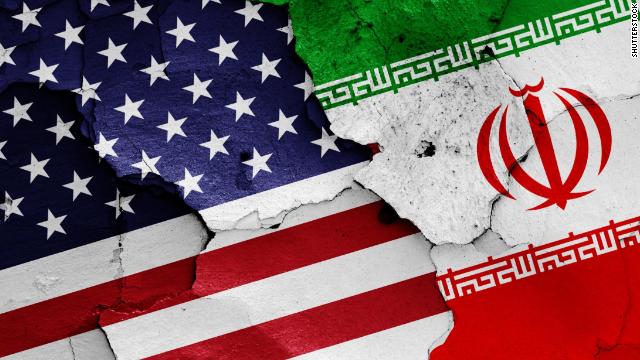
President Trump is dragging the U.S. into an unnecessary war without any national conversation or the approval of Congress. This military operation is both ill-advised and wrong-headed. President Trump is going into it alone without the consent of any of America’s allies in the Middle East, the G20, NATO, or elsewhere, except Israel. Iran was already negotiating in good faith, and the Omanis and other third parties were invested in allowing diplomacy and negotiation to work. But with the U.S. arms buildup in the region, it seems President Trump never really wanted to give diplomacy and peace a chance, believing in gunboat diplomacy and in leveraging military might over the long, patient path of jaw-jaw rather than war-war. \”President Trump is dragging the U.S. into an unnecessary war without any national conversation or the approval of Congress.” — Stan Chu Ilo War is the solution that lunatics prefer to peacemaking and nonviolence. It is anachronistic. The world has no appetite for war because we have found better ways to resolve our conflicts as a human family. War destroys everything. No American, Iranian, Israeli, Palestinian, or any other human being deserves to die needlessly in this senseless war of choice that President Trump has just begun. Americans did not elect Donald Trump as their President because they desire the continuation of these endless wars that America chooses now and again in the Middle East or other regions. A greater majority of Americans have learned from the calamities in Vietnam, Iraq, Somalia, Afghanistan, and many other places where America went in, driven by a superpower syndrome, that an imperialistic pursuit of America’s interests or regime change in other people’s lands, motivated solely by America’s security, geopolitical, and economic interests, always ends in failure and more chaos. Just look at Iraq! However, the reasoning for the United States, as Noam Chomsky writes, regarding America’s global influence is straightforward: “What we say goes!” However, I say that any attempt to dictate to other nations or impose America’s version of governance on them through military means always ends in failure and more misery for the people, the region, and the world. President Trump is attacking Iran not because of the interests of the Iranian people but because of Trump’s narrow version of America’s interests as of today. That might change tomorrow. “Any attempt to dictate to other nations or impose America’s version of governance on them through military means always ends in failure and more misery.” — Stan Chu Ilo President Trump is dragging America into another irreversible mistake in the Middle East, and Americans must stand up to this President. Indeed, all men and women of goodwill throughout the world must say “no” to this violation of Iran’s sovereignty by the U.S. and Israel. War against Iran is not the solution to the needed surgical change in Iran, whose government has brought so much misery and pain to its own people and has made this proud nation a pariah in the world. No nation can survive by repressing its own people, undermining its neighbours’ security, or pushing for the death of America, Israel, or any other nation through terrorism, sabotage, and subversive acts. Iran needs a new and enduring political dispensation that promotes and guarantees the common good for all Iranians. Still, it cannot be brought about through the current American and Israeli operation. President Bush, like President Trump today, had predicted that after the toppling of Saddam Hussein in Iraq, the Iraqis would greet Americans as liberators. We know how many lives were wasted, and Iraq is still bleeding from that terrible war experiment that America waged with the so-called coalition of the willing. More than 20 years later, we are hearing the same irrational sabre-rattling and rhetoric from another American President. I wonder: What makes President Trump think that America has the solution to other people’s problems when America is struggling to address myriad problems and challenges in its crisis of democracy, going back to the storming of Congress on January 6, 2021? What makes anyone believe that America can bring about in Iran or any other country what it is struggling to uphold in its own country, with what we are experiencing as Americans today: the dismantling of the rule of law and separation of powers, the crisis surrounding the Epstein files, government by retribution, executive overreach, and autocracy under the Trump regime in the U.S.? I long for a world where God’s people can live in peace and prosperity. I long for a world where the lives of God’s children are no longer sacrificed so cheaply by our political leaders to advance their limited perception of reality, insatiable greed, and unredeemed power to dominate. Power today, whether locally or internationally, should be exercised in concert to address human and global problems, especially to reduce human suffering and the pain of the poor, who are often the non-grievable victims of these forever wars. War should no longer be an option on the table because the just war theory was not developed with these massive weapons of destruction in mind. Who is the unjust aggressor in this surprise development in Iran today? Where is the proportionality in the destruction already inflicted on Iran and other Gulf states? An urgent meeting of the U.N. Security Council and the U.S. Congress, respectively, is needed to stop this calamitous experiment from expanding into a regional conflict and a river of blood for our fellow human beings. “War should no longer be an option on the table.” — Stan Chu Ilo With Pope Leo I, I say: “Every war is truly a wound inflicted upon the entire human family; it leaves in its wake death, devastation, and a trail of pain that marks generations. Peace cannot be postponed. It is an urgent necessity that must find a home in our hearts and be translated into responsible decisions.”

War of Choice: Why America Must Not Repeat Iraq in Iran Read More »