Category

Analysis

Analysis

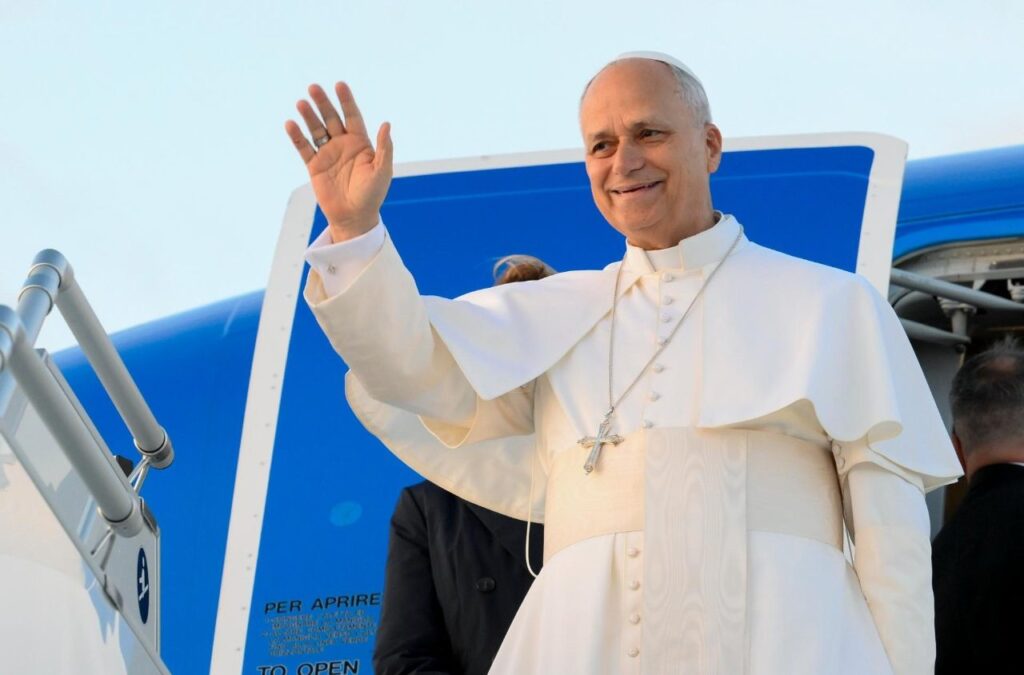
Pope Leo’s African Moment: A Prophetic Political Theology— A Test for African Bishops and Theologians, Part I

The world has been quite fascinated by what is emerging as the prophetic political theology of Pope Leo. Forbes, for instance, calls Pope Leo’s proclamation of the social gospel “a masterclass in moral courage.” CNN’s Christopher Lamb writes that Pope Leo is “reclaiming Christian values from the Trump administration.” The Financial Times similarly observes that Leo’s early interventions suggest a return to a morally assertive papacy in global affairs, while The Economist interprets his voice as part of a renewed Catholic willingness to offer a moral critique of political and economic power. The New York Times has described Leo as reasserting the moral voice of the papacy in an age of political fragmentation, and The Guardian highlights his readiness to challenge power across ideological divides in the name of human dignity and justice. Even the BBC notes the distinctive character of his leadership: a pastoral voice that speaks with unusual directness into the political crises of our time. “These positive affirmations of the Pope’s message and courageous moral voice reveal that, despite its own weaknesses and limitations, the Catholic Church, represented by the papacy, remains the world’s most visible moral authority today.” — Stan Chu Ilo In the face of the moral and spiritual bankruptcy of many political leaders across the globe, and the crisis of history unfolding in the epidemic of war and violence in our world, there is a pressing need. As Pope Leo says, there is a need for someone to speak out against these evils. There must also be a convincing message of an alternative path to a peaceful world, one that spreads love, prosperity, and happiness rather than hate, violence, and suffering among the majority of God’s people. “Pope Leo’s message offers an alternative path through what I call his prophetic political theology, which transcends his person. He speaks from within a deep and living tradition, with both Augustinian and Gospel roots, as articulated in Catholic Social Teaching.” — Stan Chu Ilo This tradition has consistently upheld the ordering of society toward the promotion of the common good, understood not merely as social stability or the absence of war, but as a moral and spiritual horizon oriented toward justice, the good life, and the flourishing of all. In this vision, the dignity, rights, and vocation of every person are safeguarded and advanced, so that society may foster sustainable and integral human development, and the ordination of all things toward the fulfillment of history in acts of love and solidarity. As I argue in my book on Pope Leo, Dilexi Te: A Church Formed by Love, he is quietly reinventing Catholic social teaching to meet the fragmented post-liberal world of today, where the erstwhile global institutions designed after World War II are exhausted and fraying under the weight of the inner contradictions of modernity’s lies about a convergent trajectory of history. “In Pope Leo’s speeches in Africa, we see a direct and unambiguous retrieval and application of Catholic Social Teaching to concrete historical realities, and, more importantly, the courageous naming of the actors whose invisible hands weave the tangled yarn of structural violence, spinning, knotting, and tightening the threads of injustice into rough fabrics of exclusion, exploitation, and suffering.” — Stan Chu Ilo These are the architects and custodians of structures of sin, who stitch together systems that bind, entrap, and hold a majority of God’s people in conditions of quiet bondage.  Leo does not allow these structures to remain faceless or abstract; he exposes the patterns, unmasks the agents, and calls them to account, even as he summons the whole human community to the harder work of unweaving these fabrics of injustice and reweaving the social order according to the demands of justice, truth, and the dignity of all. Leo’s denunciation of leaders who invoke God in the service of domination is deeply Augustinian. It recalls Augustine’s critique of the libido dominandi as the root of political disorder and the great threat to the tranquility of order. Yet Leo is not naïve about the nature of political life. Like Augustine’s vision of the two cities interwoven in history, his approach acknowledges the persistence of conflict between competing values and visions of the good. “In this sense, his political theology resonates with what contemporary theory describes as an agonistic understanding of democracy: the recognition that conflict is enduring. However, Leo refuses to absolutize conflict. His insistence on dialogue is a call to transform antagonism into a space where differences can be expressed, contested, and discerned within an ethical horizon ordered to the common good, to the love of God and others, to the dignity of the human person, and to the flourishing of all.” — Stan Chu Ilo What is this prophetic political theology and how did Pope Leo capture it so far in his messages in Algeria and Cameroon? I will address this question in the second part of this essay.
Pope Leo’s African Moment: A Prophetic Political Theology— A Test for African Bishops and Theologians, Part I Read More »

Algeria as Mission Land Again: The Implication of Pope Leo’s Visit and the Future of Evangelization of North Africa

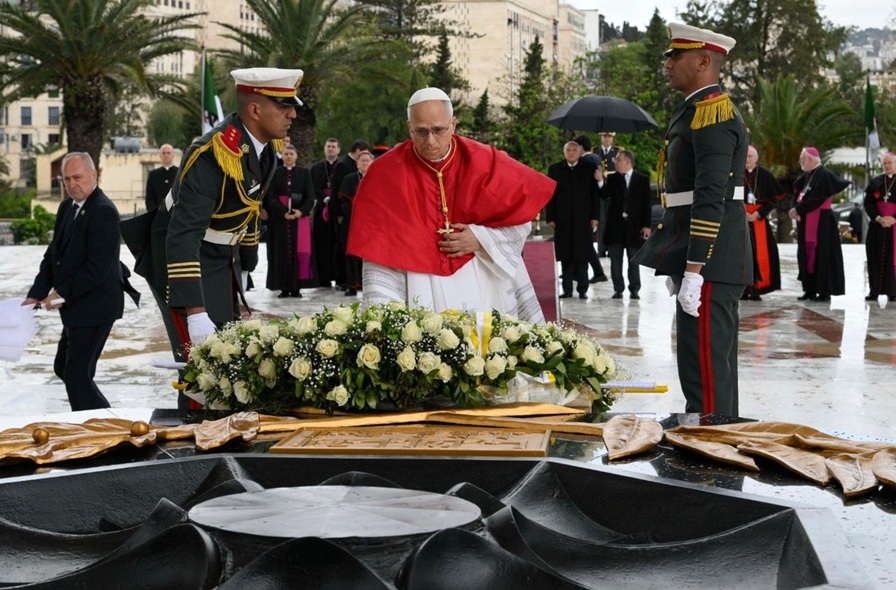
Pope Leo began his visit to Algeria with a deeply symbolic gesture: he visited the Maqam Echahid Martyrs’ Monument in Algiers to honor those who died in the struggle for independence. This site, overlooking the capital, is a sacred space of memory, sacrifice, and identity for the Algerian people. It commemorates the war of independence (1954–1962), when Algerians fought against French colonial rule, a system that had endured for over 130 years and left deep scars on the land and its people. The war was brutal and costly, with estimates of Algerian deaths ranging from several hundred thousand to over one million. It stands as one of the most painful chapters in the broader history of colonialism in Africa, where conquest, dispossession, and cultural humiliation often went hand in hand with violence and resistance. By beginning his Apostolic Visit here, Pope Leo places memory at the center of his pastoral and moral vision. His address at the monument can be read as a profound invitation to become bridge-builders in a world marked by historical ambiguities and tensions. Speaking as both brother and pastor, he situates Algeria within a layered history rich in faith, culture, and the legacy of Saint Augustine, yet also marked by violence and suffering. Rather than denying these tensions, he holds them together, urging reconciliation that does not erase the past but transforms it. At the heart of his message is a call to build bridges: between past and present, where the memory of sacrifice becomes a foundation for peace; between Christianity and Islam, where shared faith in God grounds fraternity; and between a painful history and a hopeful future, where forgiveness becomes the path forward. Peace, he insists, is not merely the absence of conflict but the fruit of justice, dignity, and healed hearts. “Pope Leo presents Algeria as a symbol of this possibility, a meeting place of cultures and religions where mutual respect enables coexistence. His broader papal vision emerges clearly: humanity must resist cycles of resentment, retribution, and violence and instead embrace a spirituality of reconciliation by encountering others as friends, not enemies.” — Stan Chu Ilo In invoking the Beatitudes, he defines true freedom and progress not in terms of power or wealth, but in terms of mercy, justice, love, and the difficult, enduring work of peacemaking. The Legacy of Saint Augustine and of Christian Persecution in Algeria In his inaugural address following his election, Pope Leo called himself a “son of Augustine.” From the outset of his pontificate, he expressed a deep desire to visit the ancient city of Hippo, where Saint Augustine spent most of his life as a bishop, pastor, and theologian, producing some of the most enduring works in Christian history. His visit to the ruins of this once-great Christian center was therefore not only personal but also profoundly symbolic. Standing in Annaba, the modern city that has replaced Hippo, one cannot help but wonder how such a vibrant Christian community could have faded so dramatically from history. The answer lies in a complex, layered history. The decline of Christianity in North Africa began well before the arrival of Islam, weakened by internal divisions such as the Donatist controversy and the socio-political fragmentation of the late Roman world. The Vandal invasion of the fifth century further destabilized the region, even though Christianity endured. The Arab Muslim conquest of the seventh century gradually reshaped the religious and cultural landscape, not through a single moment of eradication but through a long process of social transformation, conversion, and integration. Later, under Ottoman rule from the sixteenth century, the region became firmly integrated into the wider Islamic world. What we see, therefore, is not a simple story of disappearance but a slow, complex transition in which Christianity, once dominant, became a minority presence. “For some Christians, the story of Hippo may serve as a cautionary tale about the fragility of Christian civilization when it is not deeply rooted in the life, culture, and witness of the people. Yet Pope Leo does not approach this history with fear or nostalgia but with theological depth and pastoral realism.” — Stan Chu Ilo His homily at the Basilica of Saint Augustine in Annaba, the ancient Hippo, can be read as a powerful act of bridge-building across time, memory, and faith. By celebrating Mass at this historic site, once a flourishing center of Christianity and now a predominantly Muslim city, the Pope embodies the Church’s vocation to hold past and present together without denial or romanticism. Augustine’s Hippo reminds us that history is marked by both continuity and rupture. The visible structures of Christian dominance may have faded, yet the deeper witness of faith endures. In this sense, the Church, though a small flock, stands like a mustard seed, quiet and hidden yet alive and fruitful, able to proclaim God’s love beyond its own boundaries. Drawing on the Gospel encounter with Nicodemus, Pope Leo frames the Christian mission as a continual “rebirth from above,” a renewal that is both personal and historical. This renewal is not an escape from history’s wounds but a transformation of them through grace. It is a call to begin again, even in places where the past seems to speak more of loss than of promise. This message carries particular weight when read alongside Algeria\’s more recent history. During the Black Decade of the 1990s, Algeria endured a brutal civil conflict in which extremist violence claimed many lives, including nineteen Catholic religious, among them a bishop, priests, and women religious, who were killed between 1992 and 1996. Pope Leo recalled their witness as a testimony of fidelity and love, not only to the Church but also to the Algerian people among whom they chose to remain. Their beatification in 2018 at the Shrine of Our Lady of Santa Cruz in Oran stands as a living memory of suffering, as well as of hope and reconciliation. In his encounters with the Catholic community, the Augustinian sisters, and representatives of civil society, Pope Leo

Algeria as Mission Land Again: The Implication of Pope Leo’s Visit and the Future of Evangelization of North Africa Read More »

Will Pope Leo’s Africa-First Vision Go Beyond His Pilgrimage to Africa?

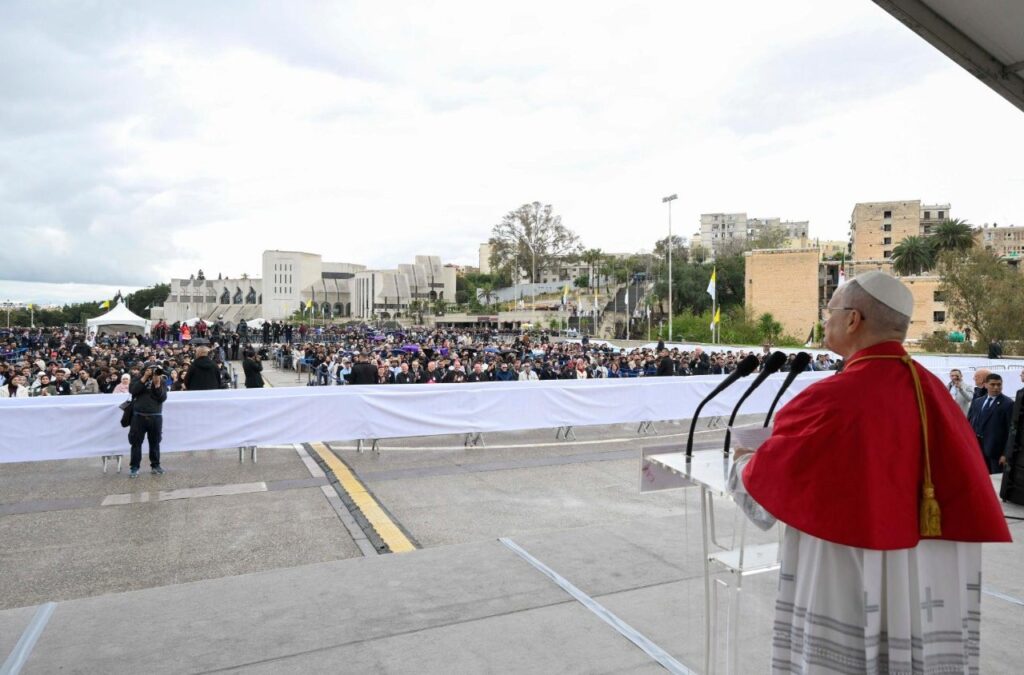
I stood among the concelebrating priests at Pope Leo’s Palm Sunday Mass in St. Peter’s Square. There, I watched the choreography of solemn ritual, spiritual power, and papal presence unfold. What caught my attention, as a Black Catholic priest, was the quieter symbolism at the altar. Two African priests were among the principal masters of ceremony at the Mass, which marks the beginning of Holy Week, the most sacred time in the Christian calendar. One sat at the Pope’s right hand, directing the rhythm of the liturgy. Another coordinated the concelebrating cardinals, bishops, and priests. These were positions of trust, proximity, and visibility. For me, this was not a passing detail—it was something I had never witnessed in any previous papacy. At many papal audiences now, an African priest also sits beside the Pope as one of his closest collaborators. These signs may seem small. But they are not small for African Catholics. They suggest a shift. They point to what I can only describe as the early contours of an Africa-first sensibility in the young papacy of Pope Leo. Despite what was often said about Pope Francis’s love for Africa, it remains striking that by the time he died, no African cardinal headed a dicastery in Rome. Africans made up barely 12 percent of the College of Cardinals, and key commissions often lacked African representation. Pope Leo has already begun to address this imbalance by appointing Africans to positions of real influence, including Monsignor Anthony Ekpo as assessor in the Secretariat of State and Father Edward Daleng, O.S.A., as Vice Regent of the Prefecture of the Pontifical Household, as well as other appointments across dicasteries and consultative bodies. It is, therefore, no surprise that Pope Leo’s longest and most consequential journey so far begins in Africa. The question is not only where he is going, but why and what it reveals about Africa’s place in the Church and in a world increasingly defined by fracture and violence. We live at a time when global attention is once again fixed on the Middle East, where fragile ceasefires conceal deeper and expanding conflicts. In such a moment, Africa risks being pushed to the margins of the world’s moral imagination, even as its own wars continue to displace millions and devastate communities. Pope Leo’s decision to begin his most ambitious journey on the continent is thus not accidental. It is a statement. Africa is not peripheral to Christianity—it is one of its birthplaces.\” Stan Chu Ilo First, Pope Leo recognizes that Africa is not peripheral to Christianity—it is one of its birthplaces. Long before Christianity took root in Europe, North Africa was already one of its great theological laboratories. In Algeria, he will walk in the footsteps of Augustine of Hippo, whose reflections on grace, freedom, unity, and the ethics of war helped shape the Church’s intellectual architecture. The debates that defined early Christianity were forged on African soil, in societies grappling with division, violence, and competing visions of the good life. Algeria itself tells a complex story. Once a center of vibrant Christian life, it is now a place where Christianity is a minority. This is a sobering reminder that demographic growth does not guarantee enduring presence. Europe, once the heartland of Christianity, now faces a different reality: empty pews, declining vocations, and widespread disaffiliation, especially among younger generations. Cultural Catholicism remains but often detached from institutional belonging. Many African Catholics, encountering this reality for the first time in Europe, are stunned. In Rome, even on Sundays, parishes are often sparsely filled. In Africa, by contrast, churches overflow. Seminaries and convents struggle to accommodate the growing number of candidates for the priesthood and religious life. But the question remains: will Africa’s current growth endure, or will it follow Europe\’s trajectory? Secondly, by choosing to visit Africa at this moment, Pope Leo is making a bold claim: Africa matters. Not only for the Church, but for the future of the world. With its demographic expansion and youthful population, Africa holds a key place in global development. African Christianity itself embodies immense cultural diversity, youthful energy, and the world\’s fastest-growing Catholic population, with 8.3 million new African Catholics recorded in the 2025 Church Book of Statistics. When Pope Paul VI visited Africa in 1969, he spoke of the continent’s deep spirituality and declared that the time had come for “an African Christianity.” That moment marked a turning point: an invitation for Africans not merely to receive the faith, but to shape it. Subsequent popes reinforced this call, urging African Christians to become missionaries to their own continent and to the wider world. Today, that vision is bearing fruit. African churches are now major sources of missionary vitality. Countries such as Nigeria, South Africa, and the Democratic Republic of Congo rank among the leading missionary-sending nations worldwide according to the State of the Great Commission’s Report. The faith that was once received from Western missionaries in Africa is now being reciprocated by African missionaries to Europe and North America. As Archbishop Fortunatus Nwachukwu of the Vatican’s Dicastery for Evangelization has described it, this is a “Church of the Sheaves,” a form of gift exchange and reverse mission in which the fruits of earlier missionary efforts sustain Christianity in regions where it is declining. And yet, this remarkable growth conceals a deeper paradox. The expansion of Christianity in Africa has not consistently translated into spiritual and cultural renewal and integral human development. Many African countries remain marked by fragile institutions, corruption, economic exclusion, and persistent insecurity. Across refugee settlements from East to West Africa, millions live in prolonged uncertainty, suspended between survival and hope. Religious life reflects this tension. Many Africans move between churches and other religious traditions, seeking healing, meaning, prosperity, and stability. The rise of Pentecostal and charismatic movements speaks to this hunger. They offer what has been described as a “factory of hope” for those abandoned by both state and society. This is not simply a challenge for the Catholic Church;

Will Pope Leo’s Africa-First Vision Go Beyond His Pilgrimage to Africa? Read More »

Rising Oil Prices: What Is Nigeria Doing with Its Petro-Dollar Windfall?

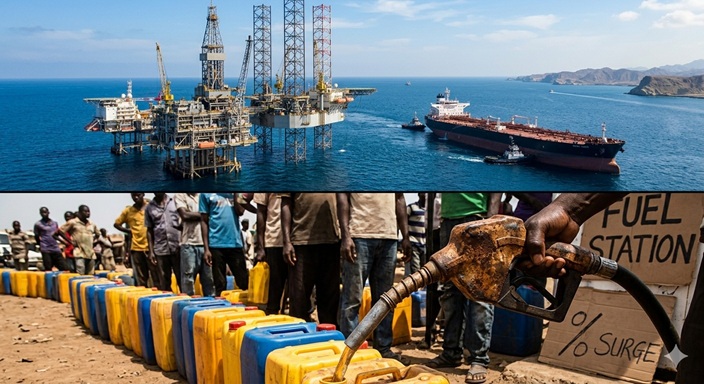
As global oil prices rose following tensions around the Strait of Hormuz, many Nigerians expected relief at the fuel pump. Instead, prices surged. Fuel prices have skyrocketed by 39.5%, plunging Nigeria into yet another fuel crisis. Located between Oman and Iran, the Strait of Hormuz is considered one of the most critical oil chokepoints in the world, with an estimated 20% to 25% of global oil transiting the strait—roughly one out of every five barrels. Its strategic importance is already causing ripple effects across global markets. Overall, Asia receives about 90% of the oil passing through the Strait of Hormuz, with countries such as China, Japan, India, and South Korea receiving a significant share and already feeling the impact. Nigeria is one of the countries benefiting from rising oil prices. But why is Nigeria caught in the dilemma of earning more from crude exports while facing higher fuel prices at the pump Nigerian Fuel Crisis: More Dollars from Crude Export, High Fuel Prices and Rising Economic Hardship The Nigerian fuel crisis may appear complex, but it is driven by several structural problems working together. The removal of fuel subsidies ushered in the current energy challenge. For decades, Nigeria kept petrol prices artificially low through subsidies, where the government absorbed part of the cost. Since this was removed in 2023, consumers now bear the full cost and directly feel the impact. “Nigeria earns more from oil, yet Nigerians pay more for fuel.” — Augustine Anwuchie This has placed significant strain on a petroleum-dependent economy that failed to diversify over the years. Crude oil accounts for an estimated 80–90% of Nigeria’s foreign exchange earnings and about 30–40% of federal government revenue. This makes the economy highly vulnerable to oil shocks, compounded by weak local refining capacity, a fragile exchange rate, and inflationary pressures. Even when global fuel prices remain stable, domestic prices continue to rise due to currency depreciation. Fuel imports are priced in dollars, and a weaker naira means higher costs in local currency. While it is often assumed that higher crude oil prices should benefit Nigeria and lower fuel costs, petrol pricing depends on multiple factors—refining, transportation, exchange rates, and market deregulation. Since government withdrawal from subsidy regimes, private marketers now dominate fuel importation and distribution. Their pricing is determined by landing costs, exchange rates, and profit margins, resulting in frequent price fluctuations. Logistics and distribution challenges—poor pipeline infrastructure, reliance on trucking, and supply bottlenecks—continue to undermine price stability. Low production has also compounded the problem, costing Nigeria over ₦28 trillion in oil revenue despite the boom. Although the Dangote refinery is expected to reduce import dependence, it is still ramping up operations, and its pricing remains tied to global market dynamics. Relief, therefore, may be gradual rather than immediate. The refinery has also faced regulatory tensions with the Nigerian Midstream and Downstream Regulatory Authority (NMDPRA) over import licensing, while disputes with the Petroleum and Natural Gas Senior Staff Association of Nigeria (PENGASSAN) have further complicated operations. “The crisis is not a lack of oil—it is a failure of structure and coordination.” — Augustine Anwuchie In essence, fuel remains expensive in Nigeria not because of crude scarcity, but due to subsidy removal, heavy import dependence, a weakened naira, limited refining capacity, and a weak regulatory framework. A Crisis Compounded by Corruption and Waste The pressing question for many Nigerians remains: if subsidy payments have ended, where are the savings? The government maintains that these funds are being redirected toward stabilising the economy, financing infrastructure, supporting social programmes, and cushioning energy costs. In theory, such funds could improve salaries, infrastructure, healthcare, education, power supply, and industrial development. However, many Nigerians report seeing little tangible impact. Civil society organisations such as SERAP have alleged that significant portions of these funds remain unaccounted for, raising concerns about transparency and accountability. At the same time, some analysts argue that the savings may not be sufficient to drive transformative economic change at scale. A Hope Wrapped in a Fragile Thread Nigeria has experienced oil windfalls before, notably during the 1973 oil boom. However, the long-term effects of that period—often described as “Dutch disease”—continue to shape the present, reflecting missed opportunities for diversification and sustainable economic planning. Today, many Nigerians face rising economic hardship, insecurity, and governance challenges. “Without reform, oil wealth will continue to deepen hardship rather than resolve it.” — Augustine Anwuchie Breaking this cycle requires decisive action. Nigeria must invest in diversification—particularly in agriculture, manufacturing, and technology—while strengthening transparency and accountability in managing public resources. Short-term relief must also translate into tangible improvements in living conditions. Without such reforms, Nigeria risks remaining trapped in a cycle where resource wealth fails to translate into broad-based prosperity.

Rising Oil Prices: What Is Nigeria Doing with Its Petro-Dollar Windfall? Read More »

The U.S. and Israel are Fighting an Unjust War in Iran

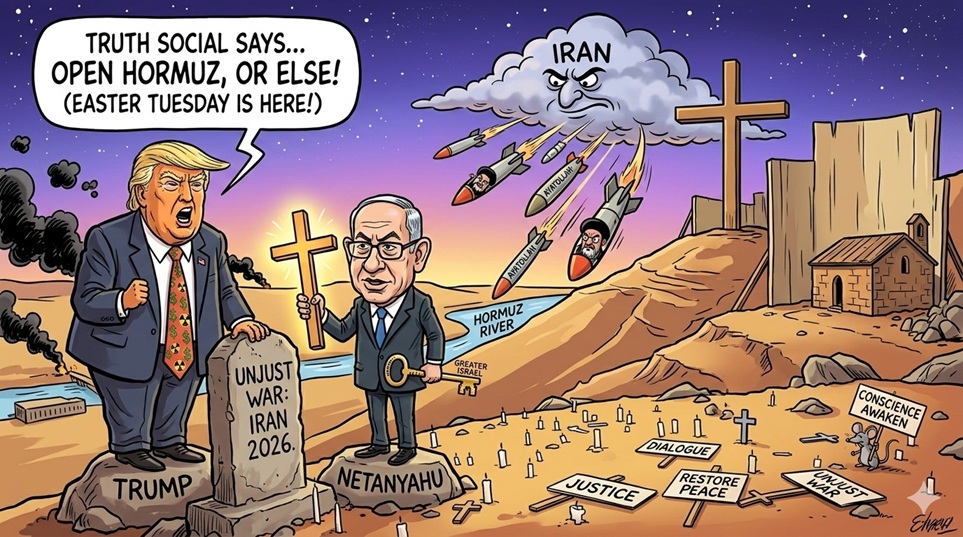
Reading the recent threats issued on Truth Social by President Trump on Easter Sunday, and his public statements on Easter Monday, threats to completely destroy Iran by Easter Tuesday, to blow up bridges, to dismantle power plants, if the Strait of Hormuz is not opened by Iran, were not only disturbing; they were heartbreaking. It forces one to ask, with a heavy conscience: how did America and the rest of the world arrive at such a perilous moral moment, where the language of annihilation is normalized and even baptized using Christian categories and language as a strategy? President Trump’s threats are not a sign of strength. Rather, it shows some sign of desperation, impatience, incohesion that has characterized his justification of this war from the beginning of this unfortunate war, and a lack of any prudence or sound judgment. This is a dangerous abandonment of the ethical restraints that govern the conduct of war and preserve our common humanity and could constitute a war crime and a violation of the U.S military’s rules of engagement. “When the language of power abandons justice, it becomes recklessness dressed as authority” — Stan Chu Ilo We may call it negotiation. We may call it deterrence. But when the language of power abandons the discipline of justice, it becomes recklessness dressed in the garments of authority. It becomes, in truth, a grave moral failure. What we are witnessing today is deeply troubling. The current war started by the United States and Israel against Iran does not, in my judgment, meet the conditions of a just war and is thus an unjust war. It lacks moral clarity, proportionality, and credible evidence of imminent threat. Preventive war, dressed up as necessity, remains ethically indefensible in international law. It is even more ethically flawed when it is driven by fear, speculation, or geopolitical ambition and economic interest rather than demonstrable and imminent danger. The unnecessary loss of innocent lives cannot be reduced to a strategy or collateral damage, particularly since this is an unjust war. The life of an American soldier is as sacred as the life of an Iranian child. The tears of a Palestinian mother, the grief of an Israeli father, the anguish of a Lebanese family, these are not inevitable collateral realities. They are the very measure by which history will judge us. And what shall we say about the systematic destruction of civilian infrastructure? Of universities, hospitals, power systems, and bridges reduced to rubble? What shall we say of targeted assassinations that erode every moral boundary? These are not signs of justice or strength but acts of cowardice driven by fear. These are wounds inflicted upon the fragile body of our shared humanity. “The Cross reveals sacrificial love, not domination; the Resurrection proclaims life, not destruction.” — Stan Chu Ilo One day, a future generation, perhaps wiser, perhaps more humane, will look back upon this moment in 2026 and ask: how did reasonable people remain silent while an architecture of violence was constructed before their very eyes? How did nations, endowed with reason and conscience, allow themselves to be carried by the winds of fear, power, and vengeance? They will ask how leaders, intoxicated by power, mistook domination for security, and destruction for peace. As a Christian leader, I must speak with prophetic clarity and humility. The Gospel does not bless war. It does not sanctify vengeance. It does not anoint the language of annihilation. As Pope Leo XIV reminded the Church on Palm Sunday, “God does not walk with those who sow death, but with those who build peace with patient hands.” And again, he teaches us: “The Church has no enemies to destroy, only brothers and sisters to embrace.” This message has landed on deaf ears and hardened hearts because the dramatis personae in this ongoing conflagration have a different agenda, which sadly they have not articulated, particularly Trump. I guess for President Netanyahu, it will serve his political interest and desire for a Greater Israel if Iran becomes a failed state and is reduced to rubble by the U.S., repeating what Israel did in Gaza, and then setting up a Board of Peace after the destruction. Let’s pray that this does not happen. This is the scandal of our time that the name of God is invoked in the service of violence, that the Cross of Christ is misappropriated to justify the machinery of war. To compare acts of military power to the death and resurrection of Jesus Christ as the U.S. Defense secretary does repeatedly is not only theologically misguided but a form of idolatry; it is a profound distortion of the Christian mystery. The Cross reveals sacrificial love, not domination. The Resurrection proclaims life, not destruction. As Christians, we must reclaim the robe of righteousness from those who would stain it with the language of war. We must remind the world that Christianity stands on the side of life, dignity, justice, dialogue, and peace. The God of life and the God of Jesus Christ, who came to give us life in abundance, is not the patron of war and vengeful people or nations, but the source of reconciliation. Therefore, the world must not remain silent. Conscience must awaken. Religious leaders, especially those who claim proximity to power, must speak truth, not flattery, as was the case last week when the Religious Freedom Committee met with President Trump at the White House. They must preach restraint, not aggression; humility, not hubris; dialogue, not destruction. They must call leaders to conversion, not reinforce their illusions of invincibility and the superpower syndrome, which largely drives the President. May we be reminded that peace is not weakness.  Peace is the highest expression of moral courage and the greatest longing of human beings. Dialogue is not futile; it is the best expression of our human capacity to reason together and walk towards the promotion of our common good. “Peace is not weakness; it is the highest expression of moral courage.” — Stan

The U.S. and Israel are Fighting an Unjust War in Iran Read More »

Far from the battlefield, close to the bill: Africa and the US–Israel–Iran war

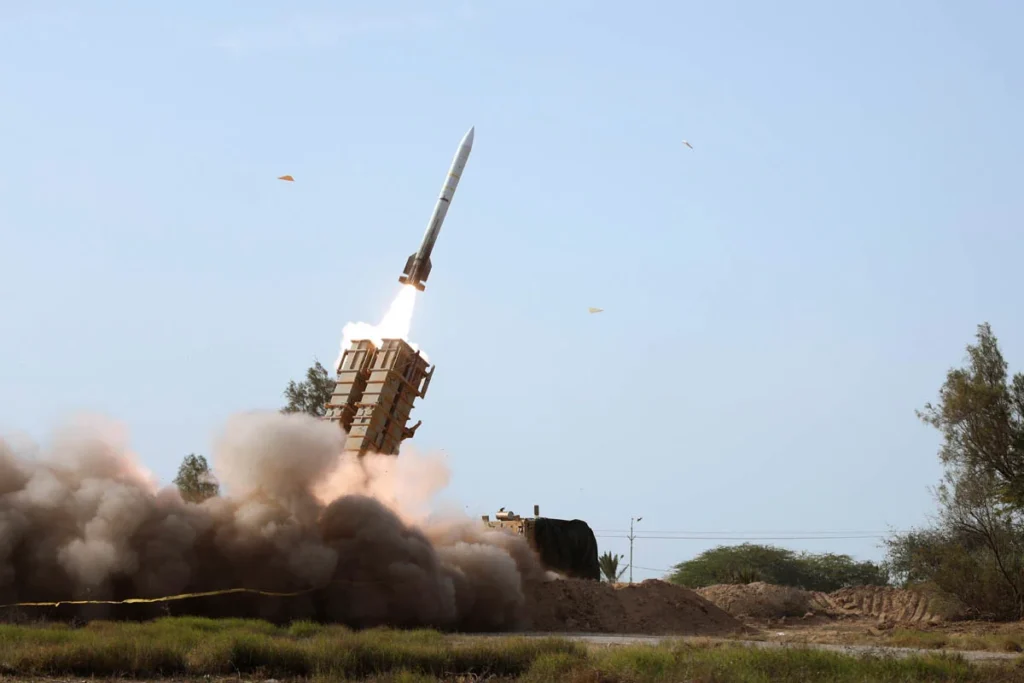
One month into escalating tensions between the United States, Israel, and Iran, the conflict is no longer confined to the Middle East. Its effects are already visible across global markets, supply chains, and political systems. Yet far from the battlefield—in Juba, Abuja, Lusaka, Algiers, and Nairobi—a different question is taking shape: what does this crisis mean for Africa? At first glance, the continent appears distant from the missiles and military maneuvers. In reality, it is already feeling the consequences—rising fuel prices, higher shipping costs, strained aid routes, and growing pressure on governments to respond to a crisis not of their making. “Africa may be far from the battlefield, but it is already paying the price.” — Nnaemeka Ali In economies where reliance on imports persists significantly and fiscal capacity is constrained, such shocks are not readily absorbed. It is tempting to assume that Africa’s oil exporters will benefit from higher prices. Therefore, while some may, briefly, experience advantages, the deeper reality for most countries is exposure to risk. External shocks—particularly those transmitted through energy and trade—have historically had disproportionately severe consequences across the continent. What makes this crisis globally significant is not just its location, but what it endangers. The Strait of Hormuz, through which a large portion of the world’s oil and liquefied natural gas is transported, has become a major concern. As tensions around Gulf infrastructure escalate, oil prices have surged sharply, surpassing $100 per barrel and occasionally nearing $115 (Reuters, March 2026). For many African economies, that shift is immediate. Most depend on imported fuel, so higher global prices quickly translate into increased transport costs, rising food prices, and mounting pressure on household incomes. Policymakers across the continent are already warning that this latest oil shock could spread across key sectors and complicate efforts to contain inflation. Governments now face difficult choices. They can absorb part of the shock through subsidies, placing further strain on already tight budgets, or pass the cost on to citizens, risking social tension. The International Monetary Fund (IMF) has repeatedly warned that many African economies are entering this period with high debt and limited fiscal space, leaving them poorly positioned to absorb external shocks. The first impact of this crisis is therefore not ideological, but fiscal. It deepens vulnerability for importers while offering uncertain gains for exporters. “This is not just a war of missiles—it is a war of prices, and Africa is on the frontline of its consequences” — Nnaemeka Ali This divide is already visible. In Nigeria, higher oil prices do not necessarily lead to stability. Despite being Africa’s largest oil producer, the country remains heavily reliant on imported refined fuel. Recent subsidy reforms have made households more directly exposed to price fluctuations, causing global increases to lead to domestic hardship quickly. For net importers, particularly in East Africa, the effects are more immediate. In Kenya, rising fuel prices affect transport, food distribution, and daily living costs. In Nairobi, this distant geopolitical crisis is already becoming a lived economic reality. Geography sharpens the impact. Countries along the Red Sea corridor—Djibouti, Sudan, Somalia, and Egypt—are at increased risk. Egypt, in particular, is vulnerable through the Suez Canal, a vital route for global trade. World Bank analysis indicates that traffic through the Suez Canal and Bab el-Mandeb Strait drops significantly during times of instability, directly affecting global trade and delivery times. This is not only an energy crisis. It is also a crisis of trade routes. As security threats interfere with essential maritime routes, ships are being diverted around the Cape of Good Hope. This detour prolongs travel durations, escalates expenses, and exerts additional pressure on supply chains. The United Nations Conference on Trade and Development has cautioned that these disruptions are already extending shipping distances and escalating costs throughout global trade networks. Africa is not only paying more for fuel; it is also paying for distance. Longer routes lead to higher freight costs, delays in deliveries, and increased pressure on economies that depend heavily on imports. The strain quickly spreads from ports to markets, transport systems, and households. African leaders are beginning to acknowledge these pressures. On March 4, South Africa’s President Cyril Ramaphosa warned that escalating tensions in the Middle East were already “putting strain on the African continent’s supply chains and causing higher energy prices.” The pressure extends into agriculture. Many African countries depend heavily on fertilizer imports routed through the Middle East. Disruptions are driving prices upward, in some cases sharply. For economies already struggling with food security, higher input costs threaten to reduce output and increase food prices. The consequences are especially severe in places like Sudan, where agricultural systems are already under strain and rising costs risk deepening an existing humanitarian crisis. This is where geopolitics becomes personal. In numerous African nations, governments are assessed less by their foreign policy stances than by the expenses associated with fuel, food, and transportation. When these three costs simultaneously escalate, pressure on authorities intensifies rapidly. The International Monetary Fund (IMF) has observed that inflationary shocks in low-income economies frequently precipitate social unrest, especially in contexts where living conditions are already delicate. At this stage, social institutions become essential. In African cities, churches and mosques are more than just places of worship—they serve as support systems. They handle pressure, provide relief, and give purpose to hardship. As economic pressure increases, they often become the first places people turn to. The humanitarian consequences are increasingly apparent. Disruptions to shipping and logistics are decelerating aid deliveries, elevating costs, and complicating operations in regions already characterized by fragility. For communities dependent on prompt assistance, even minor delays can result in severe consequences. The crisis did not give rise to these vulnerabilities; however, it is intensifying them—augmenting budgets, overburdening supply chains, and applying additional pressure on already fragile systems. African governments are responding cautiously. The African Union has called for de-escalation, reflecting a broader preference for stability over alignment. Many states are hesitant to be drawn into geopolitical blocs, even as external pressure

Far from the battlefield, close to the bill: Africa and the US–Israel–Iran war Read More »

Leadership Without a Moral Compass: Who Pays the Price?

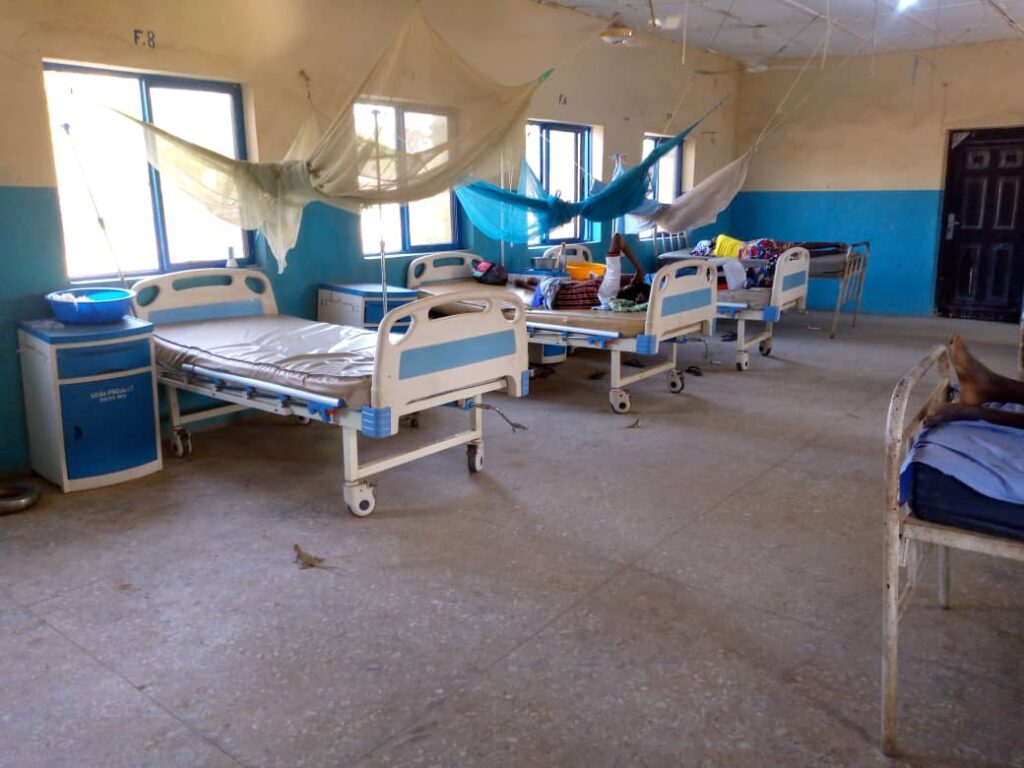
I went to the hospital not as a researcher or policy analyst, but as a priest responding to a pastoral call. A parishioner had been admitted, and my intention was simply to offer prayers and presence. What I encountered was not only illness, but quiet abandonment. The corridor was heavy with heat. Electricity failed intermittently. A nurse apologized repeatedly for delays she clearly did not cause. Essential drugs were unavailable. A young mother sat holding her feverish child, her eyes fixed on the floor—not in protest, but in resignation. Nothing about that hospital suggested the absence of leadership. The building stood. Budgets had been approved. Committees had met. Files had moved. Yet care was absent. The distance between policy and practice revealed something deeper than inefficiency. It revealed moral absence: the severing of power from responsibility, authority from conscience. Suffering had become ordinary. “Leadership without an ethical compass produces institutions that function procedurally while failing humanely.” — — Kizito C. Umennadi This essay argues that Nigeria’s crisis in healthcare is not merely administrative or economic, but fundamentally moral. Leadership without an ethical compass produces institutions that function procedurally while failing humanely. When leadership loses its moral center, structures remain standing, but human dignity collapses within them. The hospital corridor is only one example. In overcrowded classrooms, teachers improvise without resources. In government offices, files move only when conscience is bribed. In markets, inflation steadily erodes livelihoods. In communities plagued by insecurity, citizens adapt to fear as routine. Institutions function, but people are wounded. Leadership remains procedural while ethical direction disappears. The question is unavoidable: When leadership loses its moral compass, who pays the price? At its core, leadership is not simply the possession of power; it is custody over human life. A moral compass refers to the interior capacity to discern right from wrong and to act consistently for justice and the common good. Thomas Aquinas maintained that authority loses legitimacy when it departs from reason and the common good, becoming coercion rather than justice (Summa Theologica, I–II, q. 90). Augustine of Hippo warned that kingdoms without justice are little more than organized robbery (City of God, IV.4). Immanuel Kant insisted that human beings must never be treated merely as means, regardless of efficiency or legality. Modern scholarship explains how moral erosion often occurs quietly. Hannah Arendt described the “banality of evil,” the frightening normalcy with which harm can be carried out through routine bureaucracy. Zygmunt Bauman showed how institutional distance dulls moral responsibility. Ronald Heifetz distinguished technical authority from adaptive leadership, arguing that genuine leadership requires courage to confront ethical complexity rather than hide behind procedure. Nigeria’s healthcare sector gives these insights concrete expression. Preventable suffering becomes routine not only because of limited resources, but because accountability is diffused and moral urgency blunted. Moral leadership in healthcare would mean transparent procurement systems, regular maintenance of equipment, protection for whistleblowers, and investment in staff welfare. It would require leaders who measure success not merely by budget allocation, but by reductions in preventable deaths and restoration of public trust. Leadership failure also leaves psychological scars. Repeated exposure to broken systems fosters what psychologist Martin Seligman described as learned helplessness—a condition in which individuals cease attempting change because effort no longer appears connected to outcome. Closely related is moral disengagement, a concept developed by Albert Bandura, whereby individuals detach ethical standards from behavior in order to survive within corrupt environments. “The greatest danger is not crisis, but normalization—when injustice becomes expected and moral compromise passes for realism.” — Obi Ifeoma E. In counselling encounters, many young Nigerians voice a painful contradiction: they know what is right, yet feel punished for doing it. Over time, conscience weakens. Cynicism replaces hope. Integrity begins to look naïve. The crisis, however, is not only structural; it is interior. Power does not heal psychological wounds; it magnifies them. Unexamined fears—fear of losing office, fear of exposure, fear of inadequacy—can drive leaders toward control and intolerance of dissent. Rather than engage criticism reflectively, fearful leaders silence it. Unresolved trauma may further distort governance. Leaders who have not processed experiences of deprivation or humiliation may unconsciously reenact these wounds through defensive or authoritarian decision-making. Trauma that remains unacknowledged does not disappear; it becomes policy. Unchecked narcissism deepens the distortion. Institutions become extensions of the self. Accountability feels like attack. Empathy diminishes. Erik Erikson described identity diffusion as a failure to integrate values and responsibility coherently. When such fragmentation exists in those who wield authority, leadership lacks direction. As M. Scott Peck observed, avoidance of self-examination often lies at the root of social harm. Scripture underscores the moral gravity of leadership. The Prophet Ezekiel condemned shepherds who fed themselves rather than the flock (Ezek. 34:2–10). The Letter of James warns that leaders will face stricter judgment (James 3:1). Christ redefined authority as service rather than domination (Matt. 20:25–28). Pope John Paul II described the embedding of personal moral failure into institutions as “social sin.” (Sollicitudo Rei Socialis, 1987). So who pays the price? Not primarily those who wield power. It is the poor whose suffering becomes normalized. The youth whose moral imagination is wounded. Families strained by economic instability. Society itself, which gradually replaces hope with cynicism. “Until conscience is restored to public authority, the vulnerable will continue to pay the price.” — Aliyu Adaora E. The greatest danger is not crisis, but normalization—when injustice becomes expected and moral compromise passes for realism. To be sure, moral language alone cannot repair structural deficits. Underfunding, demographic pressures, and institutional complexity constrain even well-intentioned leaders. Not every failure stems from personal vice. Yet structural weaknesses become tragedies when leaders lack the ethical clarity and courage to confront them honestly. Moral courage does not eliminate scarcity; it determines how scarcity is managed and who bears its burden. Sustainable reform therefore requires more than policy change. It demands moral formation and interior integration: leadership education grounded in ethics; transparent accountability mechanisms; psychological self-awareness supported by reflective practice; and cultural norms that reward integrity

Leadership Without a Moral Compass: Who Pays the Price? Read More »

Why Are African Young Men Being Lured to Die in the Russia-Ukraine War?

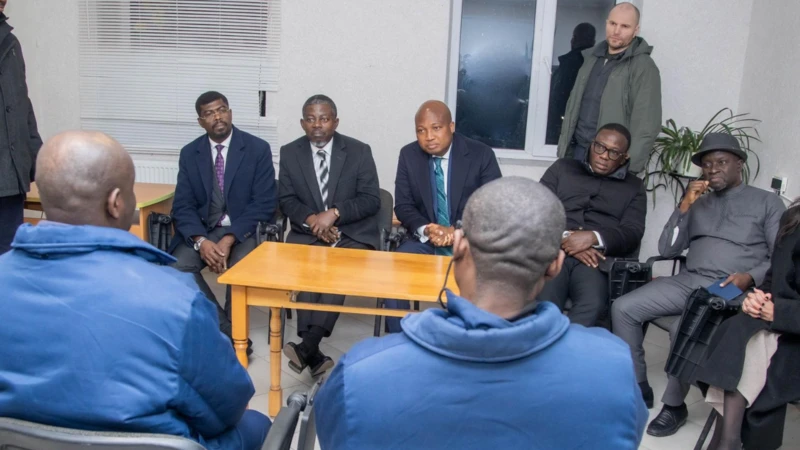
The Foreign Minister of Ghana, Samuel Ablakwa, on a recent visit to Kiev, Ukraine, asked his Ukrainian counterpart to help secure the release of two Ghanaians held as prisoners of war. According to a report by the BBC, of the 272 Ghanaians said to be fighting in the war, more than 55 young men have been killed. Another investigation by TV5 Monde in a special report titled All Eyes on Wagner, Le Business du désespoir estimated that there are currently 1,417 young Africans fighting in the war, of whom 316 have died. From the African Sahel to South Africa, from Nigeria to Ghana, and from Kenya to Ethiopia, hundreds of African young people are being lured to fight in this war through deception, exploitation, and manipulation. The number of African young fighters is not fully known because of the dark world that surrounds the recruitment networks. In South Africa, for instance, the daughter of former President Jacob Zuma, Duduzile Zuma-Sambudla, is standing trial for allegedly recruiting between 17 and 22 young South Africans to fight in the war with false promises, according to reporting by CNN. Seventeen of these South Africans, at the time she was charged, were trapped in the war-torn Donbas region. In Kenya, Festus Omwamba, head of Global Faces Human Resources, is being held on charges of illegally recruiting 22 Kenyans to fight in the war under the pretext of lucrative employment contracts, according to another report by the BBC. The Kenyan National Intelligence Service estimates that as many as 1,000 Kenyans are currently fighting in the Russia-Ukraine war. These nameless and faceless young Africans are our sons and daughters whose future has been sacrificed because they live in a continent where many prefer to expose themselves to death because they have lost hope in the African Motherland. Unlike the World Wars, where Africans were forced against their will by colonial oppressors to fight for the feuding Western powers in wars in which they and their ancestors had no hand and from which they would not benefit, these young people are being sacrificed by their own fellow citizens. “Hundreds of African young people are being lured to fight in this war through deception, exploitation, and manipulation.” — Stan Chu Ilo We are selling our own people to foreigners knowing that they may meet violent death. The greed that drives many a demented soul and poisoned heart stops at nothing in the conscienceless pursuit of filthy lucre. What is happening to our young people today, exemplified in this illegal sale of our young men to die on the battlefields of Ukraine or Russia, reflects a cycle of decay in our continent: corruption that knows no limit; lawlessness and wickedness that know no bounds; and the falsity of the claim that we Africans love life, family, and community. We must wake up to the lie that Ubuntu is alive in the continent if we are selling our own sons and daughters to foreigners to be slaughtered. Africa is now a leading continent for modern-day slavery and human trafficking, according to the United Nations Office on Drugs and Crime. This reality shatters our claims to be the last sanctuary for the finest values and testimony to the primacy of life and a pro-life ethic. We know that these young men face almost certain death in Russia and Ukraine, yet our governments are only now beginning to take notice. In an interview with CNN, the Ukrainian Foreign Minister Andrii Sybiha claimed that more than 1,400 citizens from 36 African countries are fighting for Russia in Ukraine and that “most of them are immediately sent to the so-called ‘meat assaults’ where they are quickly killed.” “We are selling our own people to foreigners knowing that they may meet violent death.” — Stan Chu Ilo As this unfortunate war enters its fourth year, the African Union, African governments, and the Catholic Church in Africa must make a pact to end this shameful and abominable act of selling our young men to die in this needless war. First, with over 70 percent of Africans under 30 years of age, education and employment must become an absolute priority. The second liberation we long for in Africa must be anchored on the shoulders of young people. As the African UN Youth Delegate, Kapwani Kavenuke, said in a recent interview with Africa Renewal, the youth of Africa are “the heartbeat that will carry Africa from potential to prosperity.” But this will not happen without transformative reforms that prioritize youth education, create opportunities for innovation and entrepreneurship, and implement sustainable forward-looking policies that build on the assets and idealism of African young people. Youth unemployment is rising across the continent. In Kenya, unemployment grew from 6.6 percent in 2006 to 15.2 percent in 2026 according to data from the World Bank. In South Africa, where the majority of the unemployed are Black, youth unemployment rose from 43.4 percent in 2002 to 59.9 percent in 2025, also according to World Bank data. Without jobs at home and without government social security to cushion the crushing poverty of joblessness, young Africans become desperate for any route of escape from the suffocating existence in which they live. “Without jobs at home, young Africans become desperate for any route of escape from the suffocating existence in which they live.” — Stan Chu Ilo Finally, the words of Pope Leo XIV on the painful anniversary of four years of this aggression begun by Russia ring with moral clarity: “Every war is truly a wound inflicted upon the entire human family; it leaves in its wake death, devastation, and a trail of pain that marks generations. Peace cannot be postponed.” Africa knows war. Present generations have been marked by wars fought at home and their aftermath. It bleeds the heart that this generation will also live with the enduring pain of young men and women slaughtered in faraway Russia and Ukraine because their fellow Africans lured them into war on foreign soil while

Why Are African Young Men Being Lured to Die in the Russia-Ukraine War? Read More »

War of Choice: Why America Must Not Repeat Iraq in Iran

President Trump is dragging the U.S. into an unnecessary war without any national conversation or the approval of Congress. This military operation is both ill-advised and wrong-headed. President Trump is going into it alone without the consent of any of America’s allies in the Middle East, the G20, NATO, or elsewhere, except Israel. Iran was already negotiating in good faith, and the Omanis and other third parties were invested in allowing diplomacy and negotiation to work. But with the U.S. arms buildup in the region, it seems President Trump never really wanted to give diplomacy and peace a chance, believing in gunboat diplomacy and in leveraging military might over the long, patient path of jaw-jaw rather than war-war. \”President Trump is dragging the U.S. into an unnecessary war without any national conversation or the approval of Congress.” — Stan Chu Ilo War is the solution that lunatics prefer to peacemaking and nonviolence. It is anachronistic. The world has no appetite for war because we have found better ways to resolve our conflicts as a human family. War destroys everything. No American, Iranian, Israeli, Palestinian, or any other human being deserves to die needlessly in this senseless war of choice that President Trump has just begun. Americans did not elect Donald Trump as their President because they desire the continuation of these endless wars that America chooses now and again in the Middle East or other regions. A greater majority of Americans have learned from the calamities in Vietnam, Iraq, Somalia, Afghanistan, and many other places where America went in, driven by a superpower syndrome, that an imperialistic pursuit of America’s interests or regime change in other people’s lands, motivated solely by America’s security, geopolitical, and economic interests, always ends in failure and more chaos. Just look at Iraq! However, the reasoning for the United States, as Noam Chomsky writes, regarding America’s global influence is straightforward: “What we say goes!” However, I say that any attempt to dictate to other nations or impose America’s version of governance on them through military means always ends in failure and more misery for the people, the region, and the world. President Trump is attacking Iran not because of the interests of the Iranian people but because of Trump’s narrow version of America’s interests as of today. That might change tomorrow. “Any attempt to dictate to other nations or impose America’s version of governance on them through military means always ends in failure and more misery.” — Stan Chu Ilo President Trump is dragging America into another irreversible mistake in the Middle East, and Americans must stand up to this President. Indeed, all men and women of goodwill throughout the world must say “no” to this violation of Iran’s sovereignty by the U.S. and Israel. War against Iran is not the solution to the needed surgical change in Iran, whose government has brought so much misery and pain to its own people and has made this proud nation a pariah in the world. No nation can survive by repressing its own people, undermining its neighbours’ security, or pushing for the death of America, Israel, or any other nation through terrorism, sabotage, and subversive acts. Iran needs a new and enduring political dispensation that promotes and guarantees the common good for all Iranians. Still, it cannot be brought about through the current American and Israeli operation. President Bush, like President Trump today, had predicted that after the toppling of Saddam Hussein in Iraq, the Iraqis would greet Americans as liberators. We know how many lives were wasted, and Iraq is still bleeding from that terrible war experiment that America waged with the so-called coalition of the willing. More than 20 years later, we are hearing the same irrational sabre-rattling and rhetoric from another American President. I wonder: What makes President Trump think that America has the solution to other people’s problems when America is struggling to address myriad problems and challenges in its crisis of democracy, going back to the storming of Congress on January 6, 2021? What makes anyone believe that America can bring about in Iran or any other country what it is struggling to uphold in its own country, with what we are experiencing as Americans today: the dismantling of the rule of law and separation of powers, the crisis surrounding the Epstein files, government by retribution, executive overreach, and autocracy under the Trump regime in the U.S.? I long for a world where God’s people can live in peace and prosperity. I long for a world where the lives of God’s children are no longer sacrificed so cheaply by our political leaders to advance their limited perception of reality, insatiable greed, and unredeemed power to dominate. Power today, whether locally or internationally, should be exercised in concert to address human and global problems, especially to reduce human suffering and the pain of the poor, who are often the non-grievable victims of these forever wars. War should no longer be an option on the table because the just war theory was not developed with these massive weapons of destruction in mind. Who is the unjust aggressor in this surprise development in Iran today? Where is the proportionality in the destruction already inflicted on Iran and other Gulf states? An urgent meeting of the U.N. Security Council and the U.S. Congress, respectively, is needed to stop this calamitous experiment from expanding into a regional conflict and a river of blood for our fellow human beings. “War should no longer be an option on the table.” — Stan Chu Ilo With Pope Leo I, I say: “Every war is truly a wound inflicted upon the entire human family; it leaves in its wake death, devastation, and a trail of pain that marks generations. Peace cannot be postponed. It is an urgent necessity that must find a home in our hearts and be translated into responsible decisions.”

War of Choice: Why America Must Not Repeat Iraq in Iran Read More »

Secret Link