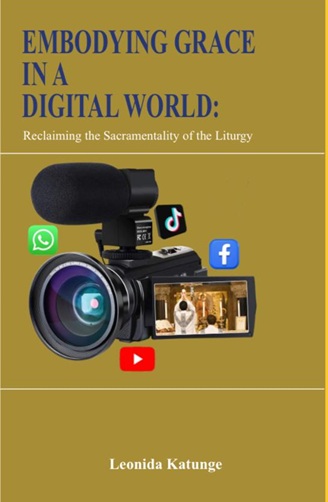
Embodying Grace in a Digital World
By Leonida Katunge
This book examines the sacramentality of the liturgical act in the context of the rapidly expanding digital culture of the twenty-first century. In an age where worship is increasingly mediated through screens, livestreams, and virtual platforms, the Church is faced with urgent theological questions about presence, participation, and communion.
While digital media have enabled pastoral care and widened access to liturgical celebrations—especially during the COVID-19 pandemic—they have also introduced tensions between embodied worship and virtual participation. Drawing on key voices in contemporary theology, the work critically reflects on whether digital mediation risks reducing the Eucharist from a lived, communal sacramental act to a form of visual or individual consumption, thereby challenging the incarnational foundation of Christian worship.
Structured in three parts, the book first establishes the theological foundations of sacramentality
grounded in Scripture, Tradition, and the teachings of the Second Vatican Council, emphasizing the Eucharist as the “source and summit” of Christian life.
The second part analyzes the impact of digital media on liturgical practice, acknowledging both its pastoral benefits and its theological limitations, particularly regarding embodiment and ecclesial communion.
The final part offers pastoral and canonical reflections aimed at guiding the Church in responsibly integrating digital tools without compromising the integrity of sacramental worship. Ultimately, the book argues for a renewed theology of liturgy that safeguards physical presence, symbolic richness, and communal participation while discerning the proper place of digital media in the life of the Church.