Is the Tinubu Government Covering Up Christian Genocide in Nigeria?
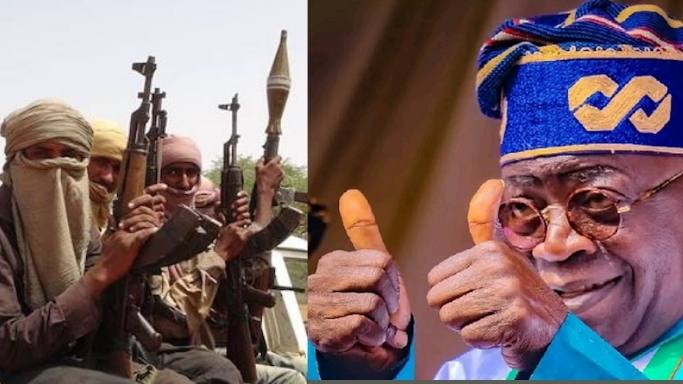
President Bola Tinubu recently hailed the killing of senior Islamic State commander Abu Bilal al -Minuki in a joint Nigerian and American military operation as evidence of his government’s “pragmatic cooperation and partnerships” in securing the lives and property of Nigerians. President Donald Trump reportedly described al-Minuki as the “most active terrorist in the world,” a troubling characterization that further underscores how Nigeria and the wider West African sub-region are now perceived by the U.S government as one of the most dangerous theaters of global terrorism. According to BBC reporting and international security assessments, the Nigerian-based branch of the Islamic State remains the most active ISIS affiliate in sub-Saharan Africa, responsible for a significant percentage of attacks across the region. Al-Minuki, whose operational fortress was reportedly located in Marte in Borno State near the Lake Chad Basin, was killed alongside several of his lieutenants in an air strike targeting his compound in the vast swampland shared by Nigeria, Chad, Niger, and Cameroon. The Lake Chad region has increasingly evolved into one of the world’s most volatile transnational insurgency corridors. “Nigeria’s crisis cannot be reduced to a single narrative of religion, ethnicity, or terrorism—it is a struggle over power, legitimacy, and state survival.” — Stan Chu Ilo Nigeria has faced Islamic insurgency, particularly since the emergence of Boko Haram in 2009, as perhaps the most organized, diffuse, and enduring threat to the Nigerian state since Independence. When Boko Haram formally pledged allegiance to the Islamic State in 2015, it established operational and ideological links with a wider constellation of extremist movements spreading across the African Sahel. These groups seek not merely territorial disruption but the creation of a new political and religious order founded upon extremist interpretations of Sharia and the establishment of a caliphate transcending national boundaries. The Islamic supremacist agenda of some of these groups is undeniable. Yet reducing the Nigerian crisis simply to Christian persecution or Islamic jihadism is analytically inadequate. The violence consuming Nigeria and much of the Sahel emerges from a far more dangerous convergence of ideological extremism, state fragility, criminal economies, ethnic conflict, climate pressures, corruption, weak governance, porous borders, and the collapse of public trust in political institutions. Indeed, President Trump, in justifying anti-insurgent military strikes reportedly carried out in cooperation with Nigerian forces, frequently accused the Nigerian government of failing to protect Christian populations, especially in Northern Nigeria. There are many within Nigeria and abroad who are convinced that Nigerian Christians are facing systematic persecution and even genocide. Some argue that the current cooperation between the Tinubu government and the United States emerged partly from mounting pressure from Washington, including the designation of Nigeria as a Country of Particular Concern on religious freedom grounds and threats of sanctions or diplomatic consequences. A recent report by International Christian Concern titled “Nigeria’s $10 Million Genocide Cover Up” alleges that the Tinubu government invested millions of dollars in lobbying efforts in Washington to cleanse its international image. According to the report, one of the central figures in this lobbying effort is Matt Mowers, a former senior adviser in the U.S. Department of State who previously worked with the Global Coalition to Defeat ISIS. The report claims that Mowers registered as a foreign agent and lobbyist shortly after Nigeria’s designation as a Country of Particular Concern and that his work sought to defend the Tinubu administration against accusations that it had failed to stop mass killings of Christians. The report further alleges that these lobbying efforts are financed through Maton Engineering Nigeria Limited, a company linked to former Niger Delta militant leader, Government Ekpemupolo, popularly known as Tompolo, whose security company received lucrative government pipeline surveillance contracts in the Niger Delta. These allegations are serious and deserve transparent public scrutiny. The International Christian Concern report advances three major claims. First, it argues that the Nigerian government seeks to repackage religiously motivated violence against Christians as mere criminality, banditry, farmer-herder clashes, or climate-induced communal conflict. According to the report, the so-called “crime-terror-nexus” language obscures the ideological motivations of extremist groups who deliberately target Christian communities in strategic regions of Northern and Middle Belt Nigeria. Second, the report argues that the Nigerian government portrays the violence as too complex and ambiguous to be classified as religious persecution. By emphasizing criminality over ideology, the report claims, the Nigerian state minimizes the role of radical Islamist movements and presents itself internationally as a secular government battling generalized insecurity rather than confronting religious extremism. Third, the report accuses the Nigerian government and its international lobbyists of carefully managing foreign visits to conflict zones in order to prevent international observers from witnessing what it calls the true scale of anti-Christian violence in Nigeria’s Middle Belt and Northern regions. The report claims that international delegations are often shielded from direct contact with victims and communities most affected by the violence. The International Christian Concern report deserves careful engagement. It is notable that foreign advocacy organizations have taken up the plight of Nigerian Christians with such intensity and visibility. However, there is also a need to interrogate both the data and the assumptions underlying some of these claims. First is the question of what constitutes genocide. The term is often invoked emotionally and politically, but genocide has a precise meaning under international law. The report does not adequately define the concept or clearly demonstrate how the Nigerian situation meets the legal thresholds established by the United Nations Genocide Convention. This does not mean that the killings are insignificant or morally less horrifying. Far from it. The murder of any innocent human being, Christian or Muslim, is an abomination before God and a tragedy for humanity. But analytical precision matters, especially when dealing with terms carrying enormous moral and legal implications. Historical memory is also important here. When one reflects on the anti-Igbo pogroms before and during the Nigerian Civil War between 1967 and 1970, difficult questions emerge about comparison, scale, intent, organization, and state complicity. Is what is happening today directly comparable to those
Is the Tinubu Government Covering Up Christian Genocide in Nigeria? Read More »