Will Pope Leo’s Africa-First Vision Go Beyond His Pilgrimage to Africa?
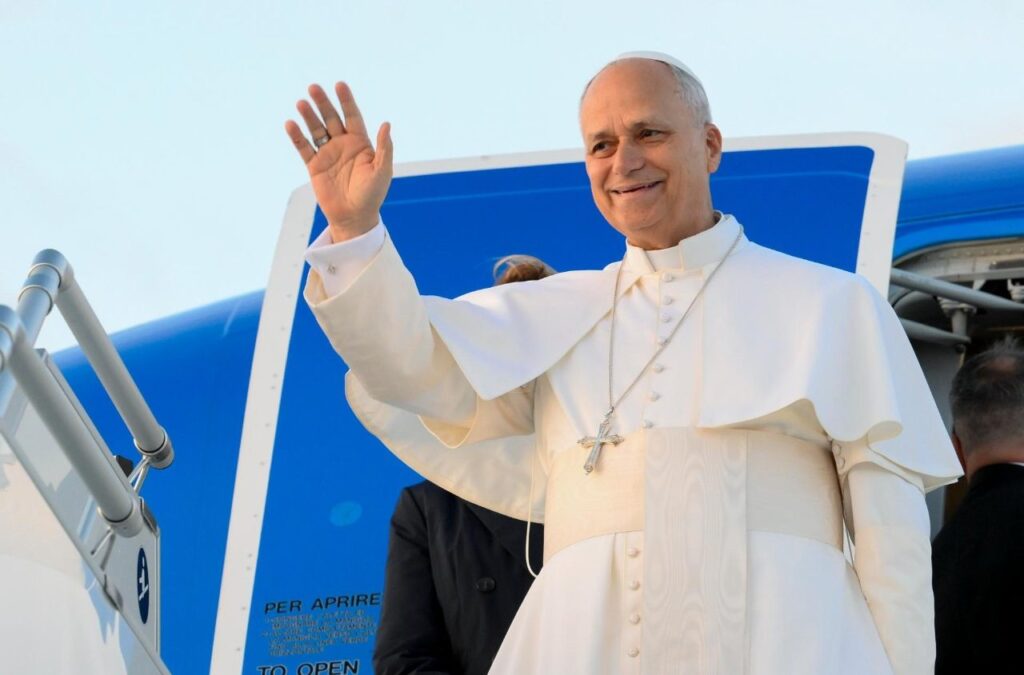
I stood among the concelebrating priests at Pope Leo’s Palm Sunday Mass in St. Peter’s Square. There, I watched the choreography of solemn ritual, spiritual power, and papal presence unfold. What caught my attention, as a Black Catholic priest, was the quieter symbolism at the altar. Two African priests were among the principal masters of ceremony at the Mass, which marks the beginning of Holy Week, the most sacred time in the Christian calendar. One sat at the Pope’s right hand, directing the rhythm of the liturgy. Another coordinated the concelebrating cardinals, bishops, and priests. These were positions of trust, proximity, and visibility. For me, this was not a passing detail—it was something I had never witnessed in any previous papacy. At many papal audiences now, an African priest also sits beside the Pope as one of his closest collaborators. These signs may seem small. But they are not small for African Catholics. They suggest a shift. They point to what I can only describe as the early contours of an Africa-first sensibility in the young papacy of Pope Leo. Despite what was often said about Pope Francis’s love for Africa, it remains striking that by the time he died, no African cardinal headed a dicastery in Rome. Africans made up barely 12 percent of the College of Cardinals, and key commissions often lacked African representation. Pope Leo has already begun to address this imbalance by appointing Africans to positions of real influence, including Monsignor Anthony Ekpo as assessor in the Secretariat of State and Father Edward Daleng, O.S.A., as Vice Regent of the Prefecture of the Pontifical Household, as well as other appointments across dicasteries and consultative bodies. It is, therefore, no surprise that Pope Leo’s longest and most consequential journey so far begins in Africa. The question is not only where he is going, but why and what it reveals about Africa’s place in the Church and in a world increasingly defined by fracture and violence. We live at a time when global attention is once again fixed on the Middle East, where fragile ceasefires conceal deeper and expanding conflicts. In such a moment, Africa risks being pushed to the margins of the world’s moral imagination, even as its own wars continue to displace millions and devastate communities. Pope Leo’s decision to begin his most ambitious journey on the continent is thus not accidental. It is a statement. Africa is not peripheral to Christianity—it is one of its birthplaces.\” Stan Chu Ilo First, Pope Leo recognizes that Africa is not peripheral to Christianity—it is one of its birthplaces. Long before Christianity took root in Europe, North Africa was already one of its great theological laboratories. In Algeria, he will walk in the footsteps of Augustine of Hippo, whose reflections on grace, freedom, unity, and the ethics of war helped shape the Church’s intellectual architecture. The debates that defined early Christianity were forged on African soil, in societies grappling with division, violence, and competing visions of the good life. Algeria itself tells a complex story. Once a center of vibrant Christian life, it is now a place where Christianity is a minority. This is a sobering reminder that demographic growth does not guarantee enduring presence. Europe, once the heartland of Christianity, now faces a different reality: empty pews, declining vocations, and widespread disaffiliation, especially among younger generations. Cultural Catholicism remains but often detached from institutional belonging. Many African Catholics, encountering this reality for the first time in Europe, are stunned. In Rome, even on Sundays, parishes are often sparsely filled. In Africa, by contrast, churches overflow. Seminaries and convents struggle to accommodate the growing number of candidates for the priesthood and religious life. But the question remains: will Africa’s current growth endure, or will it follow Europe\’s trajectory? Secondly, by choosing to visit Africa at this moment, Pope Leo is making a bold claim: Africa matters. Not only for the Church, but for the future of the world. With its demographic expansion and youthful population, Africa holds a key place in global development. African Christianity itself embodies immense cultural diversity, youthful energy, and the world\’s fastest-growing Catholic population, with 8.3 million new African Catholics recorded in the 2025 Church Book of Statistics. When Pope Paul VI visited Africa in 1969, he spoke of the continent’s deep spirituality and declared that the time had come for “an African Christianity.” That moment marked a turning point: an invitation for Africans not merely to receive the faith, but to shape it. Subsequent popes reinforced this call, urging African Christians to become missionaries to their own continent and to the wider world. Today, that vision is bearing fruit. African churches are now major sources of missionary vitality. Countries such as Nigeria, South Africa, and the Democratic Republic of Congo rank among the leading missionary-sending nations worldwide according to the State of the Great Commission’s Report. The faith that was once received from Western missionaries in Africa is now being reciprocated by African missionaries to Europe and North America. As Archbishop Fortunatus Nwachukwu of the Vatican’s Dicastery for Evangelization has described it, this is a “Church of the Sheaves,” a form of gift exchange and reverse mission in which the fruits of earlier missionary efforts sustain Christianity in regions where it is declining. And yet, this remarkable growth conceals a deeper paradox. The expansion of Christianity in Africa has not consistently translated into spiritual and cultural renewal and integral human development. Many African countries remain marked by fragile institutions, corruption, economic exclusion, and persistent insecurity. Across refugee settlements from East to West Africa, millions live in prolonged uncertainty, suspended between survival and hope. Religious life reflects this tension. Many Africans move between churches and other religious traditions, seeking healing, meaning, prosperity, and stability. The rise of Pentecostal and charismatic movements speaks to this hunger. They offer what has been described as a “factory of hope” for those abandoned by both state and society. This is not simply a challenge for the Catholic Church;
Will Pope Leo’s Africa-First Vision Go Beyond His Pilgrimage to Africa? Read More »