Pope Leo’s African Moment: A Prophetic Political Theology— A Test for African Bishops and Theologians, Part II
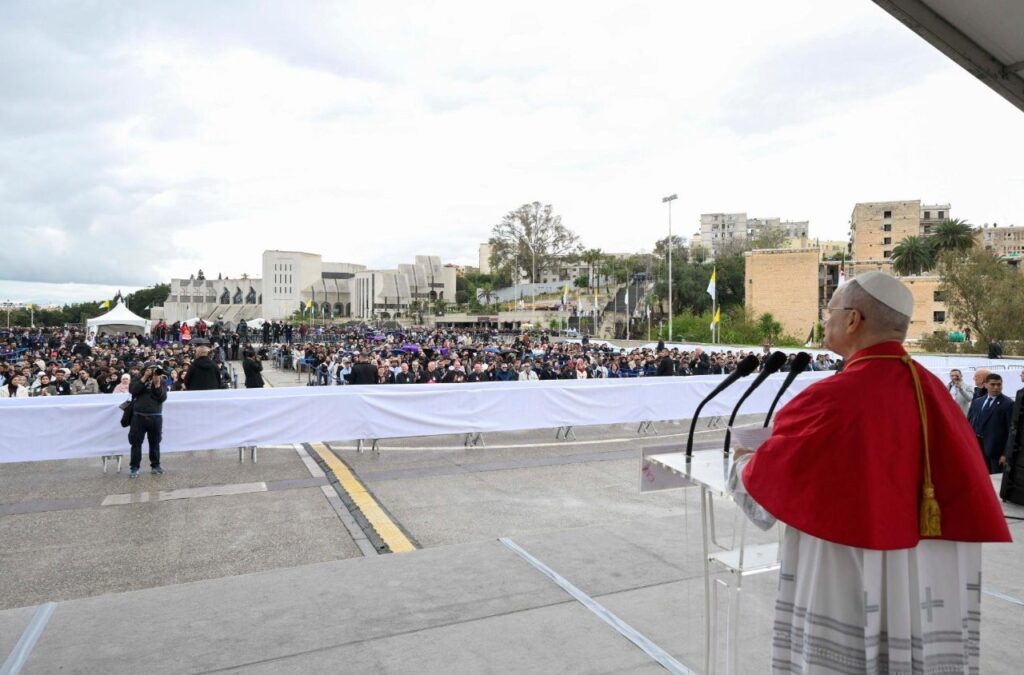
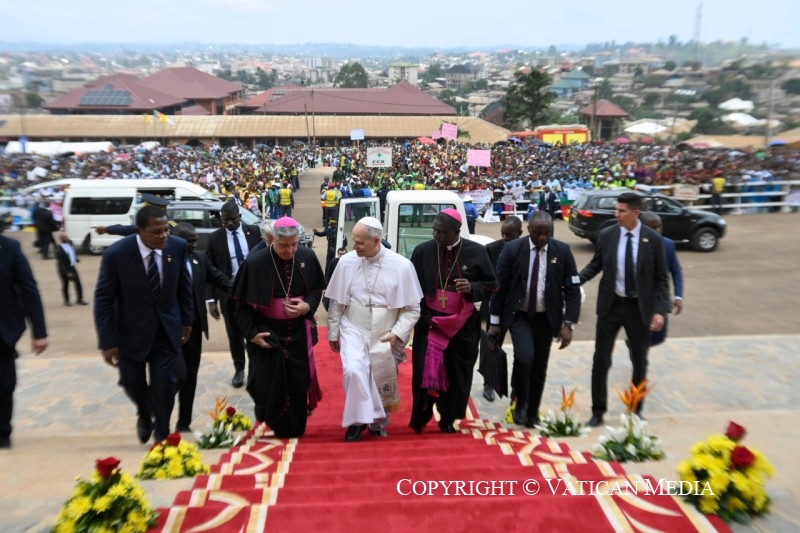
Pope Leo’s African moment is an epiphany, revealing to the Church and the world the kind of Pope God has given us. We are at the early stages of a papacy rooted in our ancient tradition and bold in proclaiming the truth of the faith with humility and joy. It is a papacy marked by deep respect for the many pathways and the diversity of cultures, races, nations, and religions that flow into the vast ocean of God’s mission, within which the Catholic Church carries on her fragile yet sacred vocation. What stands out most clearly in Pope Leo’s mission to Africa, amid today’s complex socio-political and ideological divisions, is his enunciation of a prophetic political theology. In this, he not only retrieves Catholic Social Teaching but applies it with remarkable boldness to the moral and spiritual crisis of our confused world, addressing national and global politics, the dignity and rights of all peoples, the ethics of war and peace, love of neighbor especially the poor and suffering, and offering a critique of the sinful structures of domination, corruption, and manipulation in defense of the common good. What is Pope Leo’s Prophetic Political Theology? This prophetic political theology, in Leo’s emerging usage, is not partisan theory, clerical statecraft, or papal overreach, as some whose consciences have been whipped by the prophetic sting from the mouth of the Pope might claim. Rather, it is a Gospel grounded reading of political life that makes an ethical judgment of the social order according to how far it is ordered to peace, justice, social friendship, truth, human dignity, the participation of all citizens, and the common good, while calling rulers, citizens, and institutions to conversion so that the reign of God may emerge in history. “The heart of this prophetic political theology is articulated through a closer reading of Pope Leo’s speeches and in-flight interviews during his ongoing pilgrimage of peace to Africa. ” — Stan Chu Ilo This prophetic political theology could be understood, I argue, through a set of interrelated questions about the right ordering of society in light of the Gospel, namely: How is authority and power exercised as a form of service, ordered to the common good and the flourishing of all, especially the poor and most vulnerable? How are structures of governance shaped to foster certain outcomes: participation, co-responsibility, and the dignity of every person in a spirit of communion akin to the African ubuntu? How are the diverse identities, interests, and aspirations of people discerned, reconciled, and integrated within a social order that respects difference while nurturing unity, solidarity, and social friendship? By what means are collaboration, coordination, and mutual accountability cultivated among persons, communities, and institutions, so that subsidiarity and solidarity work together in advancing the common good, shared purposes, and promoting human and cosmic flourishing? And how are questions of justice, equity, and fairness discerned in light of the dignity of the human person and the demands of the Gospel, so that social, economic, and political arrangements are rightly ordered, relationships are restored, and all people participate through their assets to building a society of abundant life for all where no one is excluded from the goods of creation? All these questions, I believe, can be understood within what I see as the Church’s preference for institutionalism as a political theory. Here, to borrow an idea from Lowndes, Marsh, and Stoker in Theory and Methods in Political Science, there is a focus on the “rules, norms, and values” that govern politics and governance, and on the institutions that regulate and promote the common life and the good of order. These norms are derived from natural law, divine positive law, the Gospel message, and the living Tradition and Magisterial teaching of the Church, discerned within history, human experience, and ecclesial life. They are universally applicable because they relate to the good of all human beings, whether they are Christians or not. However, in Pope Leo’s view, these values are not arbitrarily dictated, nor should the institutions that govern our common life locally or globally be imposed on the populace or the rest of the world by a few individuals or a few nations, and sustained by a tightly knit, narrow political class. “This is the problem in a country like Cameroon or Equatorial Guinea, where a thin top layer of the political class, or a cabal of patrons who has captured the state, as it were, turns statecraft into thievery, extraction, prebendalism, and extraversion, while using the state’s monopoly of violence to maintain tight control over a restive and disinherited masses who cry daily to God.” — Stan Chu Ilo This is also the challenge the world faces in America’s unilateralism or exceptionalism, where it uses its military or economic might to advance a narrow vision of history, spiced with a warped Christian eschatology that, sadly, has the ugly face of a new form of idolatry, having nothing to do with the reign of God, and the God of peace and love revealed to the world by our Lord Jesus Christ. Pope Leo is inviting the world and Christians to take away the robe of Christianity from right-wing white Christian nationalists, who wish to resurrect the ideals and projects of a defunct Christendom. “I think Pope Leo is inviting Christians to infuse their societies with Christian values rather than to dominate them through Christian politics or a Christian theocracy.” — Stan Chu Ilo From this perspective, it seems that Pope Leo invites the world to recognize that institutions of power should be continually renewed through reflective practices. This renewal should be informed by a social imagination that connects an understanding of people\’s daily joys and sorrows with the norms and ideals of good governance. These norms should arise from, resonate with, and address the social conditions to ensure that the social order is just, equitable, and promotes human security and the common good, which everyone should be able to access like a wellspring. How has Pope