Pan-African Catholic Theology and Pastoral Network

Pope Leo

Algeria as Mission Land Again: The Implication of Pope Leo’s Visit and the Future of Evangelization of North Africa

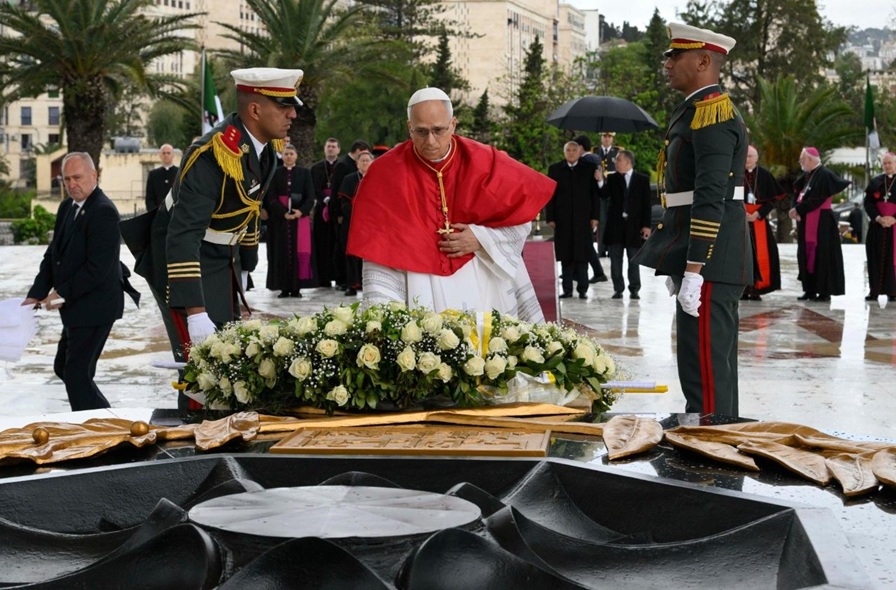
Pope Leo began his visit to Algeria with a deeply symbolic gesture: he visited the Maqam Echahid Martyrs’ Monument in Algiers to honor those who died in the struggle for independence. This site, overlooking the capital, is a sacred space of memory, sacrifice, and identity for the Algerian people. It commemorates the war of independence (1954–1962), when Algerians fought against French colonial rule, a system that had endured for over 130 years and left deep scars on the land and its people. The war was brutal and costly, with estimates of Algerian deaths ranging from several hundred thousand to over one million. It stands as one of the most painful chapters in the broader history of colonialism in Africa, where conquest, dispossession, and cultural humiliation often went hand in hand with violence and resistance. By beginning his Apostolic Visit here, Pope Leo places memory at the center of his pastoral and moral vision. His address at the monument can be read as a profound invitation to become bridge-builders in a world marked by historical ambiguities and tensions. Speaking as both brother and pastor, he situates Algeria within a layered history rich in faith, culture, and the legacy of Saint Augustine, yet also marked by violence and suffering. Rather than denying these tensions, he holds them together, urging reconciliation that does not erase the past but transforms it. At the heart of his message is a call to build bridges: between past and present, where the memory of sacrifice becomes a foundation for peace; between Christianity and Islam, where shared faith in God grounds fraternity; and between a painful history and a hopeful future, where forgiveness becomes the path forward. Peace, he insists, is not merely the absence of conflict but the fruit of justice, dignity, and healed hearts. “Pope Leo presents Algeria as a symbol of this possibility, a meeting place of cultures and religions where mutual respect enables coexistence. His broader papal vision emerges clearly: humanity must resist cycles of resentment, retribution, and violence and instead embrace a spirituality of reconciliation by encountering others as friends, not enemies.” — Stan Chu Ilo In invoking the Beatitudes, he defines true freedom and progress not in terms of power or wealth, but in terms of mercy, justice, love, and the difficult, enduring work of peacemaking. The Legacy of Saint Augustine and of Christian Persecution in Algeria In his inaugural address following his election, Pope Leo called himself a “son of Augustine.” From the outset of his pontificate, he expressed a deep desire to visit the ancient city of Hippo, where Saint Augustine spent most of his life as a bishop, pastor, and theologian, producing some of the most enduring works in Christian history. His visit to the ruins of this once-great Christian center was therefore not only personal but also profoundly symbolic. Standing in Annaba, the modern city that has replaced Hippo, one cannot help but wonder how such a vibrant Christian community could have faded so dramatically from history. The answer lies in a complex, layered history. The decline of Christianity in North Africa began well before the arrival of Islam, weakened by internal divisions such as the Donatist controversy and the socio-political fragmentation of the late Roman world. The Vandal invasion of the fifth century further destabilized the region, even though Christianity endured. The Arab Muslim conquest of the seventh century gradually reshaped the religious and cultural landscape, not through a single moment of eradication but through a long process of social transformation, conversion, and integration. Later, under Ottoman rule from the sixteenth century, the region became firmly integrated into the wider Islamic world. What we see, therefore, is not a simple story of disappearance but a slow, complex transition in which Christianity, once dominant, became a minority presence. “For some Christians, the story of Hippo may serve as a cautionary tale about the fragility of Christian civilization when it is not deeply rooted in the life, culture, and witness of the people. Yet Pope Leo does not approach this history with fear or nostalgia but with theological depth and pastoral realism.” — Stan Chu Ilo His homily at the Basilica of Saint Augustine in Annaba, the ancient Hippo, can be read as a powerful act of bridge-building across time, memory, and faith. By celebrating Mass at this historic site, once a flourishing center of Christianity and now a predominantly Muslim city, the Pope embodies the Church’s vocation to hold past and present together without denial or romanticism. Augustine’s Hippo reminds us that history is marked by both continuity and rupture. The visible structures of Christian dominance may have faded, yet the deeper witness of faith endures. In this sense, the Church, though a small flock, stands like a mustard seed, quiet and hidden yet alive and fruitful, able to proclaim God’s love beyond its own boundaries. Drawing on the Gospel encounter with Nicodemus, Pope Leo frames the Christian mission as a continual “rebirth from above,” a renewal that is both personal and historical. This renewal is not an escape from history’s wounds but a transformation of them through grace. It is a call to begin again, even in places where the past seems to speak more of loss than of promise. This message carries particular weight when read alongside Algeria\’s more recent history. During the Black Decade of the 1990s, Algeria endured a brutal civil conflict in which extremist violence claimed many lives, including nineteen Catholic religious, among them a bishop, priests, and women religious, who were killed between 1992 and 1996. Pope Leo recalled their witness as a testimony of fidelity and love, not only to the Church but also to the Algerian people among whom they chose to remain. Their beatification in 2018 at the Shrine of Our Lady of Santa Cruz in Oran stands as a living memory of suffering, as well as of hope and reconciliation. In his encounters with the Catholic community, the Augustinian sisters, and representatives of civil society, Pope Leo
Algeria as Mission Land Again: The Implication of Pope Leo’s Visit and the Future of Evangelization of North Africa Read More »

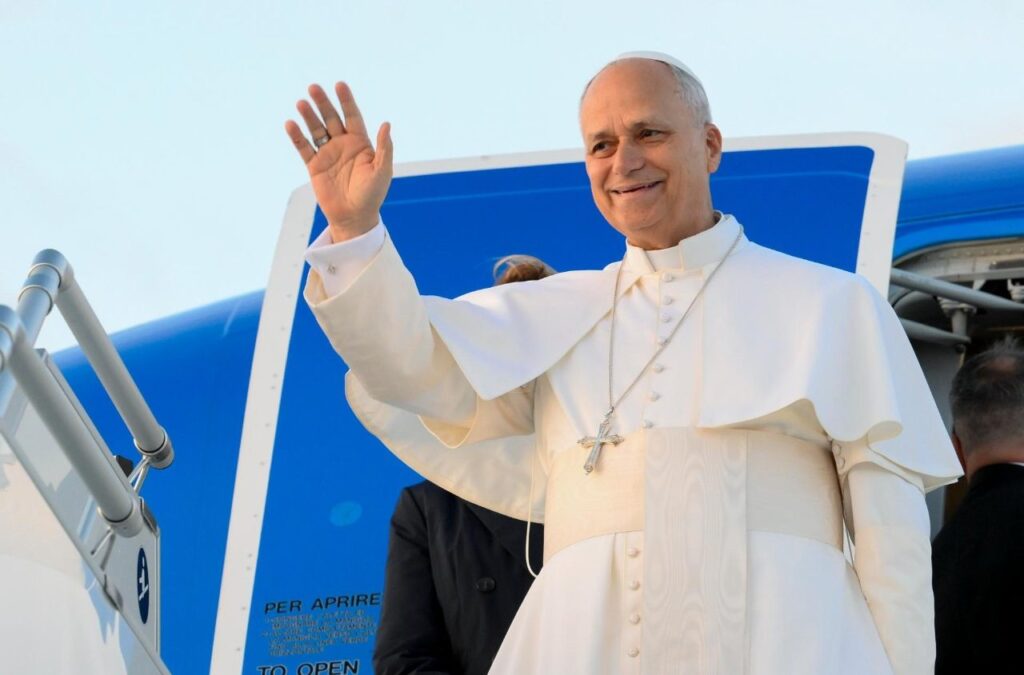
Will Pope Leo’s Africa-First Vision Go Beyond His Pilgrimage to Africa?

I stood among the concelebrating priests at Pope Leo’s Palm Sunday Mass in St. Peter’s Square. There, I watched the choreography of solemn ritual, spiritual power, and papal presence unfold. What caught my attention, as a Black Catholic priest, was the quieter symbolism at the altar. Two African priests were among the principal masters of ceremony at the Mass, which marks the beginning of Holy Week, the most sacred time in the Christian calendar. One sat at the Pope’s right hand, directing the rhythm of the liturgy. Another coordinated the concelebrating cardinals, bishops, and priests. These were positions of trust, proximity, and visibility. For me, this was not a passing detail—it was something I had never witnessed in any previous papacy. At many papal audiences now, an African priest also sits beside the Pope as one of his closest collaborators. These signs may seem small. But they are not small for African Catholics. They suggest a shift. They point to what I can only describe as the early contours of an Africa-first sensibility in the young papacy of Pope Leo. Despite what was often said about Pope Francis’s love for Africa, it remains striking that by the time he died, no African cardinal headed a dicastery in Rome. Africans made up barely 12 percent of the College of Cardinals, and key commissions often lacked African representation. Pope Leo has already begun to address this imbalance by appointing Africans to positions of real influence, including Monsignor Anthony Ekpo as assessor in the Secretariat of State and Father Edward Daleng, O.S.A., as Vice Regent of the Prefecture of the Pontifical Household, as well as other appointments across dicasteries and consultative bodies. It is, therefore, no surprise that Pope Leo’s longest and most consequential journey so far begins in Africa. The question is not only where he is going, but why and what it reveals about Africa’s place in the Church and in a world increasingly defined by fracture and violence. We live at a time when global attention is once again fixed on the Middle East, where fragile ceasefires conceal deeper and expanding conflicts. In such a moment, Africa risks being pushed to the margins of the world’s moral imagination, even as its own wars continue to displace millions and devastate communities. Pope Leo’s decision to begin his most ambitious journey on the continent is thus not accidental. It is a statement. Africa is not peripheral to Christianity—it is one of its birthplaces.\” Stan Chu Ilo First, Pope Leo recognizes that Africa is not peripheral to Christianity—it is one of its birthplaces. Long before Christianity took root in Europe, North Africa was already one of its great theological laboratories. In Algeria, he will walk in the footsteps of Augustine of Hippo, whose reflections on grace, freedom, unity, and the ethics of war helped shape the Church’s intellectual architecture. The debates that defined early Christianity were forged on African soil, in societies grappling with division, violence, and competing visions of the good life. Algeria itself tells a complex story. Once a center of vibrant Christian life, it is now a place where Christianity is a minority. This is a sobering reminder that demographic growth does not guarantee enduring presence. Europe, once the heartland of Christianity, now faces a different reality: empty pews, declining vocations, and widespread disaffiliation, especially among younger generations. Cultural Catholicism remains but often detached from institutional belonging. Many African Catholics, encountering this reality for the first time in Europe, are stunned. In Rome, even on Sundays, parishes are often sparsely filled. In Africa, by contrast, churches overflow. Seminaries and convents struggle to accommodate the growing number of candidates for the priesthood and religious life. But the question remains: will Africa’s current growth endure, or will it follow Europe\’s trajectory? Secondly, by choosing to visit Africa at this moment, Pope Leo is making a bold claim: Africa matters. Not only for the Church, but for the future of the world. With its demographic expansion and youthful population, Africa holds a key place in global development. African Christianity itself embodies immense cultural diversity, youthful energy, and the world\’s fastest-growing Catholic population, with 8.3 million new African Catholics recorded in the 2025 Church Book of Statistics. When Pope Paul VI visited Africa in 1969, he spoke of the continent’s deep spirituality and declared that the time had come for “an African Christianity.” That moment marked a turning point: an invitation for Africans not merely to receive the faith, but to shape it. Subsequent popes reinforced this call, urging African Christians to become missionaries to their own continent and to the wider world. Today, that vision is bearing fruit. African churches are now major sources of missionary vitality. Countries such as Nigeria, South Africa, and the Democratic Republic of Congo rank among the leading missionary-sending nations worldwide according to the State of the Great Commission’s Report. The faith that was once received from Western missionaries in Africa is now being reciprocated by African missionaries to Europe and North America. As Archbishop Fortunatus Nwachukwu of the Vatican’s Dicastery for Evangelization has described it, this is a “Church of the Sheaves,” a form of gift exchange and reverse mission in which the fruits of earlier missionary efforts sustain Christianity in regions where it is declining. And yet, this remarkable growth conceals a deeper paradox. The expansion of Christianity in Africa has not consistently translated into spiritual and cultural renewal and integral human development. Many African countries remain marked by fragile institutions, corruption, economic exclusion, and persistent insecurity. Across refugee settlements from East to West Africa, millions live in prolonged uncertainty, suspended between survival and hope. Religious life reflects this tension. Many Africans move between churches and other religious traditions, seeking healing, meaning, prosperity, and stability. The rise of Pentecostal and charismatic movements speaks to this hunger. They offer what has been described as a “factory of hope” for those abandoned by both state and society. This is not simply a challenge for the Catholic Church;

Will Pope Leo’s Africa-First Vision Go Beyond His Pilgrimage to Africa? Read More »