Origen

The Sahel at Risk: Mali’s Experience and Dangers of a Divided Sahel

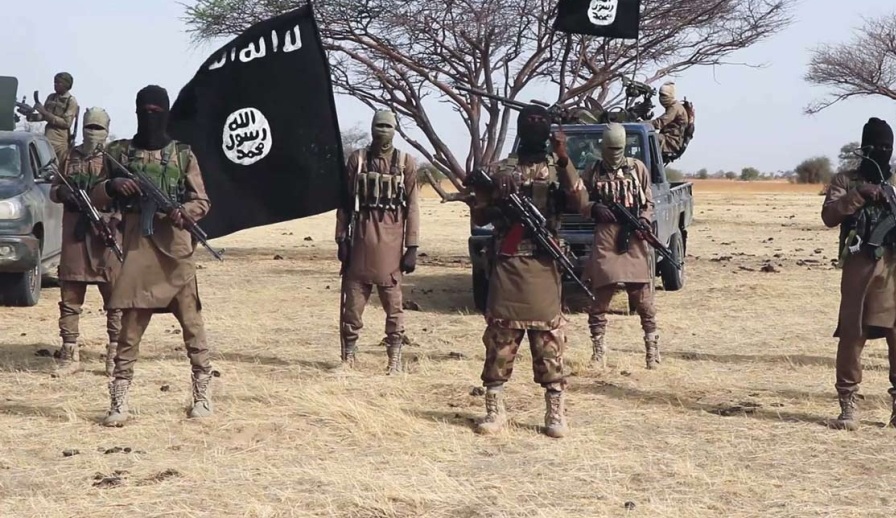
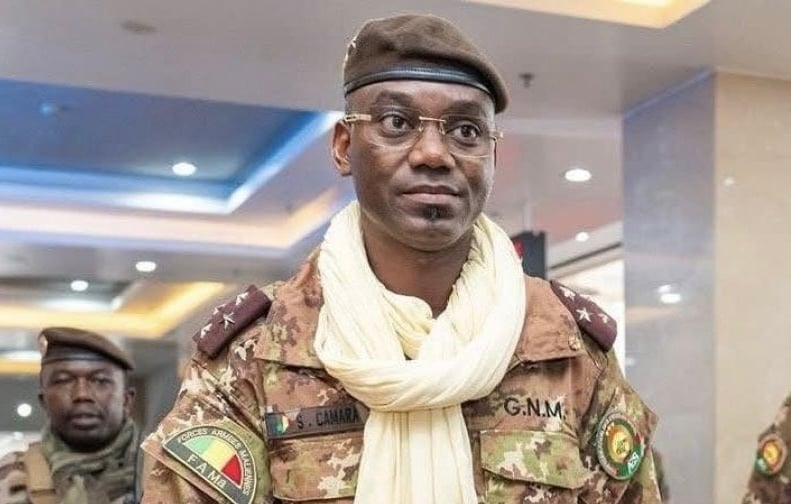
The devastating surprise attack on April 25th, which ransacked part of Mali and reportedly claimed the life of Defence Minister General Sadio Camara, has ignited profound fear over the rapidly evolving nature of terrorism in the Sahel. Previously fragmented rebel groups like Jama ‘at Nusrat al-Islam wal-Muslimin (JNIM) and the Front de Libération de Azawad – Azawad Liberation Front (FLA), once bitter rivals, have joined forces to seize territory across the region during the April 25th attack. What is most troubling is that as terrorists unite and expand their reach, the Sahel nations remain deeply divided and continue to lose ground despite the efforts of the authorities to contain the violence. “As terrorist groups coordinate across borders, the Sahelian states remain politically fragmented and militarily overstretched.” — Augustine Anwuchie A Crisis Rooted in Historical Grievances and Structural Collapse The crisis in Mali is not limited to terrorism but has its roots in historical grievances, corruption and structural collapse. The origins of the crisis date back to 2012, when Tuareg rebels allied with Jihadist groups to launch an armed rebellion for an independent state of Azawad in the Northern region. This instability prompted the 2013 French military intervention, culminating in the launch of Operation Serval, which later evolved into Operation Barkhane in 2014 and finally led to a peace agreement with the Forces of Liberation of Azawad in 2015. However, years of political corruption in Bamako and the failure of French Forces to successfully eradicate the insurgency fuelled intense anti-French sentiment and widespread domestic frustration. This political instability culminated in a 2021 military coup led by Assimi Goïta, whose nationalist junta eventually expelled French forces and, by 2024, officially abrogated the 2015 peace accord. The collapse of the peace framework contributed to an emerging ethno-political alliance between JNIM and the Front de Libération de l’Azawad (FLA), who launched coordinated attacks across parts of Bamako, Kati, Gao, Mopti and Sevare on 25th April 2026. Mali now faces a severe dual crisis, simultaneously battling the Tuareg Azawad separatists and the jihadist insurgency seeking Islamic rule. While the military government in Bamako accuses France of engineering the latest attack in an attempt to overthrow the government, an allegation France denies, the security situation on the ground remains highly volatile. Despite government claims of control, recent suspected Al-Qaeda attacks in Mopti killed 50 villagers, highlighting the extreme difficulty of combating an asymmetric enemy that has heavily infiltrated the local population. The Dangers of a Fragmented Sahel The Sahel has emerged as a global epicentre of terrorism, now accounting for 51% of all terrorism-related deaths globally. The region is ravaged by an array of insurgent groups, including the FLA, JNIM, and the Islamic State Sahel Province (ISSP/ISGS). This threat is rapidly expanding southwards into the coastal regions of Benin and Togo. At the same time, landlocked Burkina Faso faces multi-front assaults, and the Niger Republic simultaneously battles distinct terrorist factions across its western, southwestern and southeastern borders. A recent example of this volatility was on May 4th, when Boko Haram attacked a military base in the Barka Toloron region of Lake Chad, killing 23 soldiers and injuring 26 others. Compounding this crisis is the growing and dangerous pattern of collaboration among these terrorist factions, who are actively exploiting regional instability to seize control of vast territories. “The Sahel now accounts for more than half of all terrorism-related deaths globally.” — Augustine Anwuchie According to Peter Bouckaert, a senior director at Fortify Rights, the Sahel currently represents the greatest opportunity for the worldwide jihadist movement. The purely military solution to the rise of these insurgent groups, as well as operations involving heavy-handed tactics or military massacres of civilians and young men, has driven aggrieved local populations directly into the arms of jihadist movements for protection or retaliation, thereby fuelling the cycle of recruitment and violence. This vulnerability is driven by a combination of weak regional governments, a climate-related food crisis, and the security vacuum left by the withdrawal of French forces, which previously held these Islamist groups at bay. Bouckaert warns that, without urgent intervention, the region will face the severe threat of a Somalia-like state collapse, jeopardizing both regional and global security. Ultimately, the fight against terrorism is severely hampered by deep political fractures as the region is split between the newly formed Alliance of Sahel States (AES), comprising Mali, Niger and Burkina Faso, and the ECOWAS bloc. “A divided Sahel risks becoming a permanent corridor of insurgency stretching across West Africa.” — Augustine Anwuchie While a strong and united Sahel could fundamentally change the course of the war, the deep-seated distrust, dirty politics, corruption, and regional ego make this impossible. If the Sahelian governments do not put aside their divisions and unite against this expanding network of armed extremist groups, the region risks devolving into a highly fractured zone of competing terrorist factions, mirroring the long-term instability of the Middle East.

The Sahel at Risk: Mali’s Experience and Dangers of a Divided Sahel Read More »
South Africa: Xenophobic attacks and the dwindling fortune of Pan-Africanism

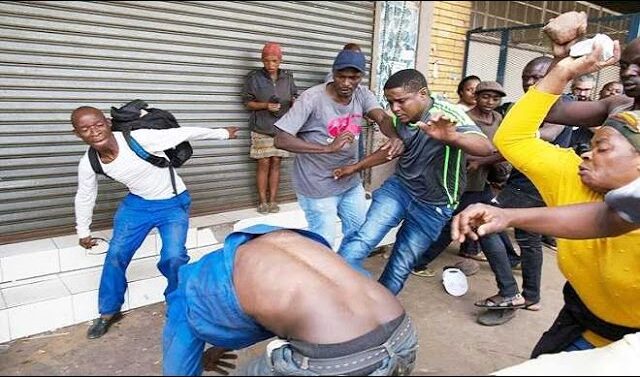
The resurgence is stark; its echoes cast a long shadow over Africa’s rising indices of conflict, violence, and division. In the recent spate of xenophobic attacks, a growing number of young South Africans are sending a clear message: migrants—predominantly from neighboring African nations—are not welcome. Critics accuse foreigners of displacing local labor, escalating crime rates, and, in many instances, residing in the country illegally. These voices are more than mere statements; they reveal a deep-seated perception of African migrants as convenient mirrors reflecting the country’s internal socio-economic failures. What began as a digital war of words has spiraled into physical violence, targeted assaults, and the tragic loss of life. Disturbing footage shows groups storming hospitals and schools in search of foreigners, looting shops, and demanding that migrants leave the country immediately. Scores have been killed, and many more left homeless over the past few weeks. President Cyril Ramaphosa has condemned the attacks, insisting that South Africans must choose the rule of law over mob violence while vowing to hold perpetrators accountable. More than scapegoating foreigners: A crisis rooted in structural failures There are legitimate concerns among young South Africans regarding the strain on public resources, rising crime, and collapsing infrastructure—evidenced by overcrowded classrooms and clinics, poor regulation, and the prevalence of drug and human trafficking. However, beneath these grievances lies a more profound structural reality. While xenophobia in South Africa is rooted in a complex weave of historical, economic, and political factors, the primary driver remains economic frustration among the poor, exacerbated by extreme inequality and governance failures. South Africa remains gripped by profound economic inequality, most visibly manifested in staggering rates of youth unemployment. The unfulfilled promises of the post-apartheid era, contrasted with the perceived success of migrant-owned small businesses—often operating at lower costs and within strong networks—have fueled a volatile mixture of resentment and frustration. Political actors and influencers often exploit the situation, either by fueling inflammatory rhetoric or remaining silent when firm condemnation is required. Patterns of xenophobia in South Africa also reflect unresolved questions of social identity and “othering,” reinforcing a strong “us versus them” mindset that casts migrants as outsiders—even though they are fellow Africans. South African youth are often labeled as entitled, lazy, or unskilled, but many reject this characterization, arguing that they are being blamed for a crisis they did not create. Theoretical analysis unveiling the deeper forces at play This hostility toward foreigners has crystallized into socio-psychological patterns that align with \”structural functionalism\” and \”realist conflict theory.\” From a structural functionalist perspective, South Africa’s social system is under significant strain. When institutions fail to provide stability, the social organism reacts with dysfunction. Rather than addressing the structural roots of the crisis, the most vulnerable members of society—migrants—are scapegoated for broader systemic failures. Xenophobic patterns can also be interpreted through the lens of realist conflict theory, which posits that competition over scarce resources leads to prejudice, discrimination, and hostility. In many ways, xenophobia is a rebranded form of apartheid. While the legal framework of apartheid was dismantled, its shadows continue to loom over modern social identities and divisions. Nationalism vs Pan-Africanism The current wave of violence leaves South Africa caught between narrow nationalist expressions and upholding the sacred tenets of Pan-Africanism. During the struggle against apartheid, South Africa relied heavily on the collective goodwill and solidarity of Pan-African allies. Nigeria gave heavy financial aid, moral and political support to black South Africans anti-apartheid struggle, while revolutionary icons such as Oliver Tambo and Chris Hani were famously welcomed and shielded during their exile in Zambia and other African nations. While the South African government must address the grievances of protesters, the core factors driving tension are structural and extend far beyond the presence of migrants. As wave of anti-immigration protests erupts across the globe, the voice of Pope Leo speaks to us in strong note, insisting that migrants should be treated with dignity and humanity. The crisis unfolding in South Africa serves as a wake-up call not only for the country itself but for all African leaders regarding the urgency of nation-building and true economic independence. It also calls on leaders to promote tolerance, unity, and solidarity across the continent, particularly at a time when global attention is focused on Africa’s internal divisions.

South Africa: Xenophobic attacks and the dwindling fortune of Pan-Africanism Read More »

\”La miséricorde de Dieu dépasse même nos choix de mort\”, affirme le nonce à Niamey

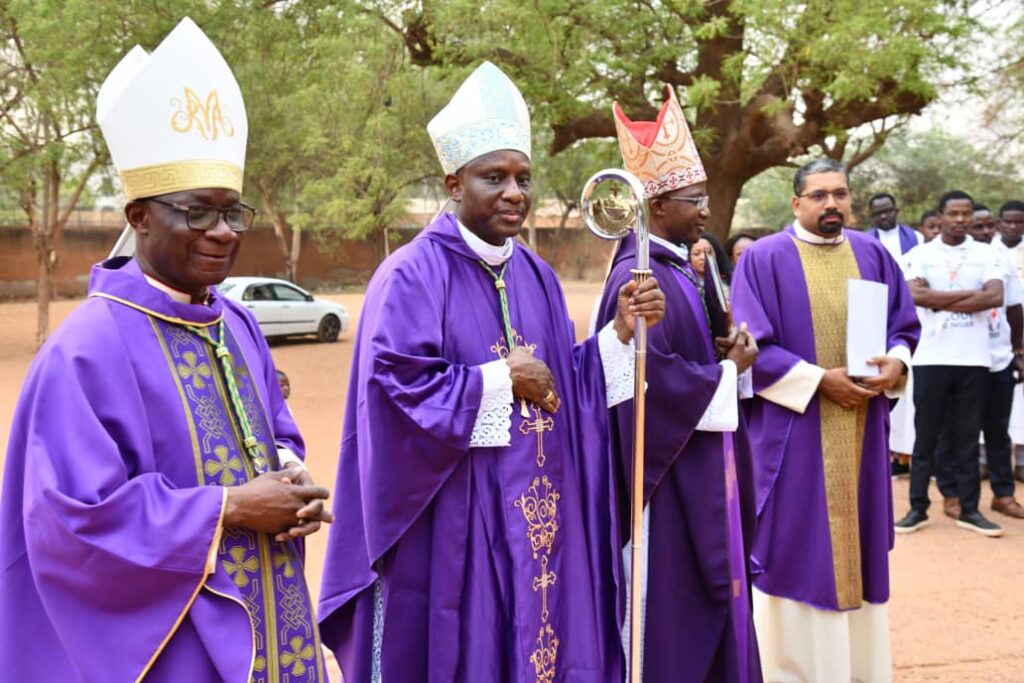
Niamey, Niger — Ce fut un moment de joie et d’accueil chaleureux lorsque Son Excellence, Mgr Éric Suiviguidi, nonce apostolique pour le Burkina Faso et le Niger, a effectué une visite à Niamey du 22 au 25 mars afin de présenter ses lettres de créance au président Abdourahamane Tiani. Lors de la messe qu’il a présidée le mardi 23 mars, le nonce a prononcé une homélie marquée par le paradoxe entre le choix humain et la miséricorde divine. \”Parfois, nous faisons des choix qui mènent à la mort, mais malgré cela, nous avons un Dieu dont la miséricorde dépasse nos choix de mort\”, a-t-il déclaré, rappelant aux fidèles l’amour constant de Dieu, même face à la fragilité humaine. “Même lorsque nos choix nous éloignent de Dieu, sa miséricorde ne cesse jamais de nous chercher” — Mgr Éric Suiviguidi Il a également médité sur la crucifixion du Christ, soulignant que Jésus appelle tous les hommes à Lui. \”Jésus n’est pas seulement la Parole de Dieu, mais Dieu Lui-même\”, a-t-il affirmé, insistant sur l’exigence de la foi : \”Soit vous croyez en Jésus, soit vous le rejetez. Il n’y a pas d’intermédiaire.\” Le nonce a encouragé les chrétiens à persévérer malgré les épreuves. Il a reconnu que l’Église au Niger traverse d’importants défis, mais a exhorté les fidèles à ne pas se laisser décourager. S’inspirant de l’histoire des Israélites, il a invité chacun à revenir vers Dieu par la repentance, en ayant confiance en sa guérison et en sa fidélité. Une mission au cœur du lien entre l’Église et l’État Après l’homélie, Mgr Laurent Lompo, archevêque métropolitain de Niamey, a remercié le nonce pour sa visite. Il a rappelé que le nonce représente une « double mission » : Celle du Saint-Siège auprès de l’Église locale, mais aussi auprès de l’État nigérien. Il a également salué la présence de Mgr Ignatius Anipu, évêque de Maradi, ainsi que celle des nombreux fidèles venus accueillir le représentant du pape. Éclairage canonique sur la visite du nonce L’abbé Wilfred Agbanglanon, canoniste diocésain, a expliqué que la présentation des lettres de créance constitue une étape essentielle dans la mission d’un nonce apostolique. \”Lorsqu’un nonce est nommé, il doit présenter ses lettres de créance avant d’exercer officiellement sa mission. Cela établit un lien officiel entre le Saint-Siège, l’État et l’Église locale\”, a-t-il précisé. Selon lui, ce cadre permet à l’Église d’être reconnue juridiquement, d’exercer ses droits et de bénéficier d’une protection institutionnelle, tout en respectant les lois de l’État. La présence du nonce renforce ainsi ce lien diplomatique et pastoral. “Le nonce est le signe visible d’un lien vivant entre Rome, l’Église locale et la nation. ” — Abbé Wilfred Agbanglanon Réactions pastorales et témoignages Pour de nombreux fidèles, cette visite a été une source de consolation et d’espérance. David Sagnan, venu de la région de Makalondi, zone fortement touchée par l’insécurité, témoigne : \”C’est une visite très importante pour nous. Le fait que le nonce vienne jusqu’à nous, au nom du Saint-Père, nous donne du courage. Les fidèles dispersés se sentent soutenus. Cela nous rassure profondément.\” Le père Flavian Akpo, curé de la paroisse Saint Augustin de Bobiel, voit dans cette visite \”Une véritable manifestation de la proximité de l’Église\”. \”Cela montre que nous ne sommes pas abandonnés. L’Église reste proche et porte ses fidèles dans la prière\”, a-t-il ajouté. Pour sœur Anastasie, religieuse de Notre-Dame du Perpétuel Secours et directrice de l’École Canada Garçons, cette rencontre est une grâce particulière : \”C’est la première fois que je rencontre un nonce en personne. C’est une grande joie d’échanger avec lui et de recevoir ses conseils.\” Elle souligne également la dimension fraternelle de cette visite : \”C’est une bénédiction pour notre Église. Ce nonce est africain, c’est notre frère. Il nous promet sa proximité, ses prières et sa collaboration.\” Sur le terrain : une atmosphère de joie et d’hospitalité Au-delà des moments officiels, la visite s’est aussi vécue dans la simplicité des rencontres : salutations, échanges spontanés, discussions entre prêtres, religieux et fidèles. Dans ces moments de proximité s’est manifestée une Église vivante, fraternelle et solidaire. “Dans un contexte d’épreuve, la présence de l’Église devient un signe concret d’espérance. ” — Augustine Anwuchie Une visite pas comme les autres Dans un contexte marqué par l’insécurité et l’incertitude, la visite du nonce apostolique apparaît comme un signe fort : celui d’une Église qui ne se retire pas, mais qui s’approche. Proximité du Saint-Siège, reconnaissance institutionnelle et encouragement pastoral convergent vers une même réalité : une espérance fragile, mais bien vivante.

\”La miséricorde de Dieu dépasse même nos choix de mort\”, affirme le nonce à Niamey Read More »

À Niamey, la foi tient bon sous le soleil et face à l’épreuve

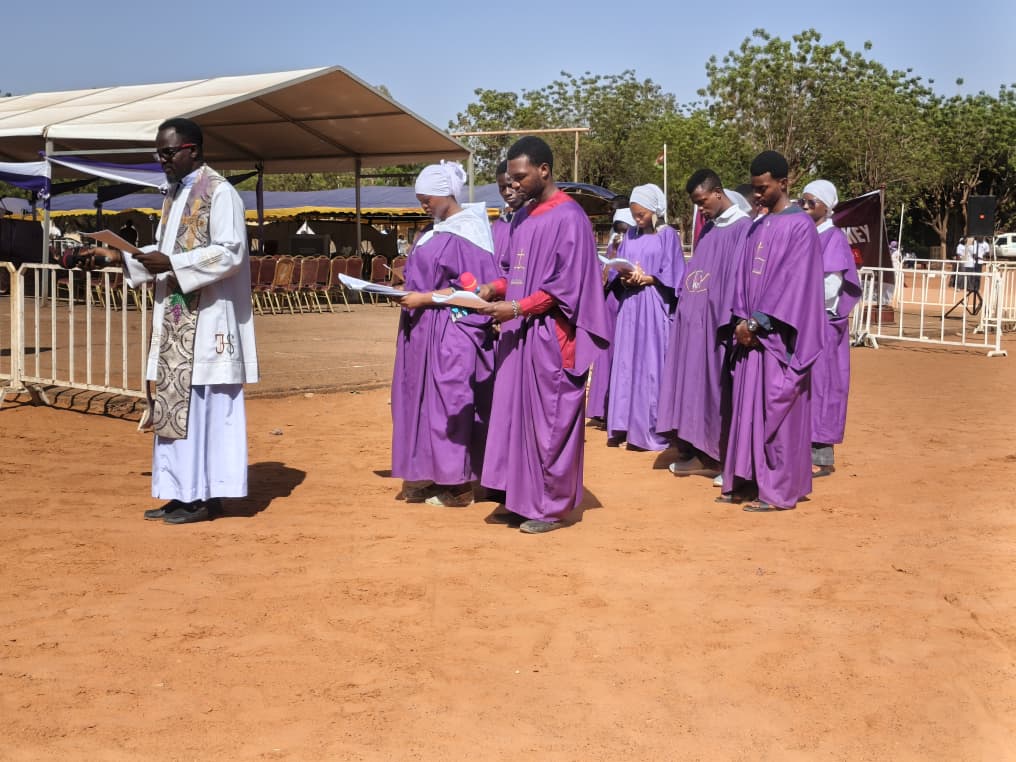
Le dimanche 23 mars n’était pas une journée comme les autres. Pour les catholiques de l’archidiocèse de Niamey, au Niger, il représente un moment profondément symbolique : leur pèlerinage annuel de Carême. Quelques jours après la période du Ramadan, les catholiques — minoritaires dans un pays à majorité musulmane — se sont rassemblés non pas pour se faire remarquer, mais pour marcher ensemble lors d’une journée de foi, de pénitence et de prière. Pour beaucoup, ce pèlerinage est une source de grâces : réconciliation, conversion, espérance et renouveau intérieur. “Dans un pays marqué par l’épreuve, la foi devient un chemin de résistance, de conversion et d’espérance.” — Augustine Anwuchie Organisé dans l’enceinte du Collège Mariama, la première école missionnaire fondée par les sœurs canadiennes de la Congrégation de Notre-Dame du Perpétuel Secours, le pèlerinage a débuté à 8 h et s’est achevé par une messe célébrée à 16 h. Une foule qui choisit la prière plutôt que le confort En cette saison où la chaleur au Niger peut atteindre 41 degrés, les fidèles ont défié le soleil brûlant. Très vite, la température a cessé d’être un obstacle : seule comptait la prière. Le site s’est rempli de pèlerins venus de toute la région : catholiques de Niamey, fidèles des villages environnants, expatriés, migrants, mais aussi des personnes déplacées par l’insécurité dans les zones frontalières du Sahel — Niger, Burkina Faso et Mali. Prêtres, religieux, religieuses, ainsi que l’archevêque de Niamey et l’évêque de Maradi étaient également présents. La journée s’est déroulée comme un véritable chemin spirituel : confessions, chemin de croix, accompagnement pastoral, adoration eucharistique et célébration de la messe. Une prière commune s’est élevée vers Dieu, implorant justice, paix et secours pour un pays confronté aux attaques jihadistes, notamment dans la région de Tillabéry, ainsi qu’aux difficultés économiques liées aux sanctions et aux tensions régionales. “Sous le soleil brûlant, ce n’était plus la chaleur qui dominait, mais la force de la prière et de la communion.” — Augustine Anwuchie Des voix qui portent l’espérance, la foi et la charité L’archevêque de Niamey, Monseigneur Laurent Lompo, a expliqué à VoiceAfrique que ce pèlerinage a été institué pour fortifier la foi des fidèles pendant le Carême et renforcer leur communion. « Ce pèlerinage concerne le secteur de Niamey, car l’insécurité ne permet pas de rassembler tout le diocèse », a-t-il précisé. « Cette année, nous méditons sur la justice à travers notre thème pastoral : Église, Famille de Dieu, dans l’espérance, soyez artisans de paix et de justice. » Pour lui, cette mobilisation témoigne d’un engagement concret des fidèles à construire la paix dans leur pays. « Comme tout pèlerinage, il s’agit de transformer la foi, de fortifier les vertus de la foi, de l’espérance et de la charité. Dans un contexte marqué par l’insécurité et les difficultés économiques, l’espérance devient essentielle pour ne pas perdre la foi. » S’appuyant sur la lecture du jour, il a évoqué le prophète Ézéchiel, qui appelait un peuple en exil à ne pas se décourager. « Dieu reste source de consolation et de force. » Il a également souligné l’importance de la solidarité envers les personnes déplacées : « Certains arrivent ici fatigués, éprouvés, parfois au bord du découragement. Mais en voyant qu’ils sont accueillis, soutenus et accompagnés, ils repartent fortifiés. » L’évêque de Maradi, Monseigneur Ignatius Anipu, a également salué la profonde spiritualité de cette rencontre. « Voir autant de fidèles engagés dans les dévotions populaires témoigne d\’une vraie soif de Dieu. C’est un appel à l’Église de les accompagner davantage. » Il espère que ce type d’initiative pourra inspirer son diocèse et encourager les fidèles à rester fermes malgré les difficultés. Parmi les participants, Mme Perpétue Félicy, présente pour la troisième fois, témoigne : « Ce pèlerinage me donne la paix, l’amour et le sens de la cohésion. Nous avons prié pour cela, et je crois que nous en avons vraiment reçu les fruits. » Elle a été particulièrement touchée par la présence de personnes déplacées venues notamment de Makalondi et de Siloé : « Le fait que la messe soit traduite en zarma, en haoussa et en gourmantché leur permet de se sentir pleinement intégrés. C’est très beau à voir. » Kosi, jeune pèlerin de 23 ans, souligne l’impact spirituel : « Les confessions permettent de se réconcilier avec Dieu. Les enseignements nourrissent l’âme. Et c’est aussi un moment pour retrouver d’autres personnes. » Selon le père Mathew Agbai, prêtre Fidei Donum originaire du Nigeria, l’accessibilité de ce pèlerinage est d\’autant plus importante : « Parce que beaucoup de croyants ne peuvent pas aller à Rome ou à Lourdes, ce pèlerinage local leur offre une véritable grâce spirituelle. » Il souligne aussi son importance pour les déplacés : « C’est un espace où ils sont vus, écoutés et soutenus, spirituellement comme matériellement. » Un moment de joie et de gratitude À la tombée du soir, l’atmosphère s’est transformée. Dans une joie visible, des milliers de pèlerins ont quitté le Collège Mariama, portant avec eux des messages d’espérance, de paix et de renouveau. “Même au cœur de l’insécurité, la foi continue de rassembler, de faire prier et de faire espérer.” — Augustine Anwuchie Ce n’était pas seulement un pèlerinage, mais aussi une rencontre et un moment de communion et de solidarité. Dans un pays marqué par l’insécurité et les épreuves, la foi continue de rassembler, de faire prier et de faire espérer.

À Niamey, la foi tient bon sous le soleil et face à l’épreuve Read More »

Inside Nigeria’s Terror Architecture

During an appearance on Head-to-Head on Al Jazeera on March 7, Daniel Bwala, Special Adviser on Policy Communication to President Bola Ahmed Tinubu, argued that Nigeria’s insecurity must be understood within its “context.” Yet for many Nigerians, the lived context is unmistakable: a country where kidnappings, bandit attacks, insurgent violence, and mass killings have become recurring features of daily life. “For millions of Nigerians, ‘context’ is not a theory—it is a daily experience of fear, bloodshed, and survival.” — Augustine Anwuchie In Kwara, armed militants reportedly killed more than 170 people on 3-4 February this year in a coordinated attack in Woro and Nuku communities, while 315 schoolchildren, including teachers, were kidnapped at St Mary’s School Papiri, Niger State, on 21 December 2025 and were later released. The President Bola Ahmed Tinubu has announced a series of reforms, such as collaboration with the United States and Turkey in counterterrorism, intelligence sharing and security support, but none have yet addressed the constant kidnappings and bloody attacks. Nigeria’s terror architecture is like a hybrid, multi-faceted structure in which extremist ideology, political exploitation, and economic criminality intersect. At the root of this architecture lie core drivers: religious extremism, power dynamics, money and territorial control, especially over Nigeria’s mineral-rich regions “Nigeria’s terror is not accidental—it is a system where ideology, politics, and profit converge.” — Augustine Anwuchie At the religious front of Nigeria’s security crisis stand Boko Haram and the Islamic State West Africa Province (ISWAP), two groups whose ideological visions overlap but whose operational models differ. Boko Haram seeks to completely overthrow the Nigerian state system and establish a puritanical Islamic order through violent jihad. Its philosophy rejects Western education and governance as corruptions that must be purged. ISWAP, though an offshoot of Boko Haram, has developed a more structured, quasi-bureaucratic model aimed at building a political entity in Nigeria and the wider Sahel. Its alignment with global jihadist networks gives it both funding and ideological reinforcement. These groups illustrate how religious extremism remains a powerful and persistent pillar of terrorism in Nigeria, driving recruitment, radicalization, and cross-border insurgency. A recent investigation has alleged that powerful Nigerians—including high-ranking politicians and military officers—protected financiers of Boko Haram and shielded them from investigation Political Interests: When Power and Violence Intersect Another critical strand in Nigeria’s terror architecture is the political manipulation of violence. Over the years, allegations have surfaced   suggesting some political actors weaponize bandits, ethnic militias, and armed groups to secure electoral advantages or maintain regional influence.Some commentators and testimonies have alleged that bandits from the Sahel were recruited, mobilized, and sponsored during the 2015 election cycle to support political actors seeking power, although the ruling All Progressives Congress (APC) has consistently denied these claims. Once embedded, these groups entrenched themselves in Nigerian forests and rural communities. Further claims continue to ignite national debate. Former Kaduna State governor Nasir El-Rufai, speaking on Channels TV, accused the National Security Adviser of making covert payments to bandit leaders.  A former aide to Bello Matawalle has further alleged that, during his tenure as governor of Zamfara, the minister of state for defence equipped bandits with vehicles and gifts, using them as political leverage, and that he has continued to maintain contact with them. An accusation that Matawalle has strongly denied. Economic Drivers: Minerals, Banditry, and Criminal Elite The economic dimension of Nigeria’s terror crisis is arguably the most explosive. It revolves around illegal mining, rare-earth minerals, and transnational criminal networks. Investigations by ENACT Africa have alleged that certain bandit groups are armed and financed by corrupt Nigerian politicians in partnership with some Chinese mining interests. Violence becomes a strategy: indigenous communities are terrorized and displaced, clearing the path for illegal mining of gold, lithium, and coltan, which are then exported—often to Chinese buyers. Other investigations further link illegal mining with bandit finances. The Cable and ICIR report that in Zamfara and across the Northwest, illegal artisanal gold mining (ASGM) is tightly woven into bandit activities. Infamous bandit leader Kachalla Mati allegedly earns ₦200–₦300 million weekly from gold operations. Large quantities of Nigeria’s gold are smuggled into Niger and Mali, where they are exchanged for cash or directly bartered for weapons. This has increased arms trafficking networks and weapons fuelling violence, exacerbated by porous borders, criminal networks spanning the Sahel, illegal local fabrication, and corruption among certain political and security officials. The Small Arms Survey notes that Northwest Nigeria is particularly exposed to these flows due to shared ethnic ties and long-standing smuggling corridors. While an  ISS report concludes that Nigeria’s borders serve as major arteries for a regional weapons pipeline linking criminal groups, jihadist factions, and political militias. Some analysts and local reports allege that elements within the political and security structures have, at times, failed to adequately responds to attack in the Middle Belt, worsening the security dilemma. A Crisis Woven from Many Threads. Nigeria is caught up in a bloodbath that is proving difficult to reverse. In the words of Ashley Kitisya, Program Manager for Africa at the Laudato Si Movement: Insecurity in Nigeria is not merely a security failure; it is a product of a deeply intertwined architecture of religious extremism, political interests, and competition over resources. If it hopes to reverse this, the value of human life and dignity must come first over political manipulation and narrow interests. Also, according to Pope Francis, ‘Every human life has inherent dignity, and that dignity must be recognized and protected.’  Nigeria’s terror landscape is not caused by a single group, ideology, or region. It is a complex architecture built from overlapping interests: jihadist ambition, political opportunism, economic exploitation, and weak governance. Any meaningful solution must therefore be multifaceted—addressing security, governance, and economic justice while dismantling both domestic and foreign networks that profit from violence. Until then, Nigeria’s cycle of terror will remain self-sustaining: fed by minerals, fuelled by arms, protected by political interests, and justified by extremist ideology. “Until these networks are dismantled, Nigeria’s violence will remain self-sustaining—fed by minerals, fuelled by arms, and protected

Inside Nigeria’s Terror Architecture Read More »