
Reflections of Faith

Judas Iscariot: Betrayer, Catalyst, or Mirror of Ourselves?

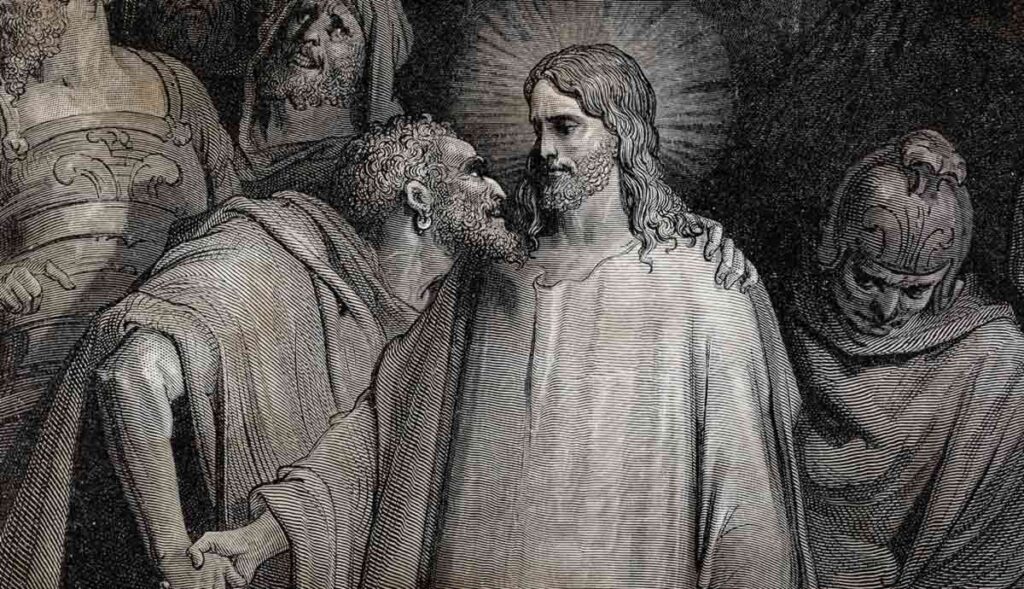
The Shadow in the Garden It was night in Gethsemane. The olive trees stood still, like silent witnesses. The stars, veiled by heavy clouds, withheld their light. In that darkness, a man kissed another man—a gesture of friendship turned into betrayal. The man who received this kiss had just fed Judas a morsel of bread dipped in rich soup—an act of love, honour, and intimacy—even as he knew Judas was already entangled in greed and deceit. That kiss has echoed through the centuries, forever tied to the name Judas Iscariot. To most of Christendom, Judas is the villain of the Passion narrative—the apostle who sold his teacher for thirty pieces of silver, the one who, realizing the weight of his crime, threw the money into the temple and hanged himself in shame. “It would have been better for that man if he had never been born” (Mark 14:21), Jesus said—words that have shaped how generations remember him. But is this the whole story? “Judas is not only the betrayer we condemn—he is the mirror we avoid.” — Augustine Anwuchie The Gospel of Judas In the canonical Gospels, Judas is portrayed in a grim light. He is the outsider among the twelve, the keeper of the moneybag, who—driven by greed or perhaps disillusionment—facilitated the arrest that led to the crucifixion. The traditional Christian understanding is clear: Judas failed not only in betrayal but in despair. Peter denied Jesus, too—but he wept, repented, and returned. Judas despaired and was lost. Yet a question remains: why did Jesus choose him in the first place? Could divine foreknowledge have overlooked Judas’s future? Or was he chosen because he would do the unthinkable? A Saint in the Shadows? Reframing Judas Among the most controversial interpretations in theological history is the idea that Judas may have been a necessary agent in the story of salvation. This view appears in certain Gnostic traditions, particularly in the Gospel of Judas, a 2nd-century Coptic text rediscovered in modern times. There, Judas is not a villain but the disciple who truly understood Jesus. Jesus tells him: “You will exceed all of them. For you will sacrifice the man that clothes me.” (Gospel of Judas, pp. 56–57) In this account, Judas’s act is not treachery but obedience—he alone carries the burden of initiating the events that lead to the cross. Without Judas, there is no crucifixion; without the cross, no resurrection. The Church, however, has never accepted this interpretation, maintaining that Judas acted in freedom and bears responsibility for his betrayal. Still, the question lingers: Could Judas have been the necessary shadow—the one through whom redemption unfolded? “Without Judas, there is no cross; and without the cross, there is no resurrection.” — Augustine Anwuchie Literature’s Reckoning with the Traitor Writers and thinkers have long wrestled with Judas’s legacy. Jorge Luis Borges, in Three Versions of Judas, imagines a theologian who argues that Judas was the true sacrifice—one who embraced eternal infamy as the ultimate act of self-denial. Nikos Kazantzakis, in The Last Temptation of Christ, portrays Judas not as a mere traitor but as a loyal friend who carries out a painful mission at Jesus’ request. These interpretations do not excuse Judas—but they complicate him. They force us to look again, not just at Judas, but at ourselves. The unsettling truth is this: Judas is not only a figure to judge. He is also a mirror. The Question of Betrayal We all betray—sometimes in small ways, sometimes in ways that wound deeply. We betray others, ourselves, and even what we claim to believe. Sometimes it is greed. Sometimes confusion. Sometimes fear. Sometimes a misguided sense of purpose. But the crucial difference is what happens next. Like Peter, we can repent and return. Or like Judas, we can let shame hollow us out until we no longer believe that mercy is possible. And when we are the ones betrayed, we face another choice: to remain trapped in bitterness—or to see even betrayal as part of a larger story, one that may yet lead to healing and renewal. The Unanswered Question Judas Iscariot remains a troubling figure—one we cannot fully explain or dismiss. His story refuses to stay in the past. It confronts us with the reality of freedom, sin, and grace. The question is not simply whether Judas was lost or redeemed. The deeper question is this: When we fall, do we still believe that mercy can reach us? Because in the end, the story of Judas is not only about betrayal. “The real question is not whether Judas was lost, but whether we still believe mercy can reach us when we fall.” — Augustine Anwuchie It is about the terrifying—and beautiful—possibility that even in our darkest moments, grace still waits.

Judas Iscariot: Betrayer, Catalyst, or Mirror of Ourselves? Read More »

Did God Create Hell? Part II: A Call to Repentance and Return to God and Love

Why are people not thinking of hell anymore as they did in the past? Lent is the season when the Church insists that we look steadily at the truth: the truth about our fragility, sin, death, eternity, and God. Lent does not invite us into morbid fear; it invites us into conversion. It calls us back from a life lived on the surface, back from a life that has forgotten eternity. We need to think of the fragility and temporality of life. My reflection on hell is not because I wish to frighten anyone, but rather because I believe that if we place eternity before us, we can never waste any single day. Having eternity before me reminds me of my human finality. It forces me to let go of pride and vain glory because we take nothing with us from this life, except, as we pray at every funeral, the good deeds that go with us. “Reflection on hell is the Church’s call to live responsibly before God in view of eternity.” — Stan Chu Ilo The contemporary forgetfulness of hell is not new. Already in the fourth century, John Chrysostom (c. 349–407), the great Archbishop of Constantinople known as the “Golden-Mouthed,” lamented that Christians of his own time were growing spiritually complacent. Though they feared poverty, illness, or public shame, they seemed indifferent to the eternal destiny of their souls. In his homilies on Matthew and Romans, he warned that people weep over material losses but do not even groan over the loss of their souls. He urged his hearers to keep eternity before their eyes, insisting that meditation on judgment and hell was not meant to terrify but to awaken. For Chrysostom, remembrance of hell was medicinal, a spiritual discipline meant to restore moral seriousness and lead to conversion. The problem, then as now, was not disbelief alone, but forgetfulness—that is, a loss of eschatological consciousness. Reflection on hell is the Church’s call to live responsibly before God in view of eternity. In this second part of my reflection, I examine how the New Testament and early Christian literature use the language of hell, asking whether it should be understood primarily as a serious warning about the terrible consequences of sin rather than as a detailed blueprint of the fate of the reprobate. It is necessary to clarify the key term “hell” as used in mainstream Catholic tradition. In 1979, the Sacred Congregation for the Doctrine of the Faith published a brief text, On Certain Questions Concerning Eschatology, at a time when confusion about the last things was spreading in theological circles. Rather than offering speculative details about the architecture of the afterlife, the document reaffirmed the essential structure of the Church’s faith. It recalled that eternal life is communion with Christ, that human freedom has lasting consequences, and that the possibility of definitive self-exclusion from the vision of God cannot be denied without emptying moral responsibility of its seriousness. Hell, in this articulation, is understood above all as deprivation of the sight of God. Hell is a rupture that touches the whole being of the person. At the same time, the document distinguished clearly between this state and the purification of those who die in God’s friendship but are not yet fully conformed to God. Purgatory is ordered toward the beatific vision; hell is the tragic refusal to see God; it is the stubborn turning away permanently from God; the refusal of the human soul to submit to God’s will and ordination of all things. Hell is the state of those who reject God to the last moment of their lives—those who turn their back on God and on their neighbors, and those who cling unrepentantly to sin and evil to the final hour of life. “The doctrine of hell ultimately reminds Christians that love must be freely chosen.” — Stan Chu Ilo The theological balance here is important. The Church safeguards both divine mercy and divine justice. She resists sentimental universalism that dissolves judgment into inevitability, and she resists a crude literalism that imagines eternal punishment in merely spatial or material terms. The Church affirms the boundless love and mercy of God for all sinners. We are reminded that though our sins be as dark as scarlet, God will forgive us. As the prophet Isaiah proclaims:                                                                                                        “Though your sins are like scarlet, they shall be as white as snow; though they are red like crimson, they shall become like wool” (Isaiah 1:18). The only sin that cannot be forgiven is the refusal to admit one’s sins before God, for God cannot forgive what we have not confessed or repented of. As Scripture teaches: “If we confess our sins, he who is faithful and just will forgive us our sins and cleanse us from all unrighteousness” (1 John 1:9) But the one who refuses to acknowledge sin closes the door to mercy, for “Whoever conceals their sins does not prosper, but the one who confesses and renounces them finds mercy” (Proverbs 28:13). God does not impose forgiveness or mercy on us—ask, and you shall receive. Jesus himself reminds us: “Ask, and it will be given to you; search, and you will find; knock, and the door will be opened for you” (Matthew 7:7). For the Lord is always ready to forgive, but he waits for the humble heart that turns back to him. What is central is relational: communion with God or its loss. God does not coerce love, but neither does He trivialize freedom. As the late Archbishop Desmond Tutu once said: “God will freely allow you to go to hell rather than force you into heaven.” Eternity, therefore, is not a figure of speech; it is real. It is the horizon before which our choices stand. It is the opening into the boundless love of God, which is the fulfilment of friendship begun with God here on earth. Friendship with God, which is our vocation, never ceases with death. In the longer

Did God Create Hell? Part II: A Call to Repentance and Return to God and Love Read More »

Lent Is All About Abundance: Embracing the Grace of Saturated Life

An experience can have the epistemic power of disruption, allowing for a new way of seeing what has become familiar in our lives. This reflection offers some insights into an experience that has initiated a new way of seeing Lent, one that I invite you to explore with me. On the second Sunday of Lent, 2026, I had the pleasure of worshipping at Saint Brendan the Navigator Parish located in Cummings, Georgia. Walking into this beautiful church, one immediately notices its spaciousness. Everything looks new. Yet, what were most disruptive to the imagination were the following: that Sunday was the twenty-fifth anniversary of the parish. One of the auxiliary bishops of Atlanta, Most Reverend John Nhan Tran, along with two priests, including the pastor, and two deacons, served as the ministers at the liturgy. The ceremony had an honorary guard of the Knights of Columbus. The church was packed full. What was most interesting to observe was the number of children playing, crying, and speaking a language that only infants and God can understand. Observing the different generations of humans gathered, one notices a sense of abundance defining the space and season. Yet it was the second Sunday of Lent. How can abundance be associated with Lent? “Lent is never a reality that stands on its own; it points to a relationship of abundance with a God radically defined by saturated life.” — SimonMary Asese Aihiokhai Too often, we are made to think that Lent is all about letting go. It is about a turn to aridity, penance, sacrifice, and frugality as a source of spiritual connection with God. On the first Sunday of Lent, we are even confronted with the gospel reading that locates Jesus in the desert, enduring his symbolic temptations at the hands of the devil after a forty-day fast. With these in mind, one can easily conclude that abundance and Lent are two contradictory realities. But we forget to ask: what does Lent point to? Lent is never a reality that stands on its own. It points to a relationship of abundance with a God that is radically defined by saturated life. Two major motifs that Lent evokes reflect abundance. First, the desert, when viewed superficially, evokes a sense of aridity. A closer look at it reveals a place of abundance that manifests as the resiliency of life. The desert is spacious. It welcomes all who seek to enter it without discrimination. Creatures who live in the desert are radically defined by existential resiliency. They endure even in the face of hardships. Their existence is a reminder to all that life is always rooted in abundance when resiliency is embraced as an existential virtue. “The desert and the spring both reveal the same truth: life persists and flourishes even where scarcity seems to reign.” — SimonMary Asese Aihiokhai Second, it is not accidental that the Church locates the season of Lent within the natural season of Spring. Spring exudes life in abundance. Plants awake from the slumber of Winter. Animals emerge from the caves of hibernation. When one looks around one’s environment during Lent, one notices the beauty of life in all its manifestations. It is during this period that the Church invites itself to journey into a deeper realm of spiritual consciousness and solidarity with all in God’s world. This sense of solidarity is not intended to steal away from the abundance that nature reveals. Rather, it is to lean into it and to show that the sacrifices we embrace during this season are intended to evoke the solidarity of abundance with the God of abundance, who reveals Godself through the abundance inherent in nature. Returning to my experience at Saint Brendan the Navigator Parish at Cummings, Georgia, the tapestry of the community speaks to what God invites us to experience during Lent. We are invited to embrace a vision that is polyphonic, one that allows us to see not just that which we are familiar with. We are asked to see the unfamiliar; a vision that is intended to disrupt our imagination so that the saturated grace of life can be received and shared with all. The crying, playful, and sound-making children offered their own homiletic message along that offered by Bishop Tran as a reminder to us that all sermonic engagement with the Word of God ought to mediate a reminder of who God is – the God of saturated life. Children are a concrete expression of saturated life oriented toward many possibilities. Similarly, the Word of God mediates saturated life that orients its listeners to several pathways for manifesting that gift of God’s life in the world. Abundance not only links us to a saturated life but also disrupts our imagination. It has the capacity to evoke in us a consciousness of beauty. Just like the desert that invites us to embrace its own beauty, which is instantiated through a different pathway, in this case, it is through the resilient existence of all that lives in the desert, the spring season is saturated with beauty. Nature invites us to encounter its content through the dazzling and varied colors of all the creatures it nurtures. These two motifs, intricately linked to Lent, are reminders to us to see Lent as a time of practicing a way of living that exudes abundance. In this case, it is the grace of saturated life. “To receive the grace of saturated life during Lent is to awaken to solidarity with those whose lives are marked by violence, displacement, and suffering.” — SimonMary Asese Aihiokhai Saturated life as a gift that reflects abundance, which God makes possible, has an ethical grounding as well. As Christians who take the reality of Lent seriously, our embrace of life ought to evoke in us as well the consciousness of solidarity with all who may not be experiencing saturated life in their own social contexts. I am particularly conscious of the Palestinian People who have been rendered homeless due to the

Lent Is All About Abundance: Embracing the Grace of Saturated Life Read More »