Sisters in Action

Unmasking the “Foreigner”: Xenophobia and the Crisis of the African Soul

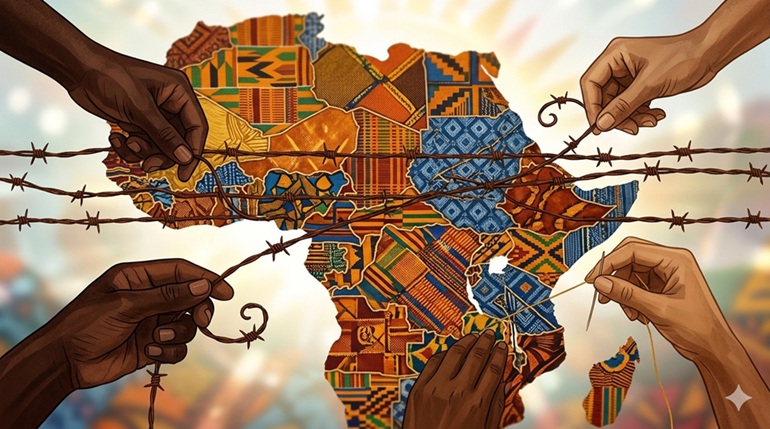
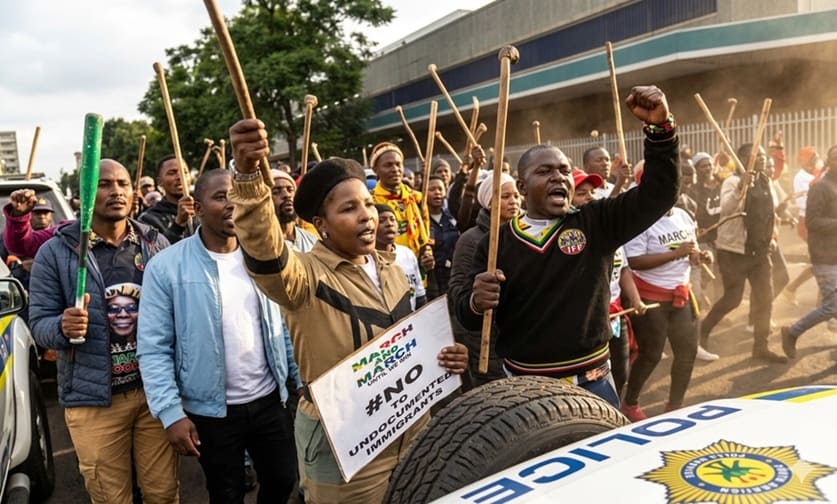
The periodic flares of xenophobia in South Africa—most notably the 2008 riots and subsequent attacks on Somali, Zimbabwean, and Nigerian nationals—are often viewed as isolated incidents of local frustration. However, these eruptions reveal a deeper fracture within the African continent. To understand the violence, we must examine the history of intra-African divisions, the artificial borders left by colonialism, and the urgent need to reclaim an African ethic of solidarity, dignity, and belonging. A Recurring Pattern of Intra-African Expulsion South Africa is not unique in its hostility toward “foreign” Africans. Post-independence Africa has repeatedly seen nations turn against their neighbors during times of economic or political stress. In 1969, Ghana’s Aliens Compliance Order led to the expulsion of hundreds of thousands of Nigerians, accused of dominating retail trade. Nigeria, facing its own economic crisis, retaliated dramatically in 1983, expelling over two million migrants, mostly Ghanaians — an event that popularized the bitter phrase “Ghana Must Go,” referring to the checkered bags carried by those fleeing the country. Equatorial Guinea and Gabon have similarly deported West Africans and Cameroonians, citing job protection and security. Even within countries, divisions persist, such as the anglophone-francophone tensions in Cameroon. The pattern is clear: when internal pressures mount, fellow Africans across the border (or across ethnic lines) become the first scapegoats. “The ‘foreigner’ in Africa today is largely a colonial hangover that the continent is still struggling to sleep off.” — Jackie Nsom, SST A Division with Deep Colonial Roots This form of institutionalized hostility was largely intensified and formalized through colonial rule and is rooted primarily in the 1884 Berlin Conference, where European powers carved up the continent with arbitrary borders that split ethnic communities and lumped rivals together. Colonial administrations introduced rigid concepts of “indigeneity” and citizenship tied to specific territories, creating the modern legal category of the “foreigner.” Colonialism replaced the African philosophy of fluid movement and shared identity with a rigid, competitive, market-based identity in which neighbours are viewed as “competitors” for scarce resources. In Africa, the stranger was often welcomed as a potential source of skills and trade, and integration followed respect for local customs and contributions to the community. Frontiers were ecological and social rather than hard political lines. “Foreignness” was temporary, not a permanent barrier. Newly independent states inherited the borders and the jurisprudence of exclusion. The attitude toward migrants shifted from pre-colonial hospitality, through colonial segregation, to post-colonial political scapegoating. The “foreigner” in Africa today is largely a colonial hangover that the continent is still struggling to sleep off. Political Entrepreneurship and the Scapegoat Strategy Contemporary politicians have further weaponized the colonial “foreigner” for short-term gain. When governments fail to deliver jobs, housing, or services, it is politically easier to blame visible outsiders than to admit systemic shortcomings. Rhetoric about ‘our people first,’ reclaiming cities, or militarized border operations often becomes political theatre designed to redirect public frustration. This marks a troubling shift away from the Pan-African vision of leaders such as Kwame Nkrumah and Julius Nyerere toward narrow micronationalism. Such rhetoric ignores the deep interdependence of African economies. Attacking a Nigerian trader in Johannesburg or a Zimbabwean worker in Limpopo undermines the regional stability on which all nations depend. “When internal pressures mount, fellow Africans become the first scapegoats.” — Jackie Nsom, SST A Christian and Moral Response Catholic Social Teaching offers a powerful framework for healing. Pope Leo XIII’s 1891 encyclical Rerum Novarum placed the dignity of the human person and the common good above narrow national interests. Later popes developed the principle of the “Universal Destination of Goods” — that the earth’s resources are intended for all humanity, not just those within a specific border. The Church affirms the right of nations to regulate borders but insists on a prior duty to welcome the stranger, especially those fleeing poverty or violence. Every person bears the “Imago Dei” — the image of God. Violence against a migrant is therefore an offence against the Creator. Pope John Paul II described xenophobia, when embedded in laws and systems, as a “structure of sin.” He reminded Africans that baptismal identity transcends national passports and that solidarity is a commitment to the good of others. In an African context, this mirrors the philosophy of ‘Ubuntu’ — “I am because we are.” Pope Benedict XVI warned that globalization without ethics turns neighbors into strangers and called on governments to protect the right of others to flourish. For South Africa, this means moving beyond “tolerance” to “integration.” Pope Francis’ 2020 encyclical, Fratelli Tutti, directly confronts the “culture of walls” and criticizes the populist rhetoric that uses fear of the “other” to gain political power. “Africa cannot reclaim its soul while Africans continue to fear and reject one another.” — Jackie Nsom, SST The Way Forward: Spiritual Reparation and Practical Change Overcoming xenophobia demands both policy reform and a conversion of heart. It also demands more than border control or political speeches. Governments must confront the structural realities of poverty, unemployment, corruption, and exclusion that fuel resentment. African leaders must also reject colonial definitions of belonging, recover a more authentic Pan-Africanism, shift political discourse from competition to complementarity, and ensure regional accountability by speaking out against xenophobia. Churches, schools, and civic institutions have a responsibility to form consciences capable of seeing migrants not as threats to fear, but as neighbours to welcome.

Unmasking the “Foreigner”: Xenophobia and the Crisis of the African Soul Read More »

Why Psychosexual Integration is no Longer Optional in Formation

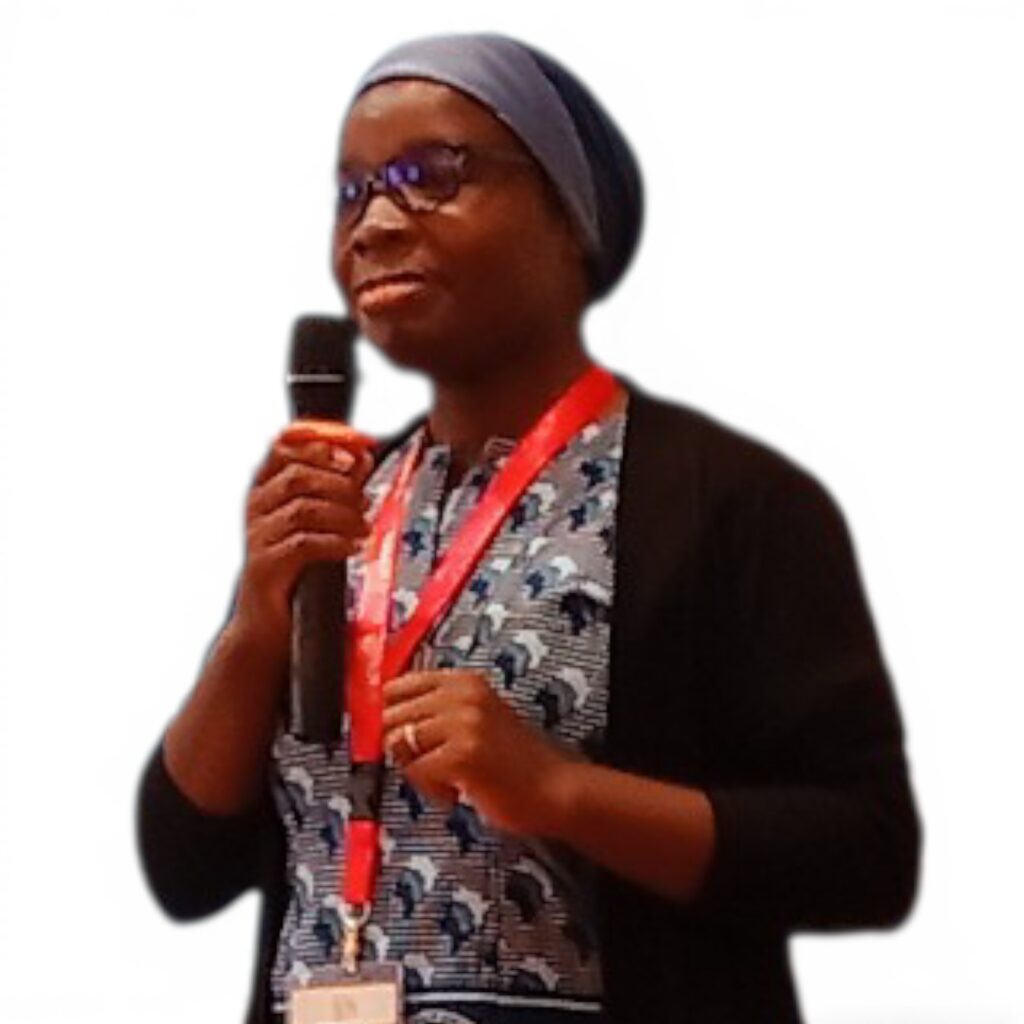
In an era marked by histories of abuse and secrecy that afflict the Church, a religious sister bears an ethical obligation to disclose the truth regarding humanity. For an extended period, the notion of the \”spiritual self\” has served as a veneer concealing a fragmented \”human self,\” thereby fostering an environment in which repression is erroneously equated with holiness. Nevertheless, as the Church in Africa confronts a modern era that demands transparency and safeguarding, traditional approaches to religious training are under scrutiny. In a recent webinar hosted by the Pan-African Catholic Theology and Pastoral Network (PACTPAN), in collaboration with the Association of Religious Formators of Kenya (ARFK), Sister Linah Siabana, MSOLA, a Zambian psychologist and Missionary Sister of Our Lady of Africa currently serving on the front lines in Northern Uganda, presented a compelling challenge to the prevailing status quo. She contended that psychosexual integration is no longer a matter of luxury but a fundamental necessity for the sustainability and integrity of ministerial responsibilities. It is no longer appropriate to require our candidates to forsake their human qualities upon entry. Vows do not negate our biological nature; rather, they necessitate a more profound integration of it, she stated. “Vows do not negate our biological nature; they demand a deeper integration of it.” — Helen Kasaka Moving beyond the spiritual bypass Sr. Siabana challenged the long-standing practice of \”spiritual bypassing,\” wherein candidates are encouraged to address profound emotional or sexual difficulties exclusively through extended periods of prayer within the chapel. While acknowledging the significance of prayer as a foundational element, she emphasized to the audience that blood circulates through our veins irrespective of our vows. She distinguished clearly between celibacy and repression, highlighting that celibacy should be characterized by intentionality and regarded as a conscious expression of love, rather than a fearful suppression of one’s true self. The participants\’ interventions highlighted the tension between traditional piety and psychological reality. When asked how to handle sexual drive, Sr. Siabana was refreshingly direct, stating that we must move toward \”emotional literacy.\” This involves teaching candidates to name their loneliness, attraction, and frustration without the paralyzing grip of shame. She emphasized that sexuality is a God-given energy for love and service; when it is ignored, it becomes a shadow that manifests as addictions, secret lives, or boundary violations. “Silence in the name of purity is a breeding ground for abuse.” — Helen Kasaka Confronting trauma and the misuse of authority A crucial aspect often neglected in traditional formation is the recognition of past trauma. Sr. Siabana pointed out that many candidates who join religious life carry unresolved wounds or histories of abuse. Failure to reconcile these fragmented aspects of identity may lead to their reemergence via the misuse of authority—where ministry is exploited to fulfill unmet emotional needs. Furthermore, it is important to note that \”Silence in the name of purity is a breeding ground for abuse. When we refuse to name the reality of our bodies, we leave the vulnerable defenceless.\” The dialogue became particularly pointed when addressing the cultural taboos that treat sexuality as a \”sacred silence.\” In many African contexts, silence is equated with purity, but Sr. Siabana argued that this silence is a breeding ground for abuse. She cited a heartbreaking case where a sister’s report of inappropriate touching was dismissed by a superior as \”provocation.\” To counter this, she called for robust safeguarding frameworks in which reporting mechanisms are transparent, and whistleblowers are protected, insisting that we must value the truth over institutional optics if we are to heal. A mandate for professionalized formation The pathway ahead requires a radical shift in how we form our brothers and sisters. In collaboration with organizations such as the ARFK, PACTPAN aims to help formators become not mere disciplinarians but mentors proficient in fundamental human development skills. This approach includes structured workshops employing role-plays to address real-world boundary situations, such as managing attraction to a colleague or navigating power dynamics with senior authority figures. It also requires a commitment to professional referrals, recognizing when a candidate needs a psychologist rather than a confessor. Furthermore, the ministry must ensure authentic accompaniment, in which one-on-one direction is a safe space, free from conflicts of interest that arise when formators act as both judges and guides. \”The goal of formation is not to produce \’perfect\’ people, but to foster honest, self-aware persons who live their vocations with integrity,\” she said. “The goal of formation is not to produce ‘perfect’ people, but to form honest, self-aware persons who live their vocation with integrity.” — Helen Kasaka Our lifelong journey of integrity Psychosexual integration is not simply a goal achieved at the time of final vows; rather, it constitutes an ongoing journey towards becoming \”authentically growing and self-aware individuals.\” For the Missionary Sisters of Our Lady of Africa and the broader Church, the message is clear: we can no longer expect our trainees to set aside their humanity. By cultivating a formation environment that is both psychologically informed and spiritually profound, we help our religious live out their vocations with joy and authenticity. Following a challenging past, the silence is ultimately being broken, paving the way for a more honest, human, and sacred Church to emerge.

Why Psychosexual Integration is no Longer Optional in Formation Read More »

Zambian Religious Sisters Trained in Chapter Facilitation at ACWECA Workshop

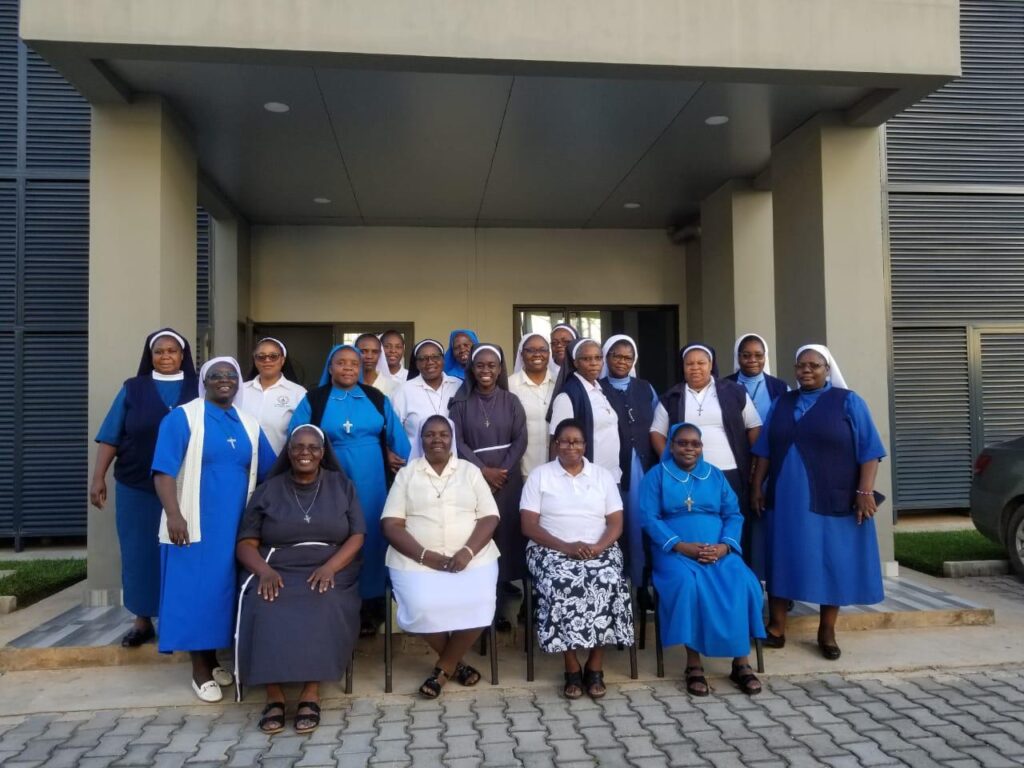
LUSAKA, Zambia – On March 17, 2026, fifteen sisters from seven religious congregations in Zambia completed a week‑long training in chapter facilitation aimed at strengthening leadership and improving the conduct of General Chapters within religious institutes. The workshop, organized by the Association of Consecrated Women in Eastern and Central Africa (ACWECA), took place at the Kalundu Conference Centre in Lusaka and focused on equipping participants with both spiritual and practical skills needed for effective facilitation. The General Chapter of a religious institute is much more than a mere business meeting or a periodic administrative duty; it is a sacred moment of grace, an ecclesial gathering, and a deep celebration of a congregation’s life. The success of this pivotal occasion often depends on the quality of its guidance.  ​The training, specifically designed to bridge the regional gap in the number of skilled facilitators, brought together 15 sisters from seven congregations across Zambia. It was not merely a technical seminar but a holistic formation journey, one that challenged, inspired, and transformed participants both personally and communally. ​The programme\’s curriculum was carefully designed to address the intricacies of contemporary religious experiences. Sr. Theresa Helena Muzeta, a Religious Sister of Charity (RSC), guided the participants in exploring the spirituality of facilitation. She highlighted that a General Chapter serves as a spiritual encounter grounded in discernment, prayer, and mindful listening to the Spirit. ​This was complemented by Sr. Lontia Siakalambwa, a Religious Sister of the Holy Spirit (RSHS), who offered practical tools for conflict transformation, helping participants understand that conflict should not be seen as something to be avoided, but as a reality that, when well handled, can generate growth, new values, and deeper communion. She also reminded the participants that a General Chapter is a spiritual encounter grounded in discernment, prayer, and mindful listening to the Spirit.\” ​Legal and structural integrity remained central to the formation with Sr. Chrisencia Mkume (RSHS), who provided insights from canon law and the five canonical purposes of a Chapter, while Sr. Thérèse Nyoni, the Superior General of the Little Sisters of St. Francis (LSSF), guided participants through the responsibilities of chapter delegates and emphasized the organic relationship between membership and leadership, noting that sound membership naturally gives rise to sound leadership. ​For many participants, the workshop dismantled long-held misconceptions about chapters. Sr. Mutinta of the Holy Spirit Sisters described a profound shift in the perspective, saying: “I was inspired by the fact that the Chapter is a celebration of our life and not a battlefield. It is a time of renewal, where we reflect on what has been and look to the future with hope.” She further reiterated that discernment is not optional but essential, not only within Chapters, but in everyday life. Participants also discovered that facilitation begins within the person. Self-awareness, preparation, and a deep understanding of the group being served emerged as critical foundations. As one insight highlighted, a facilitator must never leave things to chance but must engage deeply with the congregation’s life, charism, and constitutions. ​A recurring theme throughout the workshop was the importance of creating environments where every voice is heard and valued. Sr. Clarina Ndona (LSSF) identified creating safe spaces and active listening as the most valuable skills she has gained. In her own words, she said: “This training has taught me to be impartial and to create a space where everyone feels respected and heard.” She also noted that these skills will be immediately applicable—not only in Chapters, but also in community meetings and congregational assemblies—transforming how dialogue and decision-making unfold at every level. ​The training also touched the participants on a personal level. Sr. Dr. Christine Mwaka Himoonga (HBVM) described the experience as both challenging and enriching, particularly in learning how to guide rather than control discussions: “Facilitation is less about directing and more about guiding conversations in a way that allows everyone to feel heard.” Through role-play and shared experiences, the sisters practice patience, adaptability, and the ability to manage diverse personalities—skills essential for fostering unity in increasingly diverse communities. \”The stronger our facilitation, the stronger our communion; and the stronger our communion, the more credible our witness.\” ​This initiative responds to a long-identified gap in the region. Sr. Christine Mwangi, outgoing ACWECA Coordinator for Leadership for Mission, explained that the lack of trained facilitators has often limited the effectiveness of General Chapters. A well-facilitated chapter, she noted, leads to deeper understanding, stronger unity, and more fruitful outcomes for congregations. More importantly, it shifts the focus of Chapters from merely electing leaders to becoming authentic moments of communal discernment about the future. Going forward, ACWECA is exploring mentorship programmes, follow-up engagements, and a potential “Master Trainers” model to ensure sustainability and continued growth across the region. ​As these sisters return to their respective communities and missions, they carry renewed confidence and strengthened skills to foster unity. ​They also believe in the renewed vision of the General Chapter, not as a procedural obligation, but as a sacred space of listening, discernment, and shared responsibility for the future. In the quiet halls of Kalundu, a new generation of “midwives of communion” has emerged, women ready to guide their congregations towards a future grounded in hope, unity, and faithful witness.

Zambian Religious Sisters Trained in Chapter Facilitation at ACWECA Workshop Read More »