Topic

Catholic Church in Africa

Catholic Church in Africa

No Rest, No Self-Care: African Catholic Priests Must Pay Attention to Their Wellbeing

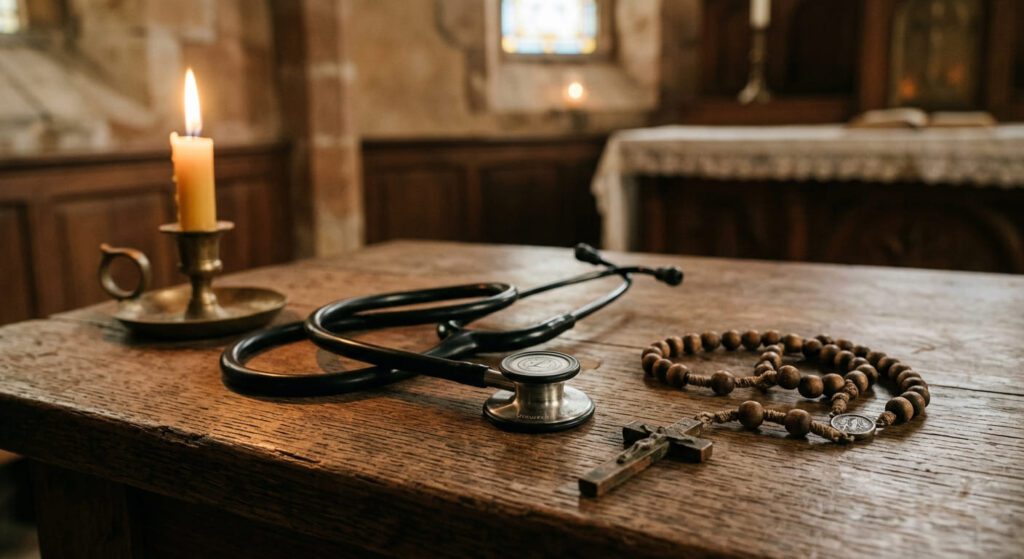
During a current self-care formation for African priests, leading African Catholic psycho-spiritual expert, Fr. Collins Okeke, reiterated the need for a proactive response to the complex challenges facing Catholic priests in Africa today. Basing his research on the well-being of Catholic priests in the United States, he advised the Church in Africa, particularly considering recent deaths by suicide among priests and religious. At the same formation program, Archbishop Fortunatus Nwachukwu shared a sobering fact from his home diocese of Aba, Nigeria, where the diocesan cemetery is filled with priests under 50. Younger priests, he said, are dying not of persecution or old age, but of preventable and treatable illnesses, the slow harvest of an unsustainable lifestyle: no rest, no exercise, no regular medical checkups, no outlet for stress, no one to whom they can honestly say, \”I am not well.\” If the American data is a warning about burnout and psychological exhaustion, the graves in Aba are a warning about something that is frighteningly real and tragic. Self-care for the African priest is not simply a lifestyle preference. It is, in the light of emerging evidence, a matter of life and death. What the data shows Research from Georgetown University’s Center for Applied Research in the Apostolate (CARA) reveals a troubling pattern beneath priestly life. While 89 percent of priests identified overwork as a problem, 78 percent identified loneliness and isolation, and 73 percent identified burnout, only about a third believed these concerns were being adequately addressed. The 2025 National Study of Catholic Priests deepens this paradox. However, American priests report high personal well-being, 8.2 on a ten-point scale; 39 percent experience at least one symptom of burnout. Diocesan priests are particularly vulnerable, with 7 percent experiencing high burnout compared with 2 percent of religious priests. Perhaps most revealing is the gap between personal and communal flourishing: priests rate their own well-being at 8.2, but the well-being of their diocesan community at only 5.7. Priests, it seems, may be personally resilient even as ecclesial environments struggle to flourish. \” A priest can love his vocation, remain faithful to prayer and ministry, and still be exhausted, lonely, emotionally depleted, or psychologically vulnerable because of an unhealthy ecclesial environment.\” -Stan Chu Ilo The message is important: a priest can love his vocation, remain faithful to prayer and ministry, and still be exhausted, lonely, emotionally depleted, or psychologically vulnerable because of an unhealthy ecclesial environment. Data from the Greater Good Science Center at the University of California, Berkeley, stress the impact of healthy relationships, social connection, and a sense of belonging regarding human well-being and proper adjustment. These findings resonate with Kenneth Pargament’s extensive work on religion, spirituality, coping, and resilience, particularly his emphasis on the relational, communal, and spiritual resources that sustain people through changing seasons. For priests serving in ecclesial settings governed by hierarchical authority, group dynamics, and inherited patterns that often presume normalcy, conformity, and order, the environment can at times become deeply alienating and disempowering. Such conditions may create unexpected saturation points of pain, loneliness, isolation, and helplessness. The paradox is particularly painful as the very ecclesial and relational structures instituted to provide belonging, fraternity, and support can at times become sources of isolation, friction, rivalry, envy, resentment, and tribal and clannish cleavages that become exclusive rather than inclusive. Profound spiritual struggles stem from such experiences. When ecclesial structures fail to adequately hold a priest’s pain or support his holistic growth and personal integration, healthy and life-giving relationships go beyond desire; they become essential. Trust and compassion in spaces where a priest can share without judgment, but rather with guidance and care, are needed for healing and resilience. Five dimensions, one neglected whole Even though these data are from research in the U.S., they also speak to the African context given the recent spike in the number of African priests and religious dying by suicide, and the number of younger priests and religious in Africa dying so young. These data point to a more holistic understanding of priestly health, built around at least five mutually reinforcing dimensions: psychological and emotional well-being; spiritual rootedness; relational and fraternal connectedness; sustainable patterns of work, rest, exercise and physical health; and healthy relationships with ecclesial institutions and leadership. Neglect in one dimension inevitably places pressure on all the others, and in Aba diocese in Eastern Nigeria, it seems the neglect of the fourth dimension is proving catastrophic. A distinctly African weight I find this disparity in overall general health among priests highly personal. I currently direct the African Catholic research component of the Global Formation Project on the spiritual maturity of pastoral agents, an international and ecumenical research initiative led by psychologist David C. Wang of Fuller Theological Seminary and supported by the Templeton Religion Trust and other Templeton foundations. The project studies the human and spiritual formation of Christian leaders across cultures and traditions. Its earlier North American phase followed more than 1,500 seminarians from 18 theological schools over three years, including the extraordinarily stressful period of the COVID-19 pandemic, using more than fifty validated measures of emotional well-being, relationships, vocation, resilience, and the capacity to cope with stress. How can we use this research intentionally? One lesson from this body of research is especially important for priests and religious today: spiritual commitment does not immunize anyone against the psychological consequences of trauma and prolonged stress. Research on religious leaders predating COVID-19 found roughly one-third reporting work-related post-traumatic stress symptoms above clinical thresholds, with more than half falling into a range warranting clinical concern. COVID-19 then provided an extraordinary real-life laboratory for observing how crisis, uncertainty, isolation, loss, and sustained responsibility affect those preparing for religious leadership. This challenge carries a distinctly African weight. Our cultures often place enormous expectations on priests and religious: to be spiritually strong, endlessly available, financially generous, emotionally composed, and able to carry the burdens of entire families, parishes, and communities on their own shoulders. Clerical culture reinforces the dangerous assumption that vulnerability is weakness. Priests

No Rest, No Self-Care: African Catholic Priests Must Pay Attention to Their Wellbeing Read More »
A Call for the Church in Africa to Walk Together

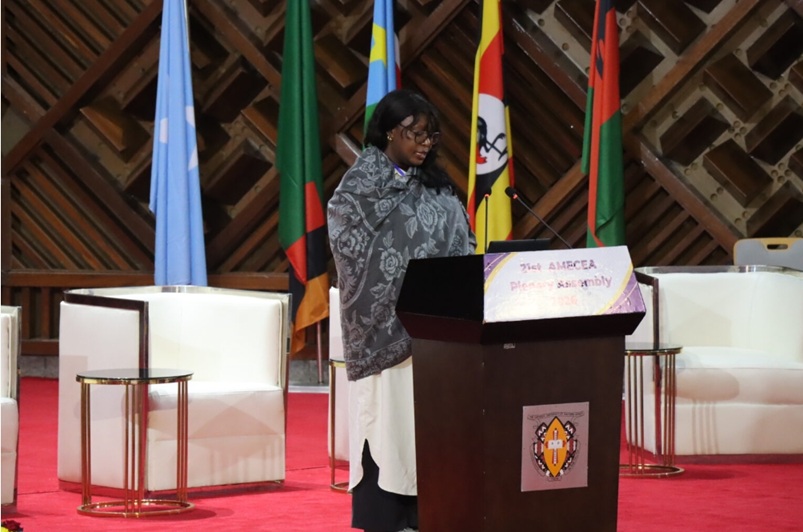
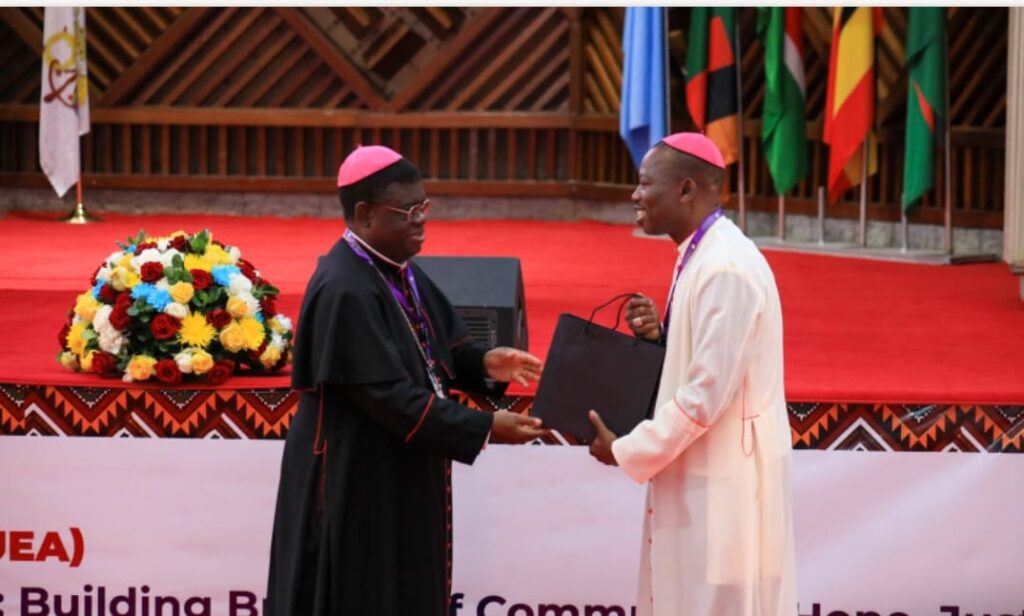
NAIROBI, Kenya — The message from the Symposium of Episcopal Conferences of Africa and Madagascar (SECAM) to the 21st Plenary Assembly of the Association of Member Episcopal Conferences in Eastern Africa (AMECEA) was brief, but its horizon was continental. As bishops gathered at the Catholic University of Eastern Africa (CUEA) in Nairobi under the theme, \”AMECEA\’s Synodal Journey with Young People: Building Bridges of Communion, Hope, Justice and Good Governance,\” SECAM invited them to see beyond the boundaries of the Assembly and recognize a wider responsibility: the Church in Africa must confront the challenges facing the continent together. The message, delivered by SECAM\’s First Vice-President, Bishop Stephen Dami Mamza of the Diocese of Yola, Nigeria, expressed appreciation for AMECEA\’s contribution, encouraged continued leadership within SECAM, and offered a vision of an Africa transformed by the values of the Gospel. Before turning to continental challenges, Bishop Mamza also commended AMECEA’s Small Christian Communities, its commitment to accompanying young people, and its progress in strengthening institutional structures and financial sustainability. But beneath those words was a more demanding question: What does it mean for the Churches of Africa to walk together when the realities confronting their people are so deeply interconnected? From appreciation to responsibility SECAM began by expressing sincere gratitude for AMECEA\’s consistent contribution to the common mission of the Church in Africa. It specifically recognised the region\’s pastoral experience, theological reflection and spirit of collaboration, noting their contribution to strengthening SECAM and deepening the bonds of communion among the Churches of Africa. The acknowledgement was significant, but it did not end there. SECAM encouraged AMECEA to continue offering leadership within the continental body as the Church responds to the many challenges confronting Africa, including poverty, armed conflict, forced displacement, ecological degradation, poor governance, youth unemployment, religious intolerance and rapid social change. These are not distant concerns. They are realities that affect the lives, security and dignity of millions of people. They also demonstrate how closely the challenges facing African societies are connected. Conflict can drive people from their homes. Poverty can deepen vulnerability. Displacement can fracture families and communities. Ecological degradation can threaten livelihoods and the wellbeing of future generations. For the Church, such realities cannot be viewed only through social, political or economic lenses. They touch the dignity of the human person and therefore belong to the Church\’s pastoral concern. That is why the call for greater collaboration carries such weight. \” \”By walking together as one Family of God, we can bear a stronger witness to the Gospel and contribute more effectively to justice, peace, reconciliation, and integral human development.\” — Bishop Stephen Dami Mamza The image of one Family of God gives the message its ecclesial centre. It suggests that communion is not simply a principle to be affirmed during assemblies. It must find expression in how Churches respond to suffering, share their experience, support one another and contribute to the search for justice, peace and reconciliation. A vision beyond the present crisis SECAM did not allow the challenges facing Africa to become the final word. Instead, its message looked towards the Africa the Church hopes to see. \” Our shared hope is for an Africa increasingly transformed by the values of the Gospel, an Africa reconciled within itself, united in its diversity, respectful of the dignity of every person, committed to good governance and care for our common home, and firmly centred on Christ who remains our hope and also our peace.\” — Bishop Stephen Dami Mamza There is a great deal contained in that vision. An Africa reconciled within itself points towards a continent capable of confronting division and pursuing peace. An Africa united in its diversity recognises that differences can exist without becoming causes of exclusion or conflict. Respect for the dignity of every person places the human being at the centre of the Church\’s concern. The reference to good governance adds another important dimension. Governance affects the lives of ordinary people, the protection of rights and the distribution of opportunities and resources. For the Church, a commitment to the common good cannot be separated from concern for how societies are led. Likewise, the call to care for our common home places ecological responsibility within the wider vision of human development. Yet SECAM ultimately places this vision within the Gospel. The Africa it hopes for is firmly centred on Christ, who remains, in the words of the message, \”our hope and also our peace.\” That is the foundation from which the rest of the vision flows. The continental meaning of Synodality The official SECAM message also called for a deeper commitment to the synodal journey of the Church in Africa. As the bishops continued their deliberations, SECAM prayed: \”May the Holy Spirit grant you wisdom, courage, and the grace for authentic discernment. May your decisions strengthen the communion of your local Churches, renew your missionary zeal, and deepen your commitment to the synodal journey of the Church in Africa.\” The prayer places discernment at the heart of the Assembly. This gives particular depth to AMECEA\’s chosen theme. A synodal journey with young people, understood within the wider continental mission described by SECAM, cannot be separated from the call to communion, hope, justice and good governance. The concerns of one generation are part of the wider pastoral reality of the Church, just as the Church\’s response to Africa\’s challenges belongs to the shared responsibility of its local Churches. Discernment is a responsibility There is also something important in the way SECAM prayed for wisdom, courage and authentic discernment. Discernment is more than arriving at decisions. It requires attentiveness, prayer and the courage to respond faithfully to what the Church is being called to do. For bishops gathered to deliberate on matters affecting the life and mission of their Churches, that responsibility is considerable. Their decisions can influence the direction of pastoral work and the way local Churches respond to the realities before them. SECAM\’s prayer therefore placed the Assembly\’s deliberations within a spiritual framework.

A Call for the Church in Africa to Walk Together Read More »

“And With Your Spirit”: Liturgical Translation, Ecclesial Reception, and the African Question

In October 2011, in a small parish in Kenya, a group of priests gathered for what was expected to be a routine preparation meeting on the new English translation of the Roman Missal. The diocesan liturgy coordinator had invited priests, catechists, and pastoral leaders involved in liturgical formation to reflect on the changes before the implementation of the revised texts. We arrived from the city carrying printed booklets, explanatory notes, and official documents from Rome. The atmosphere was cordial and expectant. Most assumed that the meeting would simply clarify several textual revisions and provide pastoral guidance on how to introduce the changes to the faithful. However, as the discussion unfolded, attention quickly focused on one change that would become the most recognizable sign of the new translation: the replacement of the familiar response, “And also with you,” with the more literal and theologically precise translation, “And with your spirit.” Other revisions were also discussed, including the reaffirmation of prescribed expressions such as “The Word of the Lord,” in place of alternative formulations that had become familiar in some local communities. The explanation offered was that these changes were intended to bring the English translation into closer fidelity with the Latin original and to recover the theological richness contained within the Church’s liturgical language. At first, there was silence. Then came resistance. One elderly priest, who had served the same parish for more than thirty years, leaned back and shook his head. “We have prayed ‘And also with you’ since our people learned English,” he said slowly. “Now you want to change the faith of the people with words? Is this Vatican Council III?” His question, although expressed with some humor, revealed a serious pastoral concern. For many of the faithful, liturgical language is not merely a collection of words. It becomes part of memory, prayer, identity, and spiritual experience. The phrase “And also with you” had accompanied generations of Catholics in their celebration of the Eucharist. To change it appeared, to some, as though something familiar and sacred were being taken away. \” Liturgical language is not merely a collection of words. It becomes part of memory, prayer, identity, and spiritual experience.” — Sr. Leonida Katunge Another younger priest, formed in Rome but serving in rural Africa, responded more cautiously. “This is not a change of faith,” he explained. “It is a correction of translation. The Latin has always said et cum spiritu tuo. We are recovering a formula preserved across the Roman liturgical tradition.” Yet the room remained uncertain. Some worried that the faithful would be confused. Others questioned whether ordinary worshippers would understand the meaning of “spirit.” Some asked whether Rome fully understood the pastoral realities of African communities, where faith is often transmitted through oral tradition, repetition, communal participation, and familiar expressions. One priest asked: “Will people not feel that they were praying wrongly for many years? Will they not think that the Church is correcting them rather than accompanying them?” These concerns were not simply resistance to change. They reflected questions that African theologians and Church leaders have raised for decades: Who determines the language through which African Christians worship? How can fidelity to the Roman liturgical tradition coexist with the rhythms, symbols, and communal patterns through which African peoples encounter the sacred? When translation is directed principally from outside the worshipping community, does it communicate the faith more faithfully, or can it unintentionally distance people from the mystery being celebrated? The issue, therefore, is not whether the Church in Africa should remain faithful to the Roman liturgy, but whether African local Churches are sufficiently involved in shaping the language through which that fidelity is expressed. \” The issue is not whether the Church in Africa should remain faithful to the Roman liturgy, but whether African local Churches are sufficiently involved in shaping the language through which that fidelity is expressed.” — Sr. Leonida Katunge These questions reveal a deeper issue in liturgical renewal: the relationship between the universal character of the Roman liturgy and the concrete cultural realities of local Churches. Liturgical texts must faithfully preserve the theological tradition of the Church, but they must also be received by communities whose faith is lived within particular histories and cultures. The coordinator listened patiently. He opened the introduction to the Roman Missal and explained that the purpose of the revision was not to change the faith of the people but to recover the theological depth of the Church’s inherited tradition. Liturgical translation, he explained, is not simply a linguistic exercise; it is an act of theological interpretation. The words prayed by the Church shape the faith of the Church. \” The words prayed by the Church shape the faith of the Church.” — Sr. Leonida Katunge That evening, when Mass was celebrated, the new response was introduced. When the priest said, “The Lord be with you,” the assembly responded hesitantly: “And with your spirit.” There was a brief silence. Some voices were uncertain. Others responded confidently. A few lips still moved according to the old habit, quietly forming “and also with you,” before correcting themselves. Yet something significant had already begun. The community was learning to pray again. The same liturgical dialogue was heard in cathedrals, village chapels, and basilicas throughout the world. Yet in that small African parish, it carried a renewed theological weight. It opened a path towards rediscovering the scriptural roots of the greeting, the witness of the early Church, and the Church’s understanding of ordained ministry. After Mass, an elderly woman approached one of the priests. “Father,” she asked gently, “why did the Church change the words again?” The priest paused before answering. “Perhaps,” he said, “the Church did not simply change the words. Perhaps she helped us hear them again.” \” Perhaps the Church did not simply change the words. Perhaps she helped us hear them again.” — Sr. Leonida Katunge In that simple question, the deeper theological journey of “And with your spirit” began to unfold. The experience of

“And With Your Spirit”: Liturgical Translation, Ecclesial Reception, and the African Question Read More »

The Church After Pope Francis: What African Catholics Want from the Future Pope

What are the expectations of the Church in Africa for the future after the remarkable service of Pope Francis? What are we hearing as theologians and pastoral leaders in Africa from our people in their joys and sorrows, hopes, and concerns for the future? This palaver will reflect on Africa’s priorities and vision for the future as Church Family of God.  The 18 African Cardinal-electors will go into the Conclave fully aware that the divisive issues in contemporary Catholicism often neglect the concerns and needs of Africa. Even though Africa is the continent where the Catholic Church is witnessing its fastest growth, this demographic advantage has not reflected in influence in the Global church because of many factors including racism and the continuing effects of colonialism and the asymmetrical power relations between Africa and the rest. Have the Catholic churches and regions in Africa been impacted by the polarization in today’s Church especially on issues of marriage and family life, same-sex marriages, immigration, climate change, the place of women in Church leadership, and the autonomy of local African Catholic dioceses and institutions from the central authority of the Roman Catholic Church? The Catholic bishops of Africa have displayed a remarkable unity on these matters as was shown in the clarity of vision in their articulation of the African agenda during the Synod. Could the Catholic Church in Africa be an alternative staging ground for new forms of faith and life that is faithful to the church’s traditions but also open to meeting the spiritual hunger of today’s world with some vibrancy of worship? Could the Church in Africa offer a depolarizing space for finding   new answers to emerging questions troubling many people through dialogue, consensus-building using the tools of the African palaver and communal embrace of all people rather than with old and tired Eurocentric answers and repetitive rituals? Even though Africa is today the continent witnessing the highest growth in population in the Catholic Church, why is the idea of a Pope from Africa still considered by some as a remote possibility? These questions and more will be discussed by our theological and pastoral experts through the African palaver. 

The Church After Pope Francis: What African Catholics Want from the Future Pope Read More »

Secret Link