
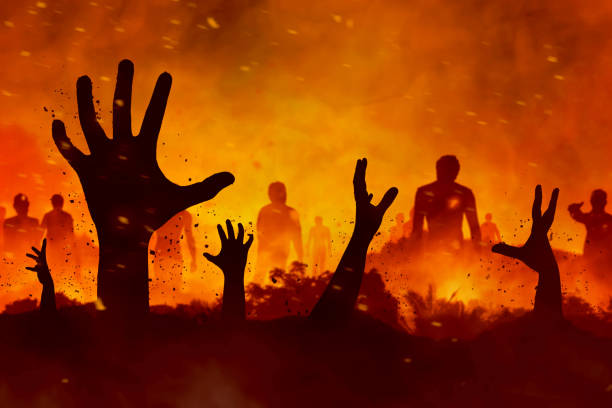
Did God Create Hell? Part II: A Call to Repentance and Return to God and Love
Why are people not thinking of hell anymore as they did in the past? Lent is the season when the Church insists that we look steadily at the truth: the truth about our fragility, sin, death, eternity, and God. Lent does not invite us into morbid fear; it invites us into conversion. It calls us back from a life lived on the surface, back from a life that has forgotten eternity. We need to think of the fragility and temporality of life. My reflection on hell is not because I wish to frighten anyone, but rather because I believe that if we place eternity before us, we can never waste any single day. Having eternity before me reminds me of my human finality. It forces me to let go of pride and vain glory because we take nothing with us from this life, except, as we pray at every funeral, the good deeds that go with us. “Reflection on hell is the Church’s call to live responsibly before God in view of eternity.” — Stan Chu Ilo The contemporary forgetfulness of hell is not new. Already in the fourth century, John Chrysostom (c. 349–407), the great Archbishop of Constantinople known as the “Golden-Mouthed,” lamented that Christians of his own time were growing spiritually complacent. Though they feared poverty, illness, or public shame, they seemed indifferent to the eternal destiny of their souls. In his homilies on Matthew and Romans, he warned that people weep over material losses but do not even groan over the loss of their souls. He urged his hearers to keep eternity before their eyes, insisting that meditation on judgment and hell was not meant to terrify but to awaken. For Chrysostom, remembrance of hell was medicinal, a spiritual discipline meant to restore moral seriousness and lead to conversion. The problem, then as now, was not disbelief alone, but forgetfulness—that is, a loss of eschatological consciousness. Reflection on hell is the Church’s call to live responsibly before God in view of eternity. In this second part of my reflection, I examine how the New Testament and early Christian literature use the language of hell, asking whether it should be understood primarily as a serious warning about the terrible consequences of sin rather than as a detailed blueprint of the fate of the reprobate. It is necessary to clarify the key term “hell” as used in mainstream Catholic tradition. In 1979, the Sacred Congregation for the Doctrine of the Faith published a brief text, On Certain Questions Concerning Eschatology, at a time when confusion about the last things was spreading in theological circles. Rather than offering speculative details about the architecture of the afterlife, the document reaffirmed the essential structure of the Church’s faith. It recalled that eternal life is communion with Christ, that human freedom has lasting consequences, and that the possibility of definitive self-exclusion from the vision of God cannot be denied without emptying moral responsibility of its seriousness. Hell, in this articulation, is understood above all as deprivation of the sight of God. Hell is a rupture that touches the whole being of the person. At the same time, the document distinguished clearly between this state and the purification of those who die in God’s friendship but are not yet fully conformed to God. Purgatory is ordered toward the beatific vision; hell is the tragic refusal to see God; it is the stubborn turning away permanently from God; the refusal of the human soul to submit to God’s will and ordination of all things. Hell is the state of those who reject God to the last moment of their lives—those who turn their back on God and on their neighbors, and those who cling unrepentantly to sin and evil to the final hour of life. “The doctrine of hell ultimately reminds Christians that love must be freely chosen.” — Stan Chu Ilo The theological balance here is important. The Church safeguards both divine mercy and divine justice. She resists sentimental universalism that dissolves judgment into inevitability, and she resists a crude literalism that imagines eternal punishment in merely spatial or material terms. The Church affirms the boundless love and mercy of God for all sinners. We are reminded that though our sins be as dark as scarlet, God will forgive us. As the prophet Isaiah proclaims: “Though your sins are like scarlet, they shall be as white as snow; though they are red like crimson, they shall become like wool” (Isaiah 1:18). The only sin that cannot be forgiven is the refusal to admit one’s sins before God, for God cannot forgive what we have not confessed or repented of. As Scripture teaches: “If we confess our sins, he who is faithful and just will forgive us our sins and cleanse us from all unrighteousness” (1 John 1:9) But the one who refuses to acknowledge sin closes the door to mercy, for “Whoever conceals their sins does not prosper, but the one who confesses and renounces them finds mercy” (Proverbs 28:13). God does not impose forgiveness or mercy on us—ask, and you shall receive. Jesus himself reminds us: “Ask, and it will be given to you; search, and you will find; knock, and the door will be opened for you” (Matthew 7:7). For the Lord is always ready to forgive, but he waits for the humble heart that turns back to him. What is central is relational: communion with God or its loss. God does not coerce love, but neither does He trivialize freedom. As the late Archbishop Desmond Tutu once said: “God will freely allow you to go to hell rather than force you into heaven.” Eternity, therefore, is not a figure of speech; it is real. It is the horizon before which our choices stand. It is the opening into the boundless love of God, which is the fulfilment of friendship begun with God here on earth. Friendship with God, which is our vocation, never ceases with death. In the longer
Did God Create Hell? Part II: A Call to Repentance and Return to God and Love Read More »