Pan-African Catholic Theology and Pastoral Network

Lake Chad Basin

The Sahel at Risk: Mali’s Experience and Dangers of a Divided Sahel

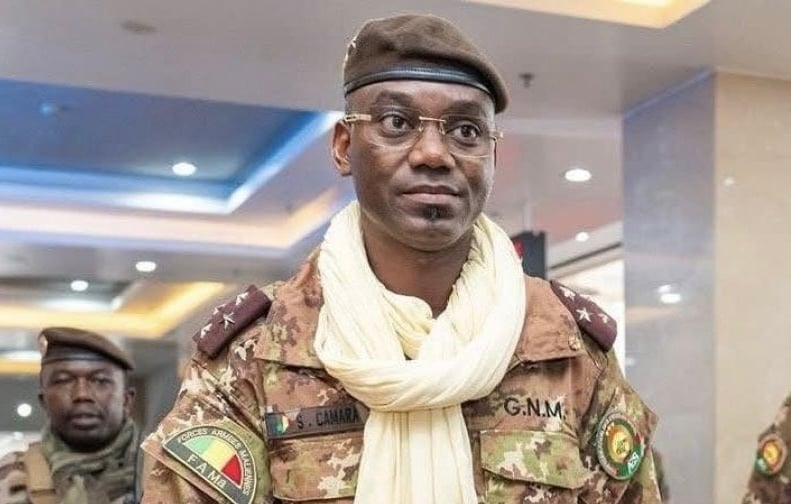
The devastating surprise attack on April 25th, which ransacked part of Mali and reportedly claimed the life of Defence Minister General Sadio Camara, has ignited profound fear over the rapidly evolving nature of terrorism in the Sahel. Previously fragmented rebel groups like Jama ‘at Nusrat al-Islam wal-Muslimin (JNIM) and the Front de Libération de Azawad – Azawad Liberation Front (FLA), once bitter rivals, have joined forces to seize territory across the region during the April 25th attack. What is most troubling is that as terrorists unite and expand their reach, the Sahel nations remain deeply divided and continue to lose ground despite the efforts of the authorities to contain the violence. “As terrorist groups coordinate across borders, the Sahelian states remain politically fragmented and militarily overstretched.” — Augustine Anwuchie A Crisis Rooted in Historical Grievances and Structural Collapse The crisis in Mali is not limited to terrorism but has its roots in historical grievances, corruption and structural collapse. The origins of the crisis date back to 2012, when Tuareg rebels allied with Jihadist groups to launch an armed rebellion for an independent state of Azawad in the Northern region. This instability prompted the 2013 French military intervention, culminating in the launch of Operation Serval, which later evolved into Operation Barkhane in 2014 and finally led to a peace agreement with the Forces of Liberation of Azawad in 2015. However, years of political corruption in Bamako and the failure of French Forces to successfully eradicate the insurgency fuelled intense anti-French sentiment and widespread domestic frustration. This political instability culminated in a 2021 military coup led by Assimi Goïta, whose nationalist junta eventually expelled French forces and, by 2024, officially abrogated the 2015 peace accord. The collapse of the peace framework contributed to an emerging ethno-political alliance between JNIM and the Front de Libération de l’Azawad (FLA), who launched coordinated attacks across parts of Bamako, Kati, Gao, Mopti and Sevare on 25th April 2026. Mali now faces a severe dual crisis, simultaneously battling the Tuareg Azawad separatists and the jihadist insurgency seeking Islamic rule. While the military government in Bamako accuses France of engineering the latest attack in an attempt to overthrow the government, an allegation France denies, the security situation on the ground remains highly volatile. Despite government claims of control, recent suspected Al-Qaeda attacks in Mopti killed 50 villagers, highlighting the extreme difficulty of combating an asymmetric enemy that has heavily infiltrated the local population. The Dangers of a Fragmented Sahel The Sahel has emerged as a global epicentre of terrorism, now accounting for 51% of all terrorism-related deaths globally. The region is ravaged by an array of insurgent groups, including the FLA, JNIM, and the Islamic State Sahel Province (ISSP/ISGS). This threat is rapidly expanding southwards into the coastal regions of Benin and Togo. At the same time, landlocked Burkina Faso faces multi-front assaults, and the Niger Republic simultaneously battles distinct terrorist factions across its western, southwestern and southeastern borders. A recent example of this volatility was on May 4th, when Boko Haram attacked a military base in the Barka Toloron region of Lake Chad, killing 23 soldiers and injuring 26 others. Compounding this crisis is the growing and dangerous pattern of collaboration among these terrorist factions, who are actively exploiting regional instability to seize control of vast territories. “The Sahel now accounts for more than half of all terrorism-related deaths globally.” — Augustine Anwuchie According to Peter Bouckaert, a senior director at Fortify Rights, the Sahel currently represents the greatest opportunity for the worldwide jihadist movement. The purely military solution to the rise of these insurgent groups, as well as operations involving heavy-handed tactics or military massacres of civilians and young men, has driven aggrieved local populations directly into the arms of jihadist movements for protection or retaliation, thereby fuelling the cycle of recruitment and violence. This vulnerability is driven by a combination of weak regional governments, a climate-related food crisis, and the security vacuum left by the withdrawal of French forces, which previously held these Islamist groups at bay. Bouckaert warns that, without urgent intervention, the region will face the severe threat of a Somalia-like state collapse, jeopardizing both regional and global security. Ultimately, the fight against terrorism is severely hampered by deep political fractures as the region is split between the newly formed Alliance of Sahel States (AES), comprising Mali, Niger and Burkina Faso, and the ECOWAS bloc. “A divided Sahel risks becoming a permanent corridor of insurgency stretching across West Africa.” — Augustine Anwuchie While a strong and united Sahel could fundamentally change the course of the war, the deep-seated distrust, dirty politics, corruption, and regional ego make this impossible. If the Sahelian governments do not put aside their divisions and unite against this expanding network of armed extremist groups, the region risks devolving into a highly fractured zone of competing terrorist factions, mirroring the long-term instability of the Middle East.

The Sahel at Risk: Mali’s Experience and Dangers of a Divided Sahel Read More »
Is the Tinubu Government Covering Up Christian Genocide in Nigeria?

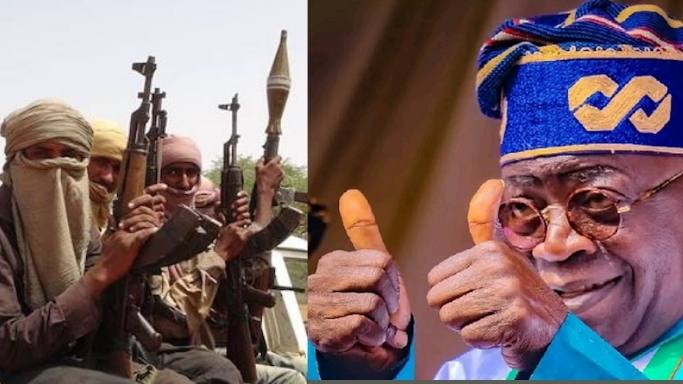
President Bola Tinubu recently hailed the killing of senior Islamic State commander Abu Bilal al -Minuki in a joint Nigerian and American military operation as evidence of his government’s “pragmatic cooperation and partnerships” in securing the lives and property of Nigerians. President Donald Trump reportedly described al-Minuki as the “most active terrorist in the world,” a troubling characterization that further underscores how Nigeria and the wider West African sub-region are now perceived by the U.S government as one of the most dangerous theaters of global terrorism. According to BBC reporting and international security assessments, the Nigerian-based branch of the Islamic State remains the most active ISIS affiliate in sub-Saharan Africa, responsible for a significant percentage of attacks across the region. Al-Minuki, whose operational fortress was reportedly located in Marte in Borno State near the Lake Chad Basin, was killed alongside several of his lieutenants in an air strike targeting his compound in the vast swampland shared by Nigeria, Chad, Niger, and Cameroon. The Lake Chad region has increasingly evolved into one of the world’s most volatile transnational insurgency corridors. “Nigeria’s crisis cannot be reduced to a single narrative of religion, ethnicity, or terrorism—it is a struggle over power, legitimacy, and state survival.” — Stan Chu Ilo Nigeria has faced Islamic insurgency, particularly since the emergence of Boko Haram in 2009, as perhaps the most organized, diffuse, and enduring threat to the Nigerian state since Independence. When Boko Haram formally pledged allegiance to the Islamic State in 2015, it established operational and ideological links with a wider constellation of extremist movements spreading across the African Sahel. These groups seek not merely territorial disruption but the creation of a new political and religious order founded upon extremist interpretations of Sharia and the establishment of a caliphate transcending national boundaries. The Islamic supremacist agenda of some of these groups is undeniable. Yet reducing the Nigerian crisis simply to Christian persecution or Islamic jihadism is analytically inadequate. The violence consuming Nigeria and much of the Sahel emerges from a far more dangerous convergence of ideological extremism, state fragility, criminal economies, ethnic conflict, climate pressures, corruption, weak governance, porous borders, and the collapse of public trust in political institutions. Indeed, President Trump, in justifying anti-insurgent military strikes reportedly carried out in cooperation with Nigerian forces, frequently accused the Nigerian government of failing to protect Christian populations, especially in Northern Nigeria. There are many within Nigeria and abroad who are convinced that Nigerian Christians are facing systematic persecution and even genocide. Some argue that the current cooperation between the Tinubu government and the United States emerged partly from mounting pressure from Washington, including the designation of Nigeria as a Country of Particular Concern on religious freedom grounds and threats of sanctions or diplomatic consequences. A recent report by International Christian Concern titled “Nigeria’s $10 Million Genocide Cover Up” alleges that the Tinubu government invested millions of dollars in lobbying efforts in Washington to cleanse its international image. According to the report, one of the central figures in this lobbying effort is Matt Mowers, a former senior adviser in the U.S. Department of State who previously worked with the Global Coalition to Defeat ISIS. The report claims that Mowers registered as a foreign agent and lobbyist shortly after Nigeria’s designation as a Country of Particular Concern and that his work sought to defend the Tinubu administration against accusations that it had failed to stop mass killings of Christians. The report further alleges that these lobbying efforts are financed through Maton Engineering Nigeria Limited, a company linked to former Niger Delta militant leader, Government Ekpemupolo, popularly known as Tompolo, whose security company received lucrative government pipeline surveillance contracts in the Niger Delta. These allegations are serious and deserve transparent public scrutiny. The International Christian Concern report advances three major claims. First, it argues that the Nigerian government seeks to repackage religiously motivated violence against Christians as mere criminality, banditry, farmer-herder clashes, or climate-induced communal conflict. According to the report, the so-called “crime-terror-nexus” language obscures the ideological motivations of extremist groups who deliberately target Christian communities in strategic regions of Northern and Middle Belt Nigeria. Second, the report argues that the Nigerian government portrays the violence as too complex and ambiguous to be classified as religious persecution. By emphasizing criminality over ideology, the report claims, the Nigerian state minimizes the role of radical Islamist movements and presents itself internationally as a secular government battling generalized insecurity rather than confronting religious extremism. Third, the report accuses the Nigerian government and its international lobbyists of carefully managing foreign visits to conflict zones in order to prevent international observers from witnessing what it calls the true scale of anti-Christian violence in Nigeria’s Middle Belt and Northern regions. The report claims that international delegations are often shielded from direct contact with victims and communities most affected by the violence. The International Christian Concern report deserves careful engagement. It is notable that foreign advocacy organizations have taken up the plight of Nigerian Christians with such intensity and visibility. However, there is also a need to interrogate both the data and the assumptions underlying some of these claims. First is the question of what constitutes genocide. The term is often invoked emotionally and politically, but genocide has a precise meaning under international law. The report does not adequately define the concept or clearly demonstrate how the Nigerian situation meets the legal thresholds established by the United Nations Genocide Convention. This does not mean that the killings are insignificant or morally less horrifying. Far from it. The murder of any innocent human being, Christian or Muslim, is an abomination before God and a tragedy for humanity. But analytical precision matters, especially when dealing with terms carrying enormous moral and legal implications. Historical memory is also important here. When one reflects on the anti-Igbo pogroms before and during the Nigerian Civil War between 1967 and 1970, difficult questions emerge about comparison, scale, intent, organization, and state complicity. Is what is happening today directly comparable to those

Is the Tinubu Government Covering Up Christian Genocide in Nigeria? Read More »