Pan-African Catholic Theology and Pastoral Network

SECAM

PACTPAN’S STATEMENT OF SOLIDARITY WITH SECAM ON THE TRAGIC KILLING OF BISHOP OSÓRIO CITORA AFONSO

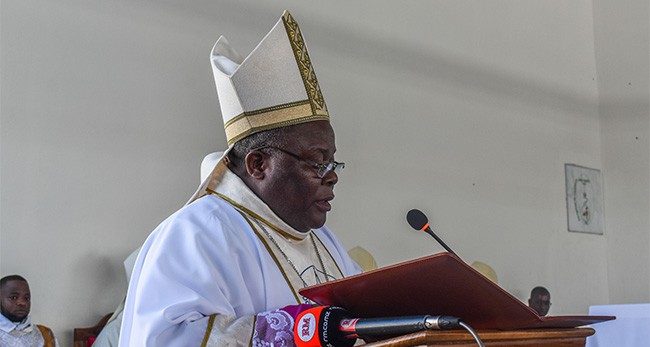
“I came that they may have life, and have it abundantly” (John 10:10) The Pan-African Catholic Theological and Pastoral Network (PACTPAN) joins the Symposium of Episcopal Conferences of Africa and Madagascar (SECAM), the Catholic Bishops’ Conference of Mozambique, the clergy, religious, and lay faithful of Mozambique, and all people of goodwill in mourning the tragic killing of Most Rev. Osório Citora Afonso, Bishop of Quelimane and Apostolic Administrator of the Archdiocese of Beira. We received with profound sorrow, shock, and indignation the news of the violent death of Bishop Afonso in his episcopal residence. We stand in prayerful solidarity with his family, his diocese, the people of Mozambique, and the entire Church in Africa. As SECAM rightly observed, this “heinous act, perpetrated against a shepherd of God’s people, constitutes not only an attack on the life and dignity of a devoted servant of the Gospel but also an assault on the values of peace, justice, human dignity, and religious freedom that are essential for the flourishing of every society.” PACTPAN wholeheartedly joins SECAM in its unequivocal condemnation of this barbaric crime and in its call upon the Government of Mozambique and all competent authorities to undertake an immediate, transparent, thorough, and independent investigation so that those responsible, whether perpetrators, accomplices, or masterminds, may be identified and brought to justice. As SECAM has rightly insisted, “the people of Mozambique, the Catholic Church, and the international community deserve the truth.” We are equally grateful for the prayerful solidarity of Pope Leo XIV, who described Bishop Afonso’s death as a painful loss for the Church and called upon all believers to reject violence and become builders of peace, reconciliation, and hope. In a continent wounded by conflict, insecurity, criminal violence, corruption, and political instability, the Holy Father’s appeal deserves renewed attention. The death of Bishop Afonso joins a disturbing pattern that has emerged in recent years across Africa. Too many bishops, priests, religious women and men, catechists, pastoral agents, and ordinary faithful have become victims of violence. In many cases, investigations remain incomplete, justice remains elusive, and families and communities are left without answers. The killing of shepherds of God’s people is never merely an attack on an individual. It is an attack on the moral conscience of society and on the sacredness of human life itself. We know that this tragedy extends far beyond attacks on Church leaders. Across our continent, countless ordinary men, women, and children are victims every day of murder, terrorism, banditry, organized crime, political violence, kidnappings, domestic violence, disappearances, and armed conflict. Mozambique continues to suffer the consequences of insurgent violence in Cabo Delgado. Nigeria faces persistent insecurity and attacks on communities. South Africa struggles with extraordinarily high levels of violent crime. Across several African nations, thousands of families live with the pain of loved ones who have been killed, abducted, or disappeared. This reality compels us to ask a painful but necessary question: What has happened to our commitment to the sanctity of life? We Africans often pride ourselves on cherishing life, family, community, and solidarity. Yet the increasing normalization of violence suggests that something precious is being lost. Human life is too often treated as disposable. Violence has become routine. Death has become commonplace. Too many people no longer feel shock when another life is taken. The killing of Bishop Afonso is a moment of moral reckoning not only for Mozambique, a country that has seen so much violence, but for our continent. PACTPAN believes that Africa\’s future depends upon a renewed commitment to two foundational sources of our moral vision: the Gospel of Jesus Christ and the African philosophy of Ubuntu. Ubuntu reminds us that “I am because we are.” Human beings do not exist in isolation. Our humanity is bound together. When one life is diminished, the entire community is diminished. When one person is murdered, something sacred is wounded in all of us. The Gospel invites us even to something higher. Jesus Christ came so that all may have life and have it abundantly. This is the motto that we have chosen as a network. The Christian vocation is therefore not merely to condemn violence after it occurs but to build cultures, institutions, and communities that protect life before it is threatened and to see justice for those who have been killed because the victims of violence die again and again if there is no justice and accounting for their deaths. For this reason, PACTPAN calls upon governments, religious leaders, educators, civil society organizations, traditional authorities, and families throughout Africa to renew their commitment to: As we mourn Bishop Osório Citora Afonso, we also recommit ourselves to the work for which he lived: building communities of faith, hope, justice, and peace. May his blood, and the blood of all innocent victims of violence in Africa, become a seed of renewal for our continent. May the Lord of Life welcome Bishop Afonso into the communion of the saints. May Jesus, the Bread and Blood of Life, whose feast Bishop Afonso was hoping to celebrate on the eve of his death, welcome him into the banquet of heaven. May God comfort all who mourn. May justice be done. May peace prevail in Mozambique and throughout Africa. Sr Jane Waruguru Kimathi Fr. Stan Chu IloCoordinating Servant, PACTPAN Pan-African Catholic Theological and Pastoral Network (PACTPAN) June 7, 2026, the Feast of the Body and Blood of Christ
PACTPAN’S STATEMENT OF SOLIDARITY WITH SECAM ON THE TRAGIC KILLING OF BISHOP OSÓRIO CITORA AFONSO Read More »

After Pope Leo’s Visit, what next for the Church in Africa?

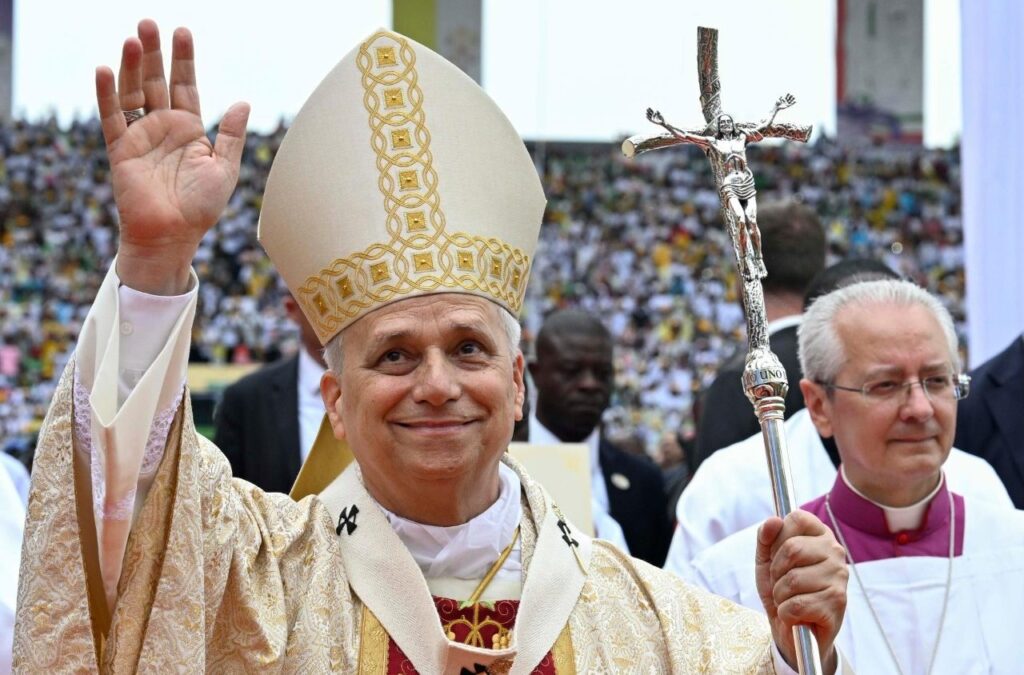
Reflecting on Pope Leo’s visit to Cameroon, Archbishop Andrew Nkea Fuanya of Bamenda posed an urgent question with striking clarity: “The Pope has given speeches and messages. We have all clapped. We are all happy. What next?” This is a question that African Catholic church leaders and theologians must take to heart. Following this successful papal visit, VoiceAfrique proposes that the next steps the Church in Africa takes will determine whether Pope Leo’s African moment will bear enduring fruits or become just another lost opportunity for the continent and the world. “The Church in Africa is profoundly blessed and is experiencing an extraordinary revival. Across our beautiful continent, the Catholic faith is flourishing at an unprecedented rate, attracting more individuals to its teachings, mission, and community.” The Church in Africa is profoundly blessed and is experiencing an extraordinary revival. Across our beautiful continent, the Catholic faith is flourishing at an unprecedented rate, attracting more individuals to its teachings, mission, and community. This growth is not just quantitative; it is also qualitative, as we are witnessing a remarkable surge in vocations to both the priestly and religious life. Our Church is vibrant and alive, energized by a young, high-potential population. These young people bring untapped spiritual gifts, dynamic energy, and a wealth of cultural and material resources that can enrich the Church and society as a whole. Throughout Africa, one can observe the fervent dedication of God\’s people as they engage in various forms of worship and community life. Whether through prayer, singing, dancing, or collaboration on community projects, they are united in their aspirations and hopes. Each action reflects a collective yearning for a brighter future, one that embodies their dreams and divine calling. As they come together in faith, they are not only nurturing their spiritual lives but also working towards a shared vision for a better tomorrow. Even in sites of pain and violence, and destruction, or amidst failed governments, and even when faced with unmerited suffering and impoverishment, our people continue to hope, to fight, and to resist the forces of entropy as they create alternative possibilities for a new era of history. All over our vast and rich land, we see signs of redemption, movements, and moments of reversal, carried on the shoulders of many agents of hope and in communities of resilience and support who work together against some of the polluting cultural, spiritual, and political vices that have stymied the continent. The Church in Africa has also produced an abundance of documents, statements, communiques, and publications regarding the desired relationship between the Church and society. At the highest level, the Symposium of the Episcopal Conferences of Africa and Madagascar (SECAM) has worked with its experts and leaders to create two pivotal documents in the last seven years: the Kampala Document (2019) and Vision 2025-2050 (2025). These documents incorporate the teachings of Vatican II, the outcomes of the two African synods, and the Synod on Synodality, providing a clear roadmap for transforming the Church and society in Africa. “A Church that collaborates with governments to promote the common good, constitutional democracy, human rights, religious freedom, and accountable governance. The Church must inspire Catholics to actively participate in politics by voting, running for office, advocating for justice, and infusing public life with Gospel values.—Pillar 12 of SECAM’s Vision 2025-2050” The 12th pillar of SECAM’s Vision 2025-2050 outlines the role of the Church in Africa, stating: “A Church that collaborates with governments to promote the common good, constitutional democracy, human rights, religious freedom, and accountable governance. The Church must inspire Catholics to actively participate in politics by voting, running for office, advocating for justice, and infusing public life with Gospel values.” God has given to us, as the Church in Africa, all the teaching and theological resources we need to be the Church that is prophetic, pastoral, and pragmatic in walking with God’s people in bringing the abundant life that the Lord promised to his people (John 10:10) and in bringing Africa toward the future which God alone knows. What is often lacking is the ability to translate moments like the recent visit of Pope Leo into concrete pastoral action. Often, there are no theological or pastoral follow-ups and measurable actions to consolidate what the papal visit accomplished magnificently. We recall many past beautiful papal visits and national, regional, and continental assemblies of bishops and religious leaders celebrated with so much enthusiasm. Yet, they often fail to translate into real action. These significant ecclesial events should have sparked lasting change, but instead, they often fizzle out. Furthermore, powerful statements, policies, and communiqués from various symposia and conferences involving bishops, priests, religious, theologians, and church organizations are released amid much fanfare and hope, only to be neglected and gather dust in chanceries, parishes, houses of formation, and theological libraries. This trend reveals a troubling reality: producing documents or organizing large events has become an end in itself rather than a catalyst for long-term, enduring, and strategic pastoral action for revival and renewal of the Church. “Organizing a papal visit is not an end in itself; rather, it marks the beginning of a pilgrimage for the Church, particularly in the countries our Holy Father visited. How can we build on the success of this visit?” Organizing a papal visit is not an end in itself; rather, it marks the beginning of a pilgrimage for the Church, particularly in the countries our Holy Father visited. How can we build on the success of this visit, especially when the world was focused on Africa and saw our continent for what it truly is, not as a place of misery, chaos, and despair, as some might portray, but as a land of hope, joy, and faith? Africa truly shone in the eyes of Pope Leo, revealing itself to be a reservoir of hope and multiple points of light and life. However, this recognition must become a call to action rather than a reason for superficial triumphalism or empty ecclesial rhetoric. As

After Pope Leo’s Visit, what next for the Church in Africa? Read More »