Pan-African Catholic Theology and Pastoral Network

Stan Chu Ilo

The U.S. and Israel are Fighting an Unjust War in Iran

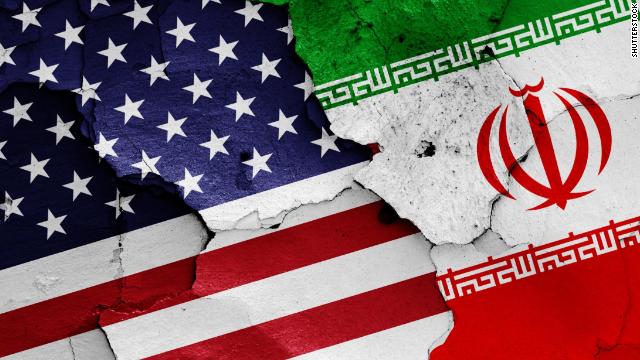
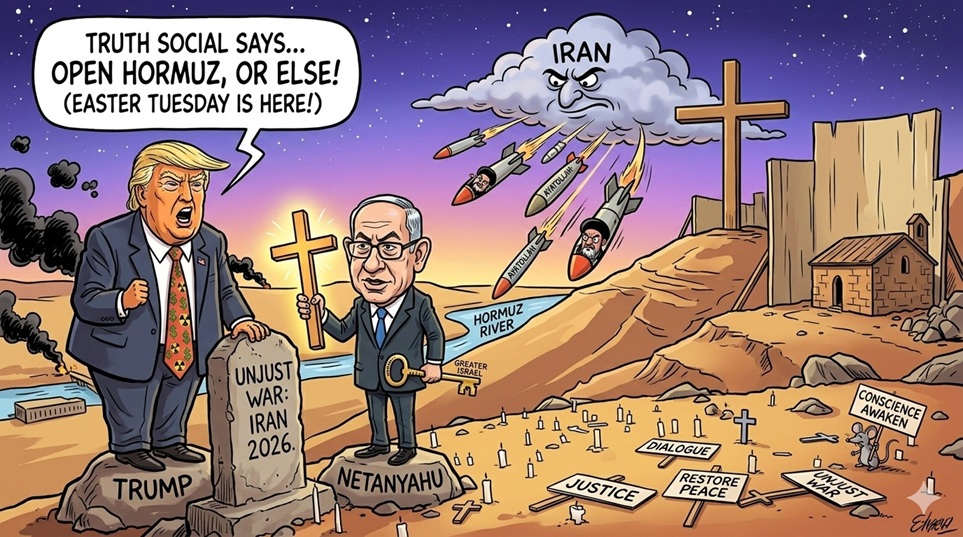
Reading the recent threats issued on Truth Social by President Trump on Easter Sunday, and his public statements on Easter Monday, threats to completely destroy Iran by Easter Tuesday, to blow up bridges, to dismantle power plants, if the Strait of Hormuz is not opened by Iran, were not only disturbing; they were heartbreaking. It forces one to ask, with a heavy conscience: how did America and the rest of the world arrive at such a perilous moral moment, where the language of annihilation is normalized and even baptized using Christian categories and language as a strategy? President Trump’s threats are not a sign of strength. Rather, it shows some sign of desperation, impatience, incohesion that has characterized his justification of this war from the beginning of this unfortunate war, and a lack of any prudence or sound judgment. This is a dangerous abandonment of the ethical restraints that govern the conduct of war and preserve our common humanity and could constitute a war crime and a violation of the U.S military’s rules of engagement. “When the language of power abandons justice, it becomes recklessness dressed as authority” — Stan Chu Ilo We may call it negotiation. We may call it deterrence. But when the language of power abandons the discipline of justice, it becomes recklessness dressed in the garments of authority. It becomes, in truth, a grave moral failure. What we are witnessing today is deeply troubling. The current war started by the United States and Israel against Iran does not, in my judgment, meet the conditions of a just war and is thus an unjust war. It lacks moral clarity, proportionality, and credible evidence of imminent threat. Preventive war, dressed up as necessity, remains ethically indefensible in international law. It is even more ethically flawed when it is driven by fear, speculation, or geopolitical ambition and economic interest rather than demonstrable and imminent danger. The unnecessary loss of innocent lives cannot be reduced to a strategy or collateral damage, particularly since this is an unjust war. The life of an American soldier is as sacred as the life of an Iranian child. The tears of a Palestinian mother, the grief of an Israeli father, the anguish of a Lebanese family, these are not inevitable collateral realities. They are the very measure by which history will judge us. And what shall we say about the systematic destruction of civilian infrastructure? Of universities, hospitals, power systems, and bridges reduced to rubble? What shall we say of targeted assassinations that erode every moral boundary? These are not signs of justice or strength but acts of cowardice driven by fear. These are wounds inflicted upon the fragile body of our shared humanity. “The Cross reveals sacrificial love, not domination; the Resurrection proclaims life, not destruction.” — Stan Chu Ilo One day, a future generation, perhaps wiser, perhaps more humane, will look back upon this moment in 2026 and ask: how did reasonable people remain silent while an architecture of violence was constructed before their very eyes? How did nations, endowed with reason and conscience, allow themselves to be carried by the winds of fear, power, and vengeance? They will ask how leaders, intoxicated by power, mistook domination for security, and destruction for peace. As a Christian leader, I must speak with prophetic clarity and humility. The Gospel does not bless war. It does not sanctify vengeance. It does not anoint the language of annihilation. As Pope Leo XIV reminded the Church on Palm Sunday, “God does not walk with those who sow death, but with those who build peace with patient hands.” And again, he teaches us: “The Church has no enemies to destroy, only brothers and sisters to embrace.” This message has landed on deaf ears and hardened hearts because the dramatis personae in this ongoing conflagration have a different agenda, which sadly they have not articulated, particularly Trump. I guess for President Netanyahu, it will serve his political interest and desire for a Greater Israel if Iran becomes a failed state and is reduced to rubble by the U.S., repeating what Israel did in Gaza, and then setting up a Board of Peace after the destruction. Let’s pray that this does not happen. This is the scandal of our time that the name of God is invoked in the service of violence, that the Cross of Christ is misappropriated to justify the machinery of war. To compare acts of military power to the death and resurrection of Jesus Christ as the U.S. Defense secretary does repeatedly is not only theologically misguided but a form of idolatry; it is a profound distortion of the Christian mystery. The Cross reveals sacrificial love, not domination. The Resurrection proclaims life, not destruction. As Christians, we must reclaim the robe of righteousness from those who would stain it with the language of war. We must remind the world that Christianity stands on the side of life, dignity, justice, dialogue, and peace. The God of life and the God of Jesus Christ, who came to give us life in abundance, is not the patron of war and vengeful people or nations, but the source of reconciliation. Therefore, the world must not remain silent. Conscience must awaken. Religious leaders, especially those who claim proximity to power, must speak truth, not flattery, as was the case last week when the Religious Freedom Committee met with President Trump at the White House. They must preach restraint, not aggression; humility, not hubris; dialogue, not destruction. They must call leaders to conversion, not reinforce their illusions of invincibility and the superpower syndrome, which largely drives the President. May we be reminded that peace is not weakness.  Peace is the highest expression of moral courage and the greatest longing of human beings. Dialogue is not futile; it is the best expression of our human capacity to reason together and walk towards the promotion of our common good. “Peace is not weakness; it is the highest expression of moral courage.” — Stan

The U.S. and Israel are Fighting an Unjust War in Iran Read More »
Did God Create Hell? Part II: A Call to Repentance and Return to God and Love

Why are people not thinking of hell anymore as they did in the past? Lent is the season when the Church insists that we look steadily at the truth: the truth about our fragility, sin, death, eternity, and God. Lent does not invite us into morbid fear; it invites us into conversion. It calls us back from a life lived on the surface, back from a life that has forgotten eternity. We need to think of the fragility and temporality of life. My reflection on hell is not because I wish to frighten anyone, but rather because I believe that if we place eternity before us, we can never waste any single day. Having eternity before me reminds me of my human finality. It forces me to let go of pride and vain glory because we take nothing with us from this life, except, as we pray at every funeral, the good deeds that go with us. “Reflection on hell is the Church’s call to live responsibly before God in view of eternity.” — Stan Chu Ilo The contemporary forgetfulness of hell is not new. Already in the fourth century, John Chrysostom (c. 349–407), the great Archbishop of Constantinople known as the “Golden-Mouthed,” lamented that Christians of his own time were growing spiritually complacent. Though they feared poverty, illness, or public shame, they seemed indifferent to the eternal destiny of their souls. In his homilies on Matthew and Romans, he warned that people weep over material losses but do not even groan over the loss of their souls. He urged his hearers to keep eternity before their eyes, insisting that meditation on judgment and hell was not meant to terrify but to awaken. For Chrysostom, remembrance of hell was medicinal, a spiritual discipline meant to restore moral seriousness and lead to conversion. The problem, then as now, was not disbelief alone, but forgetfulness—that is, a loss of eschatological consciousness. Reflection on hell is the Church’s call to live responsibly before God in view of eternity. In this second part of my reflection, I examine how the New Testament and early Christian literature use the language of hell, asking whether it should be understood primarily as a serious warning about the terrible consequences of sin rather than as a detailed blueprint of the fate of the reprobate. It is necessary to clarify the key term “hell” as used in mainstream Catholic tradition. In 1979, the Sacred Congregation for the Doctrine of the Faith published a brief text, On Certain Questions Concerning Eschatology, at a time when confusion about the last things was spreading in theological circles. Rather than offering speculative details about the architecture of the afterlife, the document reaffirmed the essential structure of the Church’s faith. It recalled that eternal life is communion with Christ, that human freedom has lasting consequences, and that the possibility of definitive self-exclusion from the vision of God cannot be denied without emptying moral responsibility of its seriousness. Hell, in this articulation, is understood above all as deprivation of the sight of God. Hell is a rupture that touches the whole being of the person. At the same time, the document distinguished clearly between this state and the purification of those who die in God’s friendship but are not yet fully conformed to God. Purgatory is ordered toward the beatific vision; hell is the tragic refusal to see God; it is the stubborn turning away permanently from God; the refusal of the human soul to submit to God’s will and ordination of all things. Hell is the state of those who reject God to the last moment of their lives—those who turn their back on God and on their neighbors, and those who cling unrepentantly to sin and evil to the final hour of life. “The doctrine of hell ultimately reminds Christians that love must be freely chosen.” — Stan Chu Ilo The theological balance here is important. The Church safeguards both divine mercy and divine justice. She resists sentimental universalism that dissolves judgment into inevitability, and she resists a crude literalism that imagines eternal punishment in merely spatial or material terms. The Church affirms the boundless love and mercy of God for all sinners. We are reminded that though our sins be as dark as scarlet, God will forgive us. As the prophet Isaiah proclaims:                                                                                                        “Though your sins are like scarlet, they shall be as white as snow; though they are red like crimson, they shall become like wool” (Isaiah 1:18). The only sin that cannot be forgiven is the refusal to admit one’s sins before God, for God cannot forgive what we have not confessed or repented of. As Scripture teaches: “If we confess our sins, he who is faithful and just will forgive us our sins and cleanse us from all unrighteousness” (1 John 1:9) But the one who refuses to acknowledge sin closes the door to mercy, for “Whoever conceals their sins does not prosper, but the one who confesses and renounces them finds mercy” (Proverbs 28:13). God does not impose forgiveness or mercy on us—ask, and you shall receive. Jesus himself reminds us: “Ask, and it will be given to you; search, and you will find; knock, and the door will be opened for you” (Matthew 7:7). For the Lord is always ready to forgive, but he waits for the humble heart that turns back to him. What is central is relational: communion with God or its loss. God does not coerce love, but neither does He trivialize freedom. As the late Archbishop Desmond Tutu once said: “God will freely allow you to go to hell rather than force you into heaven.” Eternity, therefore, is not a figure of speech; it is real. It is the horizon before which our choices stand. It is the opening into the boundless love of God, which is the fulfilment of friendship begun with God here on earth. Friendship with God, which is our vocation, never ceases with death. In the longer

Did God Create Hell? Part II: A Call to Repentance and Return to God and Love Read More »

Why Are African Young Men Being Lured to Die in the Russia-Ukraine War?

The Foreign Minister of Ghana, Samuel Ablakwa, on a recent visit to Kiev, Ukraine, asked his Ukrainian counterpart to help secure the release of two Ghanaians held as prisoners of war. According to a report by the BBC, of the 272 Ghanaians said to be fighting in the war, more than 55 young men have been killed. Another investigation by TV5 Monde in a special report titled All Eyes on Wagner, Le Business du désespoir estimated that there are currently 1,417 young Africans fighting in the war, of whom 316 have died. From the African Sahel to South Africa, from Nigeria to Ghana, and from Kenya to Ethiopia, hundreds of African young people are being lured to fight in this war through deception, exploitation, and manipulation. The number of African young fighters is not fully known because of the dark world that surrounds the recruitment networks. In South Africa, for instance, the daughter of former President Jacob Zuma, Duduzile Zuma-Sambudla, is standing trial for allegedly recruiting between 17 and 22 young South Africans to fight in the war with false promises, according to reporting by CNN. Seventeen of these South Africans, at the time she was charged, were trapped in the war-torn Donbas region. In Kenya, Festus Omwamba, head of Global Faces Human Resources, is being held on charges of illegally recruiting 22 Kenyans to fight in the war under the pretext of lucrative employment contracts, according to another report by the BBC. The Kenyan National Intelligence Service estimates that as many as 1,000 Kenyans are currently fighting in the Russia-Ukraine war. These nameless and faceless young Africans are our sons and daughters whose future has been sacrificed because they live in a continent where many prefer to expose themselves to death because they have lost hope in the African Motherland. Unlike the World Wars, where Africans were forced against their will by colonial oppressors to fight for the feuding Western powers in wars in which they and their ancestors had no hand and from which they would not benefit, these young people are being sacrificed by their own fellow citizens. “Hundreds of African young people are being lured to fight in this war through deception, exploitation, and manipulation.” — Stan Chu Ilo We are selling our own people to foreigners knowing that they may meet violent death. The greed that drives many a demented soul and poisoned heart stops at nothing in the conscienceless pursuit of filthy lucre. What is happening to our young people today, exemplified in this illegal sale of our young men to die on the battlefields of Ukraine or Russia, reflects a cycle of decay in our continent: corruption that knows no limit; lawlessness and wickedness that know no bounds; and the falsity of the claim that we Africans love life, family, and community. We must wake up to the lie that Ubuntu is alive in the continent if we are selling our own sons and daughters to foreigners to be slaughtered. Africa is now a leading continent for modern-day slavery and human trafficking, according to the United Nations Office on Drugs and Crime. This reality shatters our claims to be the last sanctuary for the finest values and testimony to the primacy of life and a pro-life ethic. We know that these young men face almost certain death in Russia and Ukraine, yet our governments are only now beginning to take notice. In an interview with CNN, the Ukrainian Foreign Minister Andrii Sybiha claimed that more than 1,400 citizens from 36 African countries are fighting for Russia in Ukraine and that “most of them are immediately sent to the so-called ‘meat assaults’ where they are quickly killed.” “We are selling our own people to foreigners knowing that they may meet violent death.” — Stan Chu Ilo As this unfortunate war enters its fourth year, the African Union, African governments, and the Catholic Church in Africa must make a pact to end this shameful and abominable act of selling our young men to die in this needless war. First, with over 70 percent of Africans under 30 years of age, education and employment must become an absolute priority. The second liberation we long for in Africa must be anchored on the shoulders of young people. As the African UN Youth Delegate, Kapwani Kavenuke, said in a recent interview with Africa Renewal, the youth of Africa are “the heartbeat that will carry Africa from potential to prosperity.” But this will not happen without transformative reforms that prioritize youth education, create opportunities for innovation and entrepreneurship, and implement sustainable forward-looking policies that build on the assets and idealism of African young people. Youth unemployment is rising across the continent. In Kenya, unemployment grew from 6.6 percent in 2006 to 15.2 percent in 2026 according to data from the World Bank. In South Africa, where the majority of the unemployed are Black, youth unemployment rose from 43.4 percent in 2002 to 59.9 percent in 2025, also according to World Bank data. Without jobs at home and without government social security to cushion the crushing poverty of joblessness, young Africans become desperate for any route of escape from the suffocating existence in which they live. “Without jobs at home, young Africans become desperate for any route of escape from the suffocating existence in which they live.” — Stan Chu Ilo Finally, the words of Pope Leo XIV on the painful anniversary of four years of this aggression begun by Russia ring with moral clarity: “Every war is truly a wound inflicted upon the entire human family; it leaves in its wake death, devastation, and a trail of pain that marks generations. Peace cannot be postponed.” Africa knows war. Present generations have been marked by wars fought at home and their aftermath. It bleeds the heart that this generation will also live with the enduring pain of young men and women slaughtered in faraway Russia and Ukraine because their fellow Africans lured them into war on foreign soil while

Why Are African Young Men Being Lured to Die in the Russia-Ukraine War? Read More »

War of Choice: Why America Must Not Repeat Iraq in Iran

President Trump is dragging the U.S. into an unnecessary war without any national conversation or the approval of Congress. This military operation is both ill-advised and wrong-headed. President Trump is going into it alone without the consent of any of America’s allies in the Middle East, the G20, NATO, or elsewhere, except Israel. Iran was already negotiating in good faith, and the Omanis and other third parties were invested in allowing diplomacy and negotiation to work. But with the U.S. arms buildup in the region, it seems President Trump never really wanted to give diplomacy and peace a chance, believing in gunboat diplomacy and in leveraging military might over the long, patient path of jaw-jaw rather than war-war. \”President Trump is dragging the U.S. into an unnecessary war without any national conversation or the approval of Congress.” — Stan Chu Ilo War is the solution that lunatics prefer to peacemaking and nonviolence. It is anachronistic. The world has no appetite for war because we have found better ways to resolve our conflicts as a human family. War destroys everything. No American, Iranian, Israeli, Palestinian, or any other human being deserves to die needlessly in this senseless war of choice that President Trump has just begun. Americans did not elect Donald Trump as their President because they desire the continuation of these endless wars that America chooses now and again in the Middle East or other regions. A greater majority of Americans have learned from the calamities in Vietnam, Iraq, Somalia, Afghanistan, and many other places where America went in, driven by a superpower syndrome, that an imperialistic pursuit of America’s interests or regime change in other people’s lands, motivated solely by America’s security, geopolitical, and economic interests, always ends in failure and more chaos. Just look at Iraq! However, the reasoning for the United States, as Noam Chomsky writes, regarding America’s global influence is straightforward: “What we say goes!” However, I say that any attempt to dictate to other nations or impose America’s version of governance on them through military means always ends in failure and more misery for the people, the region, and the world. President Trump is attacking Iran not because of the interests of the Iranian people but because of Trump’s narrow version of America’s interests as of today. That might change tomorrow. “Any attempt to dictate to other nations or impose America’s version of governance on them through military means always ends in failure and more misery.” — Stan Chu Ilo President Trump is dragging America into another irreversible mistake in the Middle East, and Americans must stand up to this President. Indeed, all men and women of goodwill throughout the world must say “no” to this violation of Iran’s sovereignty by the U.S. and Israel. War against Iran is not the solution to the needed surgical change in Iran, whose government has brought so much misery and pain to its own people and has made this proud nation a pariah in the world. No nation can survive by repressing its own people, undermining its neighbours’ security, or pushing for the death of America, Israel, or any other nation through terrorism, sabotage, and subversive acts. Iran needs a new and enduring political dispensation that promotes and guarantees the common good for all Iranians. Still, it cannot be brought about through the current American and Israeli operation. President Bush, like President Trump today, had predicted that after the toppling of Saddam Hussein in Iraq, the Iraqis would greet Americans as liberators. We know how many lives were wasted, and Iraq is still bleeding from that terrible war experiment that America waged with the so-called coalition of the willing. More than 20 years later, we are hearing the same irrational sabre-rattling and rhetoric from another American President. I wonder: What makes President Trump think that America has the solution to other people’s problems when America is struggling to address myriad problems and challenges in its crisis of democracy, going back to the storming of Congress on January 6, 2021? What makes anyone believe that America can bring about in Iran or any other country what it is struggling to uphold in its own country, with what we are experiencing as Americans today: the dismantling of the rule of law and separation of powers, the crisis surrounding the Epstein files, government by retribution, executive overreach, and autocracy under the Trump regime in the U.S.? I long for a world where God’s people can live in peace and prosperity. I long for a world where the lives of God’s children are no longer sacrificed so cheaply by our political leaders to advance their limited perception of reality, insatiable greed, and unredeemed power to dominate. Power today, whether locally or internationally, should be exercised in concert to address human and global problems, especially to reduce human suffering and the pain of the poor, who are often the non-grievable victims of these forever wars. War should no longer be an option on the table because the just war theory was not developed with these massive weapons of destruction in mind. Who is the unjust aggressor in this surprise development in Iran today? Where is the proportionality in the destruction already inflicted on Iran and other Gulf states? An urgent meeting of the U.N. Security Council and the U.S. Congress, respectively, is needed to stop this calamitous experiment from expanding into a regional conflict and a river of blood for our fellow human beings. “War should no longer be an option on the table.” — Stan Chu Ilo With Pope Leo I, I say: “Every war is truly a wound inflicted upon the entire human family; it leaves in its wake death, devastation, and a trail of pain that marks generations. Peace cannot be postponed. It is an urgent necessity that must find a home in our hearts and be translated into responsible decisions.”

War of Choice: Why America Must Not Repeat Iraq in Iran Read More »