Pan-African Catholic Theology and Pastoral Network

April 2026

After Pope Leo’s Visit, what next for the Church in Africa?

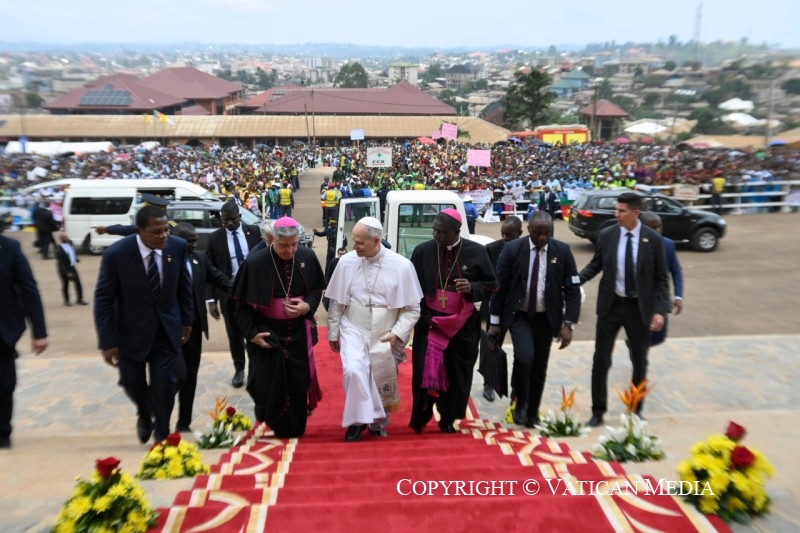
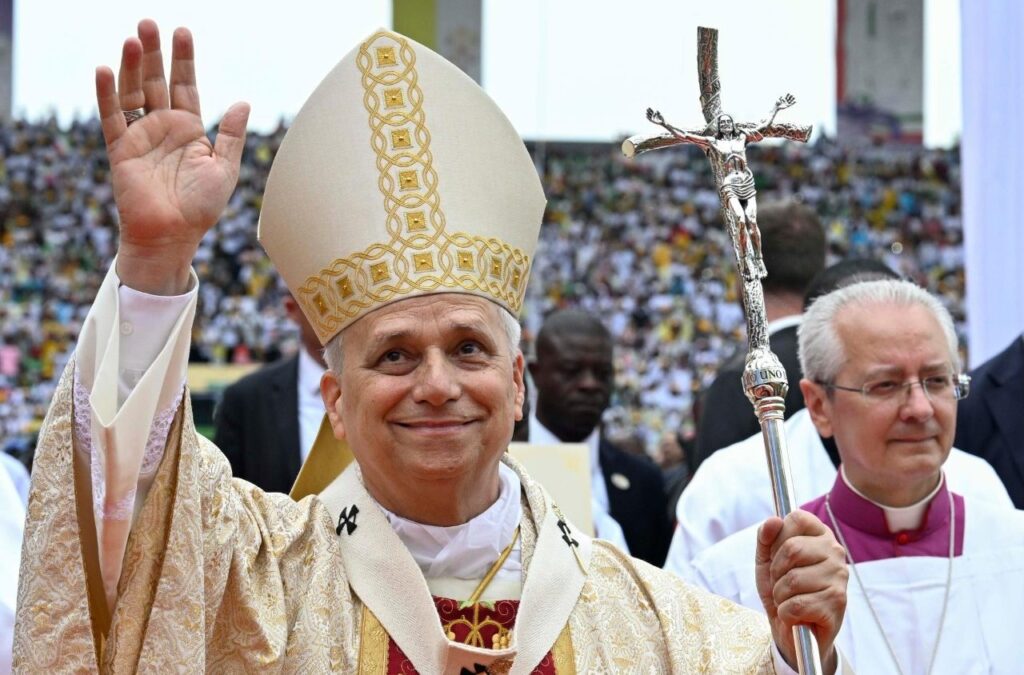
Reflecting on Pope Leo’s visit to Cameroon, Archbishop Andrew Nkea Fuanya of Bamenda posed an urgent question with striking clarity: “The Pope has given speeches and messages. We have all clapped. We are all happy. What next?” This is a question that African Catholic church leaders and theologians must take to heart. Following this successful papal visit, VoiceAfrique proposes that the next steps the Church in Africa takes will determine whether Pope Leo’s African moment will bear enduring fruits or become just another lost opportunity for the continent and the world. “The Church in Africa is profoundly blessed and is experiencing an extraordinary revival. Across our beautiful continent, the Catholic faith is flourishing at an unprecedented rate, attracting more individuals to its teachings, mission, and community.” The Church in Africa is profoundly blessed and is experiencing an extraordinary revival. Across our beautiful continent, the Catholic faith is flourishing at an unprecedented rate, attracting more individuals to its teachings, mission, and community. This growth is not just quantitative; it is also qualitative, as we are witnessing a remarkable surge in vocations to both the priestly and religious life. Our Church is vibrant and alive, energized by a young, high-potential population. These young people bring untapped spiritual gifts, dynamic energy, and a wealth of cultural and material resources that can enrich the Church and society as a whole. Throughout Africa, one can observe the fervent dedication of God\’s people as they engage in various forms of worship and community life. Whether through prayer, singing, dancing, or collaboration on community projects, they are united in their aspirations and hopes. Each action reflects a collective yearning for a brighter future, one that embodies their dreams and divine calling. As they come together in faith, they are not only nurturing their spiritual lives but also working towards a shared vision for a better tomorrow. Even in sites of pain and violence, and destruction, or amidst failed governments, and even when faced with unmerited suffering and impoverishment, our people continue to hope, to fight, and to resist the forces of entropy as they create alternative possibilities for a new era of history. All over our vast and rich land, we see signs of redemption, movements, and moments of reversal, carried on the shoulders of many agents of hope and in communities of resilience and support who work together against some of the polluting cultural, spiritual, and political vices that have stymied the continent. The Church in Africa has also produced an abundance of documents, statements, communiques, and publications regarding the desired relationship between the Church and society. At the highest level, the Symposium of the Episcopal Conferences of Africa and Madagascar (SECAM) has worked with its experts and leaders to create two pivotal documents in the last seven years: the Kampala Document (2019) and Vision 2025-2050 (2025). These documents incorporate the teachings of Vatican II, the outcomes of the two African synods, and the Synod on Synodality, providing a clear roadmap for transforming the Church and society in Africa. “A Church that collaborates with governments to promote the common good, constitutional democracy, human rights, religious freedom, and accountable governance. The Church must inspire Catholics to actively participate in politics by voting, running for office, advocating for justice, and infusing public life with Gospel values.—Pillar 12 of SECAM’s Vision 2025-2050” The 12th pillar of SECAM’s Vision 2025-2050 outlines the role of the Church in Africa, stating: “A Church that collaborates with governments to promote the common good, constitutional democracy, human rights, religious freedom, and accountable governance. The Church must inspire Catholics to actively participate in politics by voting, running for office, advocating for justice, and infusing public life with Gospel values.” God has given to us, as the Church in Africa, all the teaching and theological resources we need to be the Church that is prophetic, pastoral, and pragmatic in walking with God’s people in bringing the abundant life that the Lord promised to his people (John 10:10) and in bringing Africa toward the future which God alone knows. What is often lacking is the ability to translate moments like the recent visit of Pope Leo into concrete pastoral action. Often, there are no theological or pastoral follow-ups and measurable actions to consolidate what the papal visit accomplished magnificently. We recall many past beautiful papal visits and national, regional, and continental assemblies of bishops and religious leaders celebrated with so much enthusiasm. Yet, they often fail to translate into real action. These significant ecclesial events should have sparked lasting change, but instead, they often fizzle out. Furthermore, powerful statements, policies, and communiqués from various symposia and conferences involving bishops, priests, religious, theologians, and church organizations are released amid much fanfare and hope, only to be neglected and gather dust in chanceries, parishes, houses of formation, and theological libraries. This trend reveals a troubling reality: producing documents or organizing large events has become an end in itself rather than a catalyst for long-term, enduring, and strategic pastoral action for revival and renewal of the Church. “Organizing a papal visit is not an end in itself; rather, it marks the beginning of a pilgrimage for the Church, particularly in the countries our Holy Father visited. How can we build on the success of this visit?” Organizing a papal visit is not an end in itself; rather, it marks the beginning of a pilgrimage for the Church, particularly in the countries our Holy Father visited. How can we build on the success of this visit, especially when the world was focused on Africa and saw our continent for what it truly is, not as a place of misery, chaos, and despair, as some might portray, but as a land of hope, joy, and faith? Africa truly shone in the eyes of Pope Leo, revealing itself to be a reservoir of hope and multiple points of light and life. However, this recognition must become a call to action rather than a reason for superficial triumphalism or empty ecclesial rhetoric. As

After Pope Leo’s Visit, what next for the Church in Africa? Read More »
Pope Leo’s African Moment: A Prophetic Political Theology— A Test for African Bishops and Theologians, Part II

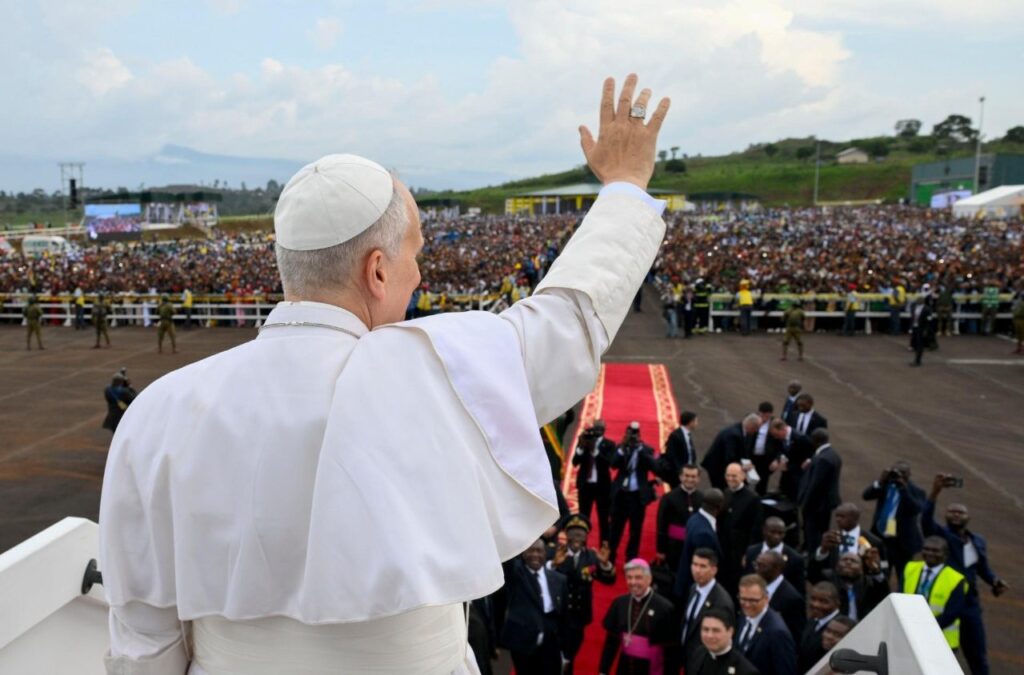
Pope Leo’s African moment is an epiphany, revealing to the Church and the world the kind of Pope God has given us. We are at the early stages of a papacy rooted in our ancient tradition and bold in proclaiming the truth of the faith with humility and joy. It is a papacy marked by deep respect for the many pathways and the diversity of cultures, races, nations, and religions that flow into the vast ocean of God’s mission, within which the Catholic Church carries on her fragile yet sacred vocation. What stands out most clearly in Pope Leo’s mission to Africa, amid today’s complex socio-political and ideological divisions, is his enunciation of a prophetic political theology. In this, he not only retrieves Catholic Social Teaching but applies it with remarkable boldness to the moral and spiritual crisis of our confused world, addressing national and global politics, the dignity and rights of all peoples, the ethics of war and peace, love of neighbor especially the poor and suffering, and offering a critique of the sinful structures of domination, corruption, and manipulation in defense of the common good. What is Pope Leo’s Prophetic Political Theology? This prophetic political theology, in Leo’s emerging usage, is not partisan theory, clerical statecraft, or papal overreach, as some whose consciences have been whipped by the prophetic sting from the mouth of the Pope might claim. Rather, it is a Gospel grounded reading of political life that makes an ethical judgment of the social order according to how far it is ordered to peace, justice, social friendship, truth, human dignity, the participation of all citizens, and the common good, while calling rulers, citizens, and institutions to conversion so that the reign of God may emerge in history. “The heart of this prophetic political theology is articulated through a closer reading of Pope Leo’s speeches and in-flight interviews during his ongoing pilgrimage of peace to Africa. ” — Stan Chu Ilo This prophetic political theology could be understood, I argue, through a set of interrelated questions about the right ordering of society in light of the Gospel, namely: How is authority and power exercised as a form of service, ordered to the common good and the flourishing of all, especially the poor and most vulnerable? How are structures of governance shaped to foster certain outcomes: participation, co-responsibility, and the dignity of every person in a spirit of communion akin to the African ubuntu? How are the diverse identities, interests, and aspirations of people discerned, reconciled, and integrated within a social order that respects difference while nurturing unity, solidarity, and social friendship? By what means are collaboration, coordination, and mutual accountability cultivated among persons, communities, and institutions, so that subsidiarity and solidarity work together in advancing the common good, shared purposes, and promoting human and cosmic flourishing? And how are questions of justice, equity, and fairness discerned in light of the dignity of the human person and the demands of the Gospel, so that social, economic, and political arrangements are rightly ordered, relationships are restored, and all people participate through their assets to building a society of abundant life for all where no one is excluded from the goods of creation? All these questions, I believe, can be understood within what I see as the Church’s preference for institutionalism as a political theory. Here, to borrow an idea from Lowndes, Marsh, and Stoker in Theory and Methods in Political Science, there is a focus on the “rules, norms, and values” that govern politics and governance, and on the institutions that regulate and promote the common life and the good of order. These norms are derived from natural law, divine positive law, the Gospel message, and the living Tradition and Magisterial teaching of the Church, discerned within history, human experience, and ecclesial life. They are universally applicable because they relate to the good of all human beings, whether they are Christians or not. However, in Pope Leo’s view, these values are not arbitrarily dictated, nor should the institutions that govern our common life locally or globally be imposed on the populace or the rest of the world by a few individuals or a few nations, and sustained by a tightly knit, narrow political class. “This is the problem in a country like Cameroon or Equatorial Guinea, where a thin top layer of the political class, or a cabal of patrons who has captured the state, as it were, turns statecraft into thievery, extraction, prebendalism, and extraversion, while using the state’s monopoly of violence to maintain tight control over a restive and disinherited masses who cry daily to God.” — Stan Chu Ilo This is also the challenge the world faces in America’s unilateralism or exceptionalism, where it uses its military or economic might to advance a narrow vision of history, spiced with a warped Christian eschatology that, sadly, has the ugly face of a new form of idolatry, having nothing to do with the reign of God, and the God of peace and love revealed to the world by our Lord Jesus Christ. Pope Leo is inviting the world and Christians to take away the robe of Christianity from right-wing white Christian nationalists, who wish to resurrect the ideals and projects of a defunct Christendom. “I think Pope Leo is inviting Christians to infuse their societies with Christian values rather than to dominate them through Christian politics or a Christian theocracy.” — Stan Chu Ilo From this perspective, it seems that Pope Leo invites the world to recognize that institutions of power should be continually renewed through reflective practices. This renewal should be informed by a social imagination that connects an understanding of people\’s daily joys and sorrows with the norms and ideals of good governance. These norms should arise from, resonate with, and address the social conditions to ensure that the social order is just, equitable, and promotes human security and the common good, which everyone should be able to access like a wellspring. How has Pope

Pope Leo’s African Moment: A Prophetic Political Theology— A Test for African Bishops and Theologians, Part II Read More »

Pope Leo’s African Moment: A Prophetic Political Theology— A Test for African Bishops and Theologians, Part I

The world has been quite fascinated by what is emerging as the prophetic political theology of Pope Leo. Forbes, for instance, calls Pope Leo’s proclamation of the social gospel “a masterclass in moral courage.” CNN’s Christopher Lamb writes that Pope Leo is “reclaiming Christian values from the Trump administration.” The Financial Times similarly observes that Leo’s early interventions suggest a return to a morally assertive papacy in global affairs, while The Economist interprets his voice as part of a renewed Catholic willingness to offer a moral critique of political and economic power. The New York Times has described Leo as reasserting the moral voice of the papacy in an age of political fragmentation, and The Guardian highlights his readiness to challenge power across ideological divides in the name of human dignity and justice. Even the BBC notes the distinctive character of his leadership: a pastoral voice that speaks with unusual directness into the political crises of our time. “These positive affirmations of the Pope’s message and courageous moral voice reveal that, despite its own weaknesses and limitations, the Catholic Church, represented by the papacy, remains the world’s most visible moral authority today.” — Stan Chu Ilo In the face of the moral and spiritual bankruptcy of many political leaders across the globe, and the crisis of history unfolding in the epidemic of war and violence in our world, there is a pressing need. As Pope Leo says, there is a need for someone to speak out against these evils. There must also be a convincing message of an alternative path to a peaceful world, one that spreads love, prosperity, and happiness rather than hate, violence, and suffering among the majority of God’s people. “Pope Leo’s message offers an alternative path through what I call his prophetic political theology, which transcends his person. He speaks from within a deep and living tradition, with both Augustinian and Gospel roots, as articulated in Catholic Social Teaching.” — Stan Chu Ilo This tradition has consistently upheld the ordering of society toward the promotion of the common good, understood not merely as social stability or the absence of war, but as a moral and spiritual horizon oriented toward justice, the good life, and the flourishing of all. In this vision, the dignity, rights, and vocation of every person are safeguarded and advanced, so that society may foster sustainable and integral human development, and the ordination of all things toward the fulfillment of history in acts of love and solidarity. As I argue in my book on Pope Leo, Dilexi Te: A Church Formed by Love, he is quietly reinventing Catholic social teaching to meet the fragmented post-liberal world of today, where the erstwhile global institutions designed after World War II are exhausted and fraying under the weight of the inner contradictions of modernity’s lies about a convergent trajectory of history. “In Pope Leo’s speeches in Africa, we see a direct and unambiguous retrieval and application of Catholic Social Teaching to concrete historical realities, and, more importantly, the courageous naming of the actors whose invisible hands weave the tangled yarn of structural violence, spinning, knotting, and tightening the threads of injustice into rough fabrics of exclusion, exploitation, and suffering.” — Stan Chu Ilo These are the architects and custodians of structures of sin, who stitch together systems that bind, entrap, and hold a majority of God’s people in conditions of quiet bondage.  Leo does not allow these structures to remain faceless or abstract; he exposes the patterns, unmasks the agents, and calls them to account, even as he summons the whole human community to the harder work of unweaving these fabrics of injustice and reweaving the social order according to the demands of justice, truth, and the dignity of all. Leo’s denunciation of leaders who invoke God in the service of domination is deeply Augustinian. It recalls Augustine’s critique of the libido dominandi as the root of political disorder and the great threat to the tranquility of order. Yet Leo is not naïve about the nature of political life. Like Augustine’s vision of the two cities interwoven in history, his approach acknowledges the persistence of conflict between competing values and visions of the good. “In this sense, his political theology resonates with what contemporary theory describes as an agonistic understanding of democracy: the recognition that conflict is enduring. However, Leo refuses to absolutize conflict. His insistence on dialogue is a call to transform antagonism into a space where differences can be expressed, contested, and discerned within an ethical horizon ordered to the common good, to the love of God and others, to the dignity of the human person, and to the flourishing of all.” — Stan Chu Ilo What is this prophetic political theology and how did Pope Leo capture it so far in his messages in Algeria and Cameroon? I will address this question in the second part of this essay.

Pope Leo’s African Moment: A Prophetic Political Theology— A Test for African Bishops and Theologians, Part I Read More »

Le Nonce apostolique face aux défis pastoraux au Burkina Faso et au Niger

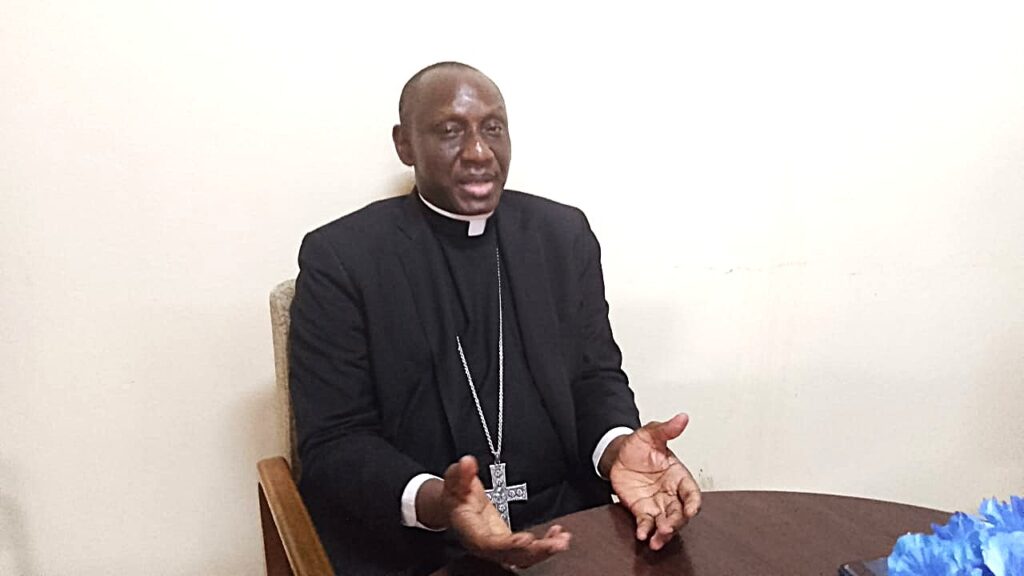
Résumé En mission au cœur du Sahel, entre défis sécuritaires, crises humanitaires et espérance chrétienne, le nouveau nonce apostolique au Burkina Faso et au Niger, Son Excellence Éric Suiviguidi, partage sa vision pastorale. Dans cet entretien accordé à VoiceAfrique – Catholic News Analysis, il revient sur sa mission, les réalités du terrain et l’appel à une Église toujours plus proche des plus vulnérables. Accueillir la mission dans la foi VoiceAfrique: Votre récente nomination comme nonce apostolique au Burkina Faso et au Niger vous place au cœur d’un front pastoral parmi les plus délicats de l’Église. Dans quelles dispositions intérieures avez-vous accueilli cette mission, et quelle vision souhaitez-vous y porter? Son Excellence (SE) Éric Suiviguidi : Lorsque l’Église vous appelle à une mission, on l’accueille d’abord dans la foi. Certes, la mission qui m’est confiée n’est ni simple ni facile, mais je l’ai reçue avec confiance. C’est d’ailleurs pour cela que j’ai choisi comme devise : « Il est fidèle, celui qui vous appelle ». Je me suis disposé à vivre cette mission en communion avec les Églises locales. Les évêques, les prêtres, les agents pastoraux, les religieux, les religieuses et les laïcs sont les premiers acteurs de la vie pastorale. Face aux nombreux défis au Burkina Faso et au Niger, leur résilience est pour moi une lumière, un véritable signe d’espérance. Mon rôle est de les accompagner, de les soutenir et de fortifier cette espérance. Une Église au cœur de l’épreuve VoiceAfrique: L’insécurité et le terrorisme marquent profondément la vie des populations. En quoi ces réalités redéfinissent-elles la mission de l’Église? SE Éric Suiviguidi : L’Église au Niger, comme dans d’autres pays de la sous-région, traverse une période particulièrement difficile. Nous puisons dans l’expérience de nos aînés pour vivre cette situation, en la confiant au Seigneur et en demandant la grâce de la traverser avec sérénité. Pour les agents pastoraux, le défi est immense. Ils vivent eux-mêmes des situations traumatisantes, tout en étant appelés à apporter réconfort, confiance et paix aux fidèles. Cela exige une grande proximité et un véritable dépassement de soi : porter la souffrance des autres tout en affrontant la sienne. Au Burkina Faso, j’ai vu des paroisses et des communautés religieuses visiter les camps de déplacés, soutenir les familles, offrir écoute, prière et accompagnement psychologique. Dans ces contextes de douleur, la proximité pastorale est essentielle. Une Église en sortie, malgré les limites VoiceAfrique: Le pape François appelle à une \”Église en sortie\”. Comment cette vision peut-elle s’incarner concrètement dans votre contexte? SE Éric Suiviguidi : Les populations doivent ressentir la proximité de l’Église, non seulement pour les conduire à la foi, mais aussi pour leur révéler l’amour de Dieu. Nous devons être réellement une Église en sortie. Les fidèles ne viendront pas toujours spontanément, surtout dans des contextes où les catholiques sont minoritaires. J’ai visité une paroisse où certains villages sont situés à plus de 10 kilomètres. Se rendre à la messe représente un coût important pour les familles. Avec davantage de prêtres et de moyens, il serait possible de rapprocher les lieux de culte. Mais les défis restent réels : manque de prêtres, ressources limitées. Il nous faut donc réfléchir à des moyens concrets pour rester proches des fidèles malgré ces contraintes. Servir les pauvres avec amour VoiceAfrique: Comment l’Église peut-elle incarner concrètement l’option préférentielle pour les pauvres ? SE Éric Suiviguidi: Jésus a dit : \”Les pauvres, vous en aurez toujours avec vous\”. Le service des pauvres est essentiel, mais il doit être vécu par amour pour le Christ. Nous sommes appelés à prendre soin de nos frères et sœurs dans le besoin avec un cœur habité par cet amour. Dialogue et réconciliation VoiceAfrique: Dans un contexte marqué par les divisions, comment promouvoir le dialogue, la justice et la paix ? SE Éric Suiviguidi: Pour construire la réconciliation, il est nécessaire de dépasser les blessures du passé. Ce n’est pas facile, mais en tant que chrétiens, nous sommes appelés à répondre à tout par l’amour. Même face à la violence ou à la polarisation, nous devons proposer un langage de fraternité. J’ai été témoin de belles initiatives de dialogue, notamment avec la communauté musulmane. J’ai, par exemple, été invité à une prière de fin de Ramadan. Cela montre qu’il est possible de construire des ponts. Tout serviteur de Dieu est un artisan de réconciliation. Espérance au cœur de la crise VoiceAfrique: Face aux déplacements massifs et à la crise humanitaire, où voyez-vous des signes d’espérance? SE Éric Suiviguidi: Il y a de nombreux déplacés internes, et l’Église s’efforce de créer des lieux de culte, d’éducation et d’accompagnement. Les catéchistes, parfois au péril de leur vie, continuent d’annoncer l’Évangile. Certains ont donné leur vie : ce sont de véritables martyrs. Le fait que la foi demeure vivante au cœur de la crise est un grand signe d’espérance. La vocation missionnaire aujourd’hui VoiceAfrique: Comment encourager davantage de prêtres à s’engager dans ces missions difficiles? SE Éric Suiviguidi: On ne peut pas contraindre quelqu’un à être missionnaire dans un contexte aussi exigeant. Il faut une véritable vocation, une passion et une force intérieure. Envoyer quelqu’un dans un environnement qu’il ne peut supporter peut le briser. Il est donc essentiel d’identifier ceux qui ont cet appel missionnaire et de les accompagner. Un message aux fidèles VoiceAfrique: Quel message souhaitez-vous adresser aux prêtres, aux religieux et aux fidèles ? SE  Éric Suiviguidi: Je les encourage vivement. Ce sont des témoins courageux du Christ. Je prie pour qu’ils reçoivent la force de l’Esprit Saint et la protection de la Vierge Marie. Il y a une grande joie à se donner à Dieu, même dans le risque. Cela montre que l’on aime Dieu plus que soi-même. Que le Seigneur ravive en chacun l’ardeur des débuts. Conclusion: Dans un contexte marqué par l’épreuve, cet appel à la foi, à la proximité et à la mission résonne comme un témoignage puissant d’espérance. Au Burkina Faso comme au Niger, l’Église continue d’avancer — portée par la fidélité de ses pasteurs et le courage

Le Nonce apostolique face aux défis pastoraux au Burkina Faso et au Niger Read More »

Algeria as Mission Land Again: The Implication of Pope Leo’s Visit and the Future of Evangelization of North Africa

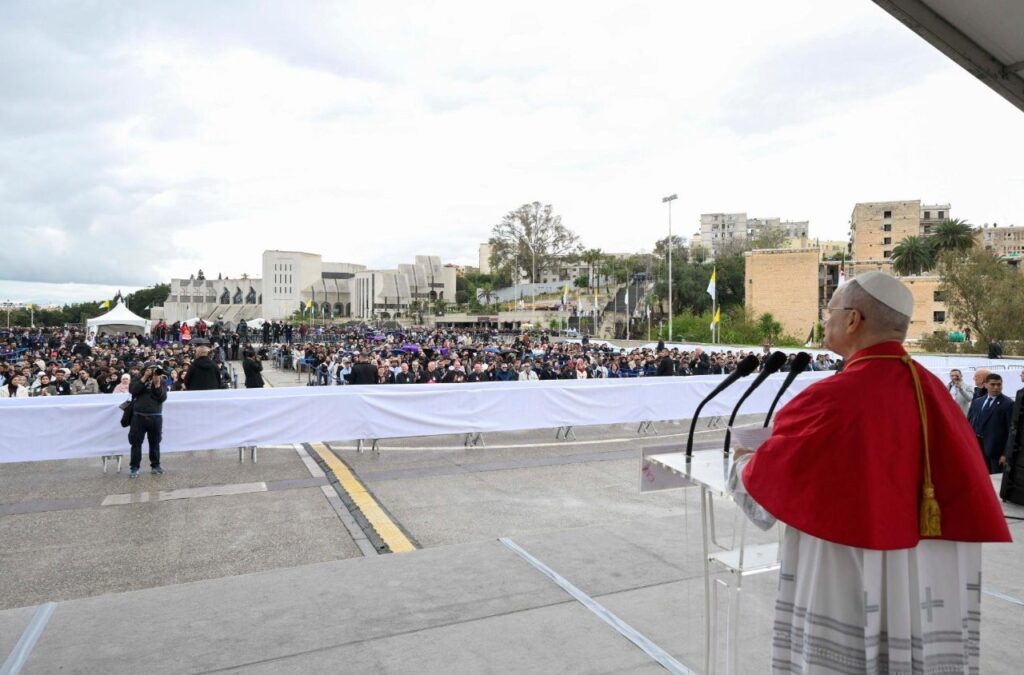
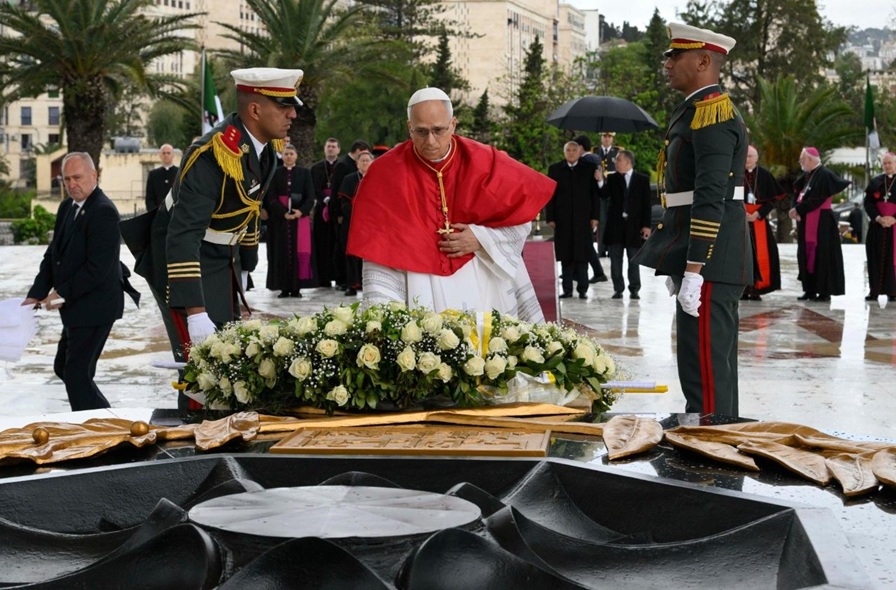
Pope Leo began his visit to Algeria with a deeply symbolic gesture: he visited the Maqam Echahid Martyrs’ Monument in Algiers to honor those who died in the struggle for independence. This site, overlooking the capital, is a sacred space of memory, sacrifice, and identity for the Algerian people. It commemorates the war of independence (1954–1962), when Algerians fought against French colonial rule, a system that had endured for over 130 years and left deep scars on the land and its people. The war was brutal and costly, with estimates of Algerian deaths ranging from several hundred thousand to over one million. It stands as one of the most painful chapters in the broader history of colonialism in Africa, where conquest, dispossession, and cultural humiliation often went hand in hand with violence and resistance. By beginning his Apostolic Visit here, Pope Leo places memory at the center of his pastoral and moral vision. His address at the monument can be read as a profound invitation to become bridge-builders in a world marked by historical ambiguities and tensions. Speaking as both brother and pastor, he situates Algeria within a layered history rich in faith, culture, and the legacy of Saint Augustine, yet also marked by violence and suffering. Rather than denying these tensions, he holds them together, urging reconciliation that does not erase the past but transforms it. At the heart of his message is a call to build bridges: between past and present, where the memory of sacrifice becomes a foundation for peace; between Christianity and Islam, where shared faith in God grounds fraternity; and between a painful history and a hopeful future, where forgiveness becomes the path forward. Peace, he insists, is not merely the absence of conflict but the fruit of justice, dignity, and healed hearts. “Pope Leo presents Algeria as a symbol of this possibility, a meeting place of cultures and religions where mutual respect enables coexistence. His broader papal vision emerges clearly: humanity must resist cycles of resentment, retribution, and violence and instead embrace a spirituality of reconciliation by encountering others as friends, not enemies.” — Stan Chu Ilo In invoking the Beatitudes, he defines true freedom and progress not in terms of power or wealth, but in terms of mercy, justice, love, and the difficult, enduring work of peacemaking. The Legacy of Saint Augustine and of Christian Persecution in Algeria In his inaugural address following his election, Pope Leo called himself a “son of Augustine.” From the outset of his pontificate, he expressed a deep desire to visit the ancient city of Hippo, where Saint Augustine spent most of his life as a bishop, pastor, and theologian, producing some of the most enduring works in Christian history. His visit to the ruins of this once-great Christian center was therefore not only personal but also profoundly symbolic. Standing in Annaba, the modern city that has replaced Hippo, one cannot help but wonder how such a vibrant Christian community could have faded so dramatically from history. The answer lies in a complex, layered history. The decline of Christianity in North Africa began well before the arrival of Islam, weakened by internal divisions such as the Donatist controversy and the socio-political fragmentation of the late Roman world. The Vandal invasion of the fifth century further destabilized the region, even though Christianity endured. The Arab Muslim conquest of the seventh century gradually reshaped the religious and cultural landscape, not through a single moment of eradication but through a long process of social transformation, conversion, and integration. Later, under Ottoman rule from the sixteenth century, the region became firmly integrated into the wider Islamic world. What we see, therefore, is not a simple story of disappearance but a slow, complex transition in which Christianity, once dominant, became a minority presence. “For some Christians, the story of Hippo may serve as a cautionary tale about the fragility of Christian civilization when it is not deeply rooted in the life, culture, and witness of the people. Yet Pope Leo does not approach this history with fear or nostalgia but with theological depth and pastoral realism.” — Stan Chu Ilo His homily at the Basilica of Saint Augustine in Annaba, the ancient Hippo, can be read as a powerful act of bridge-building across time, memory, and faith. By celebrating Mass at this historic site, once a flourishing center of Christianity and now a predominantly Muslim city, the Pope embodies the Church’s vocation to hold past and present together without denial or romanticism. Augustine’s Hippo reminds us that history is marked by both continuity and rupture. The visible structures of Christian dominance may have faded, yet the deeper witness of faith endures. In this sense, the Church, though a small flock, stands like a mustard seed, quiet and hidden yet alive and fruitful, able to proclaim God’s love beyond its own boundaries. Drawing on the Gospel encounter with Nicodemus, Pope Leo frames the Christian mission as a continual “rebirth from above,” a renewal that is both personal and historical. This renewal is not an escape from history’s wounds but a transformation of them through grace. It is a call to begin again, even in places where the past seems to speak more of loss than of promise. This message carries particular weight when read alongside Algeria\’s more recent history. During the Black Decade of the 1990s, Algeria endured a brutal civil conflict in which extremist violence claimed many lives, including nineteen Catholic religious, among them a bishop, priests, and women religious, who were killed between 1992 and 1996. Pope Leo recalled their witness as a testimony of fidelity and love, not only to the Church but also to the Algerian people among whom they chose to remain. Their beatification in 2018 at the Shrine of Our Lady of Santa Cruz in Oran stands as a living memory of suffering, as well as of hope and reconciliation. In his encounters with the Catholic community, the Augustinian sisters, and representatives of civil society, Pope Leo

Algeria as Mission Land Again: The Implication of Pope Leo’s Visit and the Future of Evangelization of North Africa Read More »

Will Pope Leo’s Africa-First Vision Go Beyond His Pilgrimage to Africa?

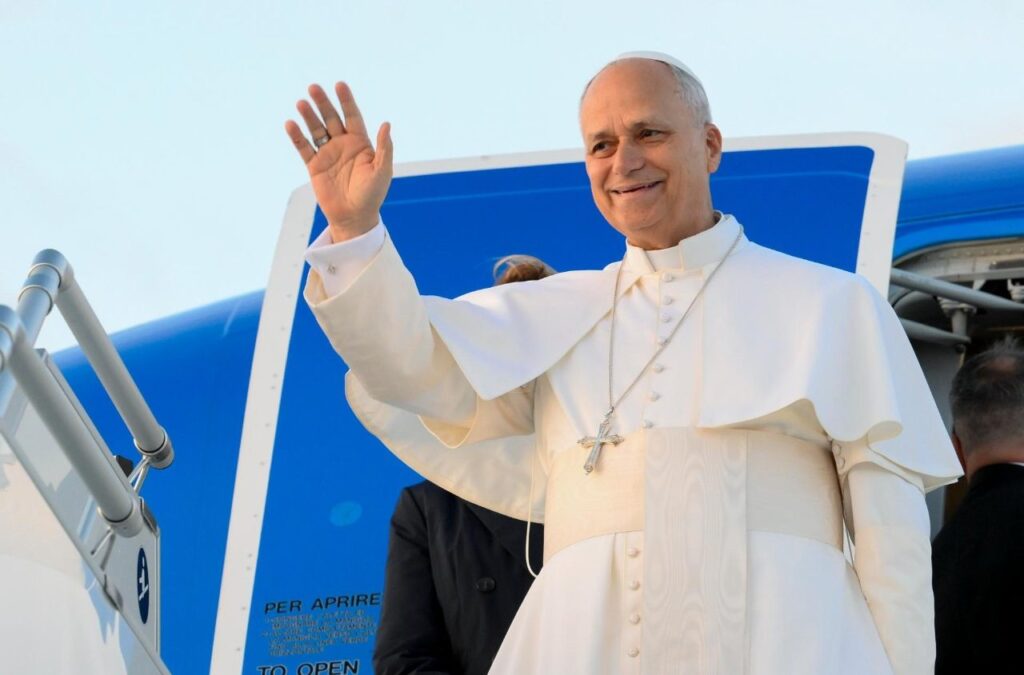
I stood among the concelebrating priests at Pope Leo’s Palm Sunday Mass in St. Peter’s Square. There, I watched the choreography of solemn ritual, spiritual power, and papal presence unfold. What caught my attention, as a Black Catholic priest, was the quieter symbolism at the altar. Two African priests were among the principal masters of ceremony at the Mass, which marks the beginning of Holy Week, the most sacred time in the Christian calendar. One sat at the Pope’s right hand, directing the rhythm of the liturgy. Another coordinated the concelebrating cardinals, bishops, and priests. These were positions of trust, proximity, and visibility. For me, this was not a passing detail—it was something I had never witnessed in any previous papacy. At many papal audiences now, an African priest also sits beside the Pope as one of his closest collaborators. These signs may seem small. But they are not small for African Catholics. They suggest a shift. They point to what I can only describe as the early contours of an Africa-first sensibility in the young papacy of Pope Leo. Despite what was often said about Pope Francis’s love for Africa, it remains striking that by the time he died, no African cardinal headed a dicastery in Rome. Africans made up barely 12 percent of the College of Cardinals, and key commissions often lacked African representation. Pope Leo has already begun to address this imbalance by appointing Africans to positions of real influence, including Monsignor Anthony Ekpo as assessor in the Secretariat of State and Father Edward Daleng, O.S.A., as Vice Regent of the Prefecture of the Pontifical Household, as well as other appointments across dicasteries and consultative bodies. It is, therefore, no surprise that Pope Leo’s longest and most consequential journey so far begins in Africa. The question is not only where he is going, but why and what it reveals about Africa’s place in the Church and in a world increasingly defined by fracture and violence. We live at a time when global attention is once again fixed on the Middle East, where fragile ceasefires conceal deeper and expanding conflicts. In such a moment, Africa risks being pushed to the margins of the world’s moral imagination, even as its own wars continue to displace millions and devastate communities. Pope Leo’s decision to begin his most ambitious journey on the continent is thus not accidental. It is a statement. Africa is not peripheral to Christianity—it is one of its birthplaces.\” Stan Chu Ilo First, Pope Leo recognizes that Africa is not peripheral to Christianity—it is one of its birthplaces. Long before Christianity took root in Europe, North Africa was already one of its great theological laboratories. In Algeria, he will walk in the footsteps of Augustine of Hippo, whose reflections on grace, freedom, unity, and the ethics of war helped shape the Church’s intellectual architecture. The debates that defined early Christianity were forged on African soil, in societies grappling with division, violence, and competing visions of the good life. Algeria itself tells a complex story. Once a center of vibrant Christian life, it is now a place where Christianity is a minority. This is a sobering reminder that demographic growth does not guarantee enduring presence. Europe, once the heartland of Christianity, now faces a different reality: empty pews, declining vocations, and widespread disaffiliation, especially among younger generations. Cultural Catholicism remains but often detached from institutional belonging. Many African Catholics, encountering this reality for the first time in Europe, are stunned. In Rome, even on Sundays, parishes are often sparsely filled. In Africa, by contrast, churches overflow. Seminaries and convents struggle to accommodate the growing number of candidates for the priesthood and religious life. But the question remains: will Africa’s current growth endure, or will it follow Europe\’s trajectory? Secondly, by choosing to visit Africa at this moment, Pope Leo is making a bold claim: Africa matters. Not only for the Church, but for the future of the world. With its demographic expansion and youthful population, Africa holds a key place in global development. African Christianity itself embodies immense cultural diversity, youthful energy, and the world\’s fastest-growing Catholic population, with 8.3 million new African Catholics recorded in the 2025 Church Book of Statistics. When Pope Paul VI visited Africa in 1969, he spoke of the continent’s deep spirituality and declared that the time had come for “an African Christianity.” That moment marked a turning point: an invitation for Africans not merely to receive the faith, but to shape it. Subsequent popes reinforced this call, urging African Christians to become missionaries to their own continent and to the wider world. Today, that vision is bearing fruit. African churches are now major sources of missionary vitality. Countries such as Nigeria, South Africa, and the Democratic Republic of Congo rank among the leading missionary-sending nations worldwide according to the State of the Great Commission’s Report. The faith that was once received from Western missionaries in Africa is now being reciprocated by African missionaries to Europe and North America. As Archbishop Fortunatus Nwachukwu of the Vatican’s Dicastery for Evangelization has described it, this is a “Church of the Sheaves,” a form of gift exchange and reverse mission in which the fruits of earlier missionary efforts sustain Christianity in regions where it is declining. And yet, this remarkable growth conceals a deeper paradox. The expansion of Christianity in Africa has not consistently translated into spiritual and cultural renewal and integral human development. Many African countries remain marked by fragile institutions, corruption, economic exclusion, and persistent insecurity. Across refugee settlements from East to West Africa, millions live in prolonged uncertainty, suspended between survival and hope. Religious life reflects this tension. Many Africans move between churches and other religious traditions, seeking healing, meaning, prosperity, and stability. The rise of Pentecostal and charismatic movements speaks to this hunger. They offer what has been described as a “factory of hope” for those abandoned by both state and society. This is not simply a challenge for the Catholic Church;

Will Pope Leo’s Africa-First Vision Go Beyond His Pilgrimage to Africa? Read More »

Rising Oil Prices: What Is Nigeria Doing with Its Petro-Dollar Windfall?

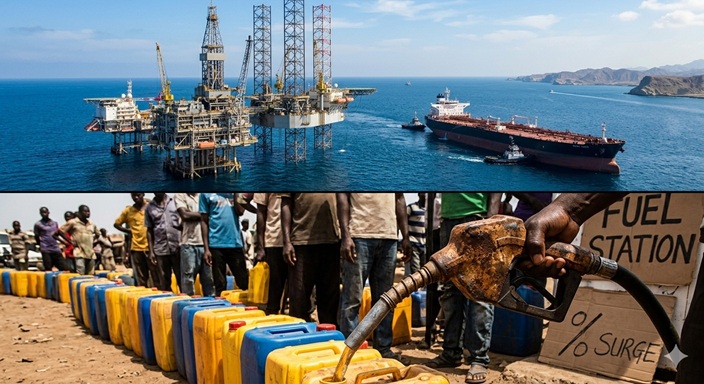
As global oil prices rose following tensions around the Strait of Hormuz, many Nigerians expected relief at the fuel pump. Instead, prices surged. Fuel prices have skyrocketed by 39.5%, plunging Nigeria into yet another fuel crisis. Located between Oman and Iran, the Strait of Hormuz is considered one of the most critical oil chokepoints in the world, with an estimated 20% to 25% of global oil transiting the strait—roughly one out of every five barrels. Its strategic importance is already causing ripple effects across global markets. Overall, Asia receives about 90% of the oil passing through the Strait of Hormuz, with countries such as China, Japan, India, and South Korea receiving a significant share and already feeling the impact. Nigeria is one of the countries benefiting from rising oil prices. But why is Nigeria caught in the dilemma of earning more from crude exports while facing higher fuel prices at the pump Nigerian Fuel Crisis: More Dollars from Crude Export, High Fuel Prices and Rising Economic Hardship The Nigerian fuel crisis may appear complex, but it is driven by several structural problems working together. The removal of fuel subsidies ushered in the current energy challenge. For decades, Nigeria kept petrol prices artificially low through subsidies, where the government absorbed part of the cost. Since this was removed in 2023, consumers now bear the full cost and directly feel the impact. “Nigeria earns more from oil, yet Nigerians pay more for fuel.” — Augustine Anwuchie This has placed significant strain on a petroleum-dependent economy that failed to diversify over the years. Crude oil accounts for an estimated 80–90% of Nigeria’s foreign exchange earnings and about 30–40% of federal government revenue. This makes the economy highly vulnerable to oil shocks, compounded by weak local refining capacity, a fragile exchange rate, and inflationary pressures. Even when global fuel prices remain stable, domestic prices continue to rise due to currency depreciation. Fuel imports are priced in dollars, and a weaker naira means higher costs in local currency. While it is often assumed that higher crude oil prices should benefit Nigeria and lower fuel costs, petrol pricing depends on multiple factors—refining, transportation, exchange rates, and market deregulation. Since government withdrawal from subsidy regimes, private marketers now dominate fuel importation and distribution. Their pricing is determined by landing costs, exchange rates, and profit margins, resulting in frequent price fluctuations. Logistics and distribution challenges—poor pipeline infrastructure, reliance on trucking, and supply bottlenecks—continue to undermine price stability. Low production has also compounded the problem, costing Nigeria over ₦28 trillion in oil revenue despite the boom. Although the Dangote refinery is expected to reduce import dependence, it is still ramping up operations, and its pricing remains tied to global market dynamics. Relief, therefore, may be gradual rather than immediate. The refinery has also faced regulatory tensions with the Nigerian Midstream and Downstream Regulatory Authority (NMDPRA) over import licensing, while disputes with the Petroleum and Natural Gas Senior Staff Association of Nigeria (PENGASSAN) have further complicated operations. “The crisis is not a lack of oil—it is a failure of structure and coordination.” — Augustine Anwuchie In essence, fuel remains expensive in Nigeria not because of crude scarcity, but due to subsidy removal, heavy import dependence, a weakened naira, limited refining capacity, and a weak regulatory framework. A Crisis Compounded by Corruption and Waste The pressing question for many Nigerians remains: if subsidy payments have ended, where are the savings? The government maintains that these funds are being redirected toward stabilising the economy, financing infrastructure, supporting social programmes, and cushioning energy costs. In theory, such funds could improve salaries, infrastructure, healthcare, education, power supply, and industrial development. However, many Nigerians report seeing little tangible impact. Civil society organisations such as SERAP have alleged that significant portions of these funds remain unaccounted for, raising concerns about transparency and accountability. At the same time, some analysts argue that the savings may not be sufficient to drive transformative economic change at scale. A Hope Wrapped in a Fragile Thread Nigeria has experienced oil windfalls before, notably during the 1973 oil boom. However, the long-term effects of that period—often described as “Dutch disease”—continue to shape the present, reflecting missed opportunities for diversification and sustainable economic planning. Today, many Nigerians face rising economic hardship, insecurity, and governance challenges. “Without reform, oil wealth will continue to deepen hardship rather than resolve it.” — Augustine Anwuchie Breaking this cycle requires decisive action. Nigeria must invest in diversification—particularly in agriculture, manufacturing, and technology—while strengthening transparency and accountability in managing public resources. Short-term relief must also translate into tangible improvements in living conditions. Without such reforms, Nigeria risks remaining trapped in a cycle where resource wealth fails to translate into broad-based prosperity.

Rising Oil Prices: What Is Nigeria Doing with Its Petro-Dollar Windfall? Read More »

PNFPB Install PWA using share icon

For IOS and IPAD browsers, Install PWA using add to home screen in ios safari browser or add to dock option in macos safari browser