
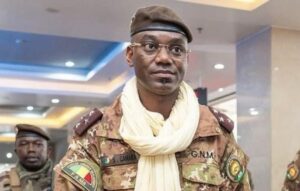
The devastating surprise attack on April 25th, which ransacked part of Mali and reportedly claimed the life of Defence Minister General Sadio Camara, has ignited profound fear over the rapidly evolving nature of terrorism in the Sahel. Previously fragmented rebel groups like Jama ‘at Nusrat al-Islam wal-Muslimin (JNIM) and the Front de Libération de Azawad – Azawad Liberation Front (FLA), once bitter rivals, have joined forces to seize territory across the region during the April 25th attack. What is most troubling is that as terrorists unite and expand their reach, the Sahel nations remain deeply divided and continue to lose ground despite the efforts of the authorities to contain the violence. “As terrorist groups coordinate across borders, the Sahelian states remain politically fragmented and militarily overstretched.” — Augustine Anwuchie A Crisis Rooted in Historical Grievances and Structural Collapse The crisis in Mali is not limited to terrorism but has its roots in historical grievances, corruption and structural collapse. The origins of the crisis date back to 2012, when Tuareg rebels allied with Jihadist groups to launch an armed rebellion for an independent state of Azawad in the Northern region. This instability prompted the 2013 French military intervention, culminating in the launch of Operation Serval, which later evolved into Operation Barkhane in 2014 and finally led to a peace agreement with the Forces of Liberation of Azawad in 2015. However, years of political corruption in Bamako and the failure of French Forces to successfully eradicate the insurgency fuelled intense anti-French sentiment and widespread domestic frustration. This political instability culminated in a 2021 military coup led by Assimi Goïta, whose nationalist junta eventually expelled French forces and, by 2024, officially abrogated the 2015 peace accord. The collapse of the peace framework contributed to an emerging ethno-political alliance between JNIM and the Front de Libération de l’Azawad (FLA), who launched coordinated attacks across parts of Bamako, Kati, Gao, Mopti and Sevare on 25th April 2026. Mali now faces a severe dual crisis, simultaneously battling the Tuareg Azawad separatists and the jihadist insurgency seeking Islamic rule. While the military government in Bamako accuses France of engineering the latest attack in an attempt to overthrow the government, an allegation France denies, the security situation on the ground remains highly volatile. Despite government claims of control, recent suspected Al-Qaeda attacks in Mopti killed 50 villagers, highlighting the extreme difficulty of combating an asymmetric enemy that has heavily infiltrated the local population. The Dangers of a Fragmented Sahel The Sahel has emerged as a global epicentre of terrorism, now accounting for 51% of all terrorism-related deaths globally. The region is ravaged by an array of insurgent groups, including the FLA, JNIM, and the Islamic State Sahel Province (ISSP/ISGS). This threat is rapidly expanding southwards into the coastal regions of Benin and Togo. At the same time, landlocked Burkina Faso faces multi-front assaults, and the Niger Republic simultaneously battles distinct terrorist factions across its western, southwestern and southeastern borders. A recent example of this volatility was on May 4th, when Boko Haram attacked a military base in the Barka Toloron region of Lake Chad, killing 23 soldiers and injuring 26 others. Compounding this crisis is the growing and dangerous pattern of collaboration among these terrorist factions, who are actively exploiting regional instability to seize control of vast territories. “The Sahel now accounts for more than half of all terrorism-related deaths globally.” — Augustine Anwuchie According to Peter Bouckaert, a senior director at Fortify Rights, the Sahel currently represents the greatest opportunity for the worldwide jihadist movement. The purely military solution to the rise of these insurgent groups, as well as operations involving heavy-handed tactics or military massacres of civilians and young men, has driven aggrieved local populations directly into the arms of jihadist movements for protection or retaliation, thereby fuelling the cycle of recruitment and violence. This vulnerability is driven by a combination of weak regional governments, a climate-related food crisis, and the security vacuum left by the withdrawal of French forces, which previously held these Islamist groups at bay. Bouckaert warns that, without urgent intervention, the region will face the severe threat of a Somalia-like state collapse, jeopardizing both regional and global security. Ultimately, the fight against terrorism is severely hampered by deep political fractures as the region is split between the newly formed Alliance of Sahel States (AES), comprising Mali, Niger and Burkina Faso, and the ECOWAS bloc. “A divided Sahel risks becoming a permanent corridor of insurgency stretching across West Africa.” — Augustine Anwuchie While a strong and united Sahel could fundamentally change the course of the war, the deep-seated distrust, dirty politics, corruption, and regional ego make this impossible. If the Sahelian governments do not put aside their divisions and unite against this expanding network of armed extremist groups, the region risks devolving into a highly fractured zone of competing terrorist factions, mirroring the long-term instability of the Middle East.

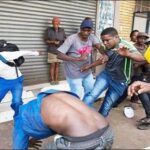
The resurgence is stark; its echoes cast a long shadow over Africa’s rising indices of conflict, violence, and division. In the recent spate of xenophobic attacks, a growing number of young South Africans are sending a clear message: migrants—predominantly from neighboring African nations—are not welcome. Critics accuse foreigners of displacing local labor, escalating crime rates, and, in many instances, residing in the country illegally. These voices are more than mere statements; they reveal a deep-seated perception of African migrants as convenient mirrors reflecting the country’s internal socio-economic failures. What began as a digital war of words has spiraled into physical violence, targeted assaults, and the tragic loss of life. Disturbing footage shows groups storming hospitals and schools in search of foreigners, looting shops, and demanding that migrants leave the country immediately. Scores have been killed, and many more left homeless over the past few weeks. President Cyril Ramaphosa has condemned the attacks, insisting that South Africans must choose the rule of law over mob violence while vowing to hold perpetrators accountable. More than scapegoating foreigners: A crisis rooted in structural failures There are legitimate concerns among young South Africans regarding the strain on public resources, rising crime, and collapsing infrastructure—evidenced by overcrowded classrooms and clinics, poor regulation, and the prevalence of drug and human trafficking. However, beneath these grievances lies a more profound structural reality. While xenophobia in South Africa is rooted in a complex weave of historical, economic, and political factors, the primary driver remains economic frustration among the poor, exacerbated by extreme inequality and governance failures. South Africa remains gripped by profound economic inequality, most visibly manifested in staggering rates of youth unemployment. The unfulfilled promises of the post-apartheid era, contrasted with the perceived success of migrant-owned small businesses—often operating at lower costs and within strong networks—have fueled a volatile mixture of resentment and frustration. Political actors and influencers often exploit the situation, either by fueling inflammatory rhetoric or remaining silent when firm condemnation is required. Patterns of xenophobia in South Africa also reflect unresolved questions of social identity and “othering,” reinforcing a strong “us versus them” mindset that casts migrants as outsiders—even though they are fellow Africans. South African youth are often labeled as entitled, lazy, or unskilled, but many reject this characterization, arguing that they are being blamed for a crisis they did not create. Theoretical analysis unveiling the deeper forces at play This hostility toward foreigners has crystallized into socio-psychological patterns that align with \”structural functionalism\” and \”realist conflict theory.\” From a structural functionalist perspective, South Africa’s social system is under significant strain. When institutions fail to provide stability, the social organism reacts with dysfunction. Rather than addressing the structural roots of the crisis, the most vulnerable members of society—migrants—are scapegoated for broader systemic failures. Xenophobic patterns can also be interpreted through the lens of realist conflict theory, which posits that competition over scarce resources leads to prejudice, discrimination, and hostility. In many ways, xenophobia is a rebranded form of apartheid. While the legal framework of apartheid was dismantled, its shadows continue to loom over modern social identities and divisions. Nationalism vs Pan-Africanism The current wave of violence leaves South Africa caught between narrow nationalist expressions and upholding the sacred tenets of Pan-Africanism. During the struggle against apartheid, South Africa relied heavily on the collective goodwill and solidarity of Pan-African allies. Nigeria gave heavy financial aid, moral and political support to black South Africans anti-apartheid struggle, while revolutionary icons such as Oliver Tambo and Chris Hani were famously welcomed and shielded during their exile in Zambia and other African nations. While the South African government must address the grievances of protesters, the core factors driving tension are structural and extend far beyond the presence of migrants. As wave of anti-immigration protests erupts across the globe, the voice of Pope Leo speaks to us in strong note, insisting that migrants should be treated with dignity and humanity. The crisis unfolding in South Africa serves as a wake-up call not only for the country itself but for all African leaders regarding the urgency of nation-building and true economic independence. It also calls on leaders to promote tolerance, unity, and solidarity across the continent, particularly at a time when global attention is focused on Africa’s internal divisions.

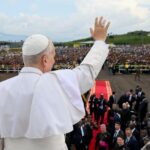
During his address to students at the Catholic University of Central Africa in Yaoundé, the capital of Cameroon, Pope Leo XIV delivered a sweeping message, challenging young Africans to stay and build their country rather than abandon it for Europe and other developed countries. The Pope’s message comes at a crossroads of the growing mindsets among young Africans who see migration to these countries as a solution to their economic, social and security plights, which, to them, means a transition from hell to paradise. Thinking of this nature contributes to the form of unconscious ‘internalised oppression’ whereby many young Africans absorb negative stereotypes about their country, identity, race, culture, politics, and economy – believing everything Western is better than theirs. A mindset that is further reinforced by the ugly experiences of dirty politics, oppression and injustice, economic depression, corruption, insecurity and instability fraying the continent. In his landmark speech, the Pope said that migration is not an option and called young Africans not to run away from their land but to see themselves as agents of change capable of transforming the continent and as solutions, not as victims. True dignity, according to the Pope, comes from contributing to nation-building and the development of their societies, insisting that the future of the continent depends on educated young people staying engaged: creating businesses, improving governance, and strengthening communities, rather than fleeing abroad. A Prophetic and Timely Voice at the Crossroad with African Second Exodus The Pope didn’t just make a statement; he proclaimed a prophecy. The timing was accurate. The rendering came at a time when Africa is facing what, in one of my poems, I called ‘The Second Exodus’. The first exodus is the trans-Atlantic slavery, when millions of our forebears were forcefully sold and carted away across the Atlantic Ocean to the Americas. This second Exodus is the desperation of our young people to flee to the West and Asia in search of better opportunities. The first Exodus was forced and imposed. The second Exodus oscillates between choice and uncanny socio-political and economic conditions that compel young people to seek greener pastures abroad. Words like ‘relocation’, ‘Jappa’, ‘soft-life-abroad’, and ‘burger’ are not just flowery words that describe migration; they picture the perceived status symbol attached to them. Behind this paradisiac image of abroad lies a price and some dark sides. Young Africans become victims of a cycle of abuse and exploitation, while some die in the hot Sahara Desert or are drowned in the Atlantic Ocean trying to cross to Europe. Many countries are tightening immigration policy, making life complicated for African migrants. The recent growth of xenophobia and anti-migrant groups from fringes to mainstream politics, where it is being woven into popular culture, identity politics, and social fabrics, often targeting African migrants, is a pattern that should worry everyone, calling on young Africans to reflect on whether they are not fleeing the wind into the storm. A Tension Between Departure and Development The African migrant nightmare often reflects a mentality of ‘stay vs leave syndrome’ – creating a tension between the urgency for development and reform, and the streaming youth departing the continent in droves. In 2024, after suffering an acute shortage of health workers, the Nigerian government weighed in by curbing health worker migration, claiming it wanted to stem the brain drain. Such an unrealistic solution creates more problems; young Africans don’t choose to leave; the conditions compel them to do so. This is why the call to stay must be matched by realistic conditions that restrain them from departing. Government, institutions and stakeholders must create an environment where young people can thrive – where they are valued, their merit is rewarded, innovation is supported, and justice prevails. A Dream Hunted by Shadows Africa has everything it needs to become one of the greatest continents. It\’s sitting on minerals worth trillions of dollars. Added to this is a teeming young population with a vast reservoir of energy, creativity and possibility. A new Africa is possible with governance founded on accountability, responsibility, justice and equity. Again, immigration will remain a contested global issue as long as there are economic inequality and political instability. The UN reports that thousands of Africans are trafficked across the globe annually. Developed nations should be more transparent and more committed to strengthening democracy in their foreign policy toward Africa. African solid and rare earth minerals cannot power the great industries of Asia and the West while her soul lies in ruins. If developing countries continue to take from Africa while it lies in desolation and ruin, the urge to flock towards the end product in developed countries will continue to persist. Again, Pope Leo\’s speech is a call for collective responsibility, for both internal and external matters, in line with the church\’s social teaching to build a society of justice, peace and human flourishing, and African youths should see this as a challenge to take on head-on.

Résumé En mission au cœur du Sahel, entre défis sécuritaires, crises humanitaires et espérance chrétienne, le nouveau nonce apostolique au Burkina Faso et au Niger, Son Excellence Éric Suiviguidi, partage sa vision pastorale. Dans cet entretien accordé à VoiceAfrique – Catholic News Analysis, il revient sur sa mission, les réalités du terrain et l’appel à une Église toujours plus proche des plus vulnérables. Accueillir la mission dans la foi VoiceAfrique: Votre récente nomination comme nonce apostolique au Burkina Faso et au Niger vous place au cœur d’un front pastoral parmi les plus délicats de l’Église. Dans quelles dispositions intérieures avez-vous accueilli cette mission, et quelle vision souhaitez-vous y porter? Son Excellence (SE) Éric Suiviguidi : Lorsque l’Église vous appelle à une mission, on l’accueille d’abord dans la foi. Certes, la mission qui m’est confiée n’est ni simple ni facile, mais je l’ai reçue avec confiance. C’est d’ailleurs pour cela que j’ai choisi comme devise : « Il est fidèle, celui qui vous appelle ». Je me suis disposé à vivre cette mission en communion avec les Églises locales. Les évêques, les prêtres, les agents pastoraux, les religieux, les religieuses et les laïcs sont les premiers acteurs de la vie pastorale. Face aux nombreux défis au Burkina Faso et au Niger, leur résilience est pour moi une lumière, un véritable signe d’espérance. Mon rôle est de les accompagner, de les soutenir et de fortifier cette espérance. Une Église au cœur de l’épreuve VoiceAfrique: L’insécurité et le terrorisme marquent profondément la vie des populations. En quoi ces réalités redéfinissent-elles la mission de l’Église? SE Éric Suiviguidi : L’Église au Niger, comme dans d’autres pays de la sous-région, traverse une période particulièrement difficile. Nous puisons dans l’expérience de nos aînés pour vivre cette situation, en la confiant au Seigneur et en demandant la grâce de la traverser avec sérénité. Pour les agents pastoraux, le défi est immense. Ils vivent eux-mêmes des situations traumatisantes, tout en étant appelés à apporter réconfort, confiance et paix aux fidèles. Cela exige une grande proximité et un véritable dépassement de soi : porter la souffrance des autres tout en affrontant la sienne. Au Burkina Faso, j’ai vu des paroisses et des communautés religieuses visiter les camps de déplacés, soutenir les familles, offrir écoute, prière et accompagnement psychologique. Dans ces contextes de douleur, la proximité pastorale est essentielle. Une Église en sortie, malgré les limites VoiceAfrique: Le pape François appelle à une \”Église en sortie\”. Comment cette vision peut-elle s’incarner concrètement dans votre contexte? SE Éric Suiviguidi : Les populations doivent ressentir la proximité de l’Église, non seulement pour les conduire à la foi, mais aussi pour leur révéler l’amour de Dieu. Nous devons être réellement une Église en sortie. Les fidèles ne viendront pas toujours spontanément, surtout dans des contextes où les catholiques sont minoritaires. J’ai visité une paroisse où certains villages sont situés à plus de 10 kilomètres. Se rendre à la messe représente un coût important pour les familles. Avec davantage de prêtres et de moyens, il serait possible de rapprocher les lieux de culte. Mais les défis restent réels : manque de prêtres, ressources limitées. Il nous faut donc réfléchir à des moyens concrets pour rester proches des fidèles malgré ces contraintes. Servir les pauvres avec amour VoiceAfrique: Comment l’Église peut-elle incarner concrètement l’option préférentielle pour les pauvres ? SE Éric Suiviguidi: Jésus a dit : \”Les pauvres, vous en aurez toujours avec vous\”. Le service des pauvres est essentiel, mais il doit être vécu par amour pour le Christ. Nous sommes appelés à prendre soin de nos frères et sœurs dans le besoin avec un cœur habité par cet amour. Dialogue et réconciliation VoiceAfrique: Dans un contexte marqué par les divisions, comment promouvoir le dialogue, la justice et la paix ? SE Éric Suiviguidi: Pour construire la réconciliation, il est nécessaire de dépasser les blessures du passé. Ce n’est pas facile, mais en tant que chrétiens, nous sommes appelés à répondre à tout par l’amour. Même face à la violence ou à la polarisation, nous devons proposer un langage de fraternité. J’ai été témoin de belles initiatives de dialogue, notamment avec la communauté musulmane. J’ai, par exemple, été invité à une prière de fin de Ramadan. Cela montre qu’il est possible de construire des ponts. Tout serviteur de Dieu est un artisan de réconciliation. Espérance au cœur de la crise VoiceAfrique: Face aux déplacements massifs et à la crise humanitaire, où voyez-vous des signes d’espérance? SE Éric Suiviguidi: Il y a de nombreux déplacés internes, et l’Église s’efforce de créer des lieux de culte, d’éducation et d’accompagnement. Les catéchistes, parfois au péril de leur vie, continuent d’annoncer l’Évangile. Certains ont donné leur vie : ce sont de véritables martyrs. Le fait que la foi demeure vivante au cœur de la crise est un grand signe d’espérance. La vocation missionnaire aujourd’hui VoiceAfrique: Comment encourager davantage de prêtres à s’engager dans ces missions difficiles? SE Éric Suiviguidi: On ne peut pas contraindre quelqu’un à être missionnaire dans un contexte aussi exigeant. Il faut une véritable vocation, une passion et une force intérieure. Envoyer quelqu’un dans un environnement qu’il ne peut supporter peut le briser. Il est donc essentiel d’identifier ceux qui ont cet appel missionnaire et de les accompagner. Un message aux fidèles VoiceAfrique: Quel message souhaitez-vous adresser aux prêtres, aux religieux et aux fidèles ? SE Éric Suiviguidi: Je les encourage vivement. Ce sont des témoins courageux du Christ. Je prie pour qu’ils reçoivent la force de l’Esprit Saint et la protection de la Vierge Marie. Il y a une grande joie à se donner à Dieu, même dans le risque. Cela montre que l’on aime Dieu plus que soi-même. Que le Seigneur ravive en chacun l’ardeur des débuts. Conclusion: Dans un contexte marqué par l’épreuve, cet appel à la foi, à la proximité et à la mission résonne comme un témoignage puissant d’espérance. Au Burkina Faso comme au Niger, l’Église continue d’avancer — portée par la fidélité de ses pasteurs et le courage

As global oil prices rose following tensions around the Strait of Hormuz, many Nigerians expected relief at the fuel pump. Instead, prices surged. Fuel prices have skyrocketed by 39.5%, plunging Nigeria into yet another fuel crisis. Located between Oman and Iran, the Strait of Hormuz is considered one of the most critical oil chokepoints in the world, with an estimated 20% to 25% of global oil transiting the strait—roughly one out of every five barrels. Its strategic importance is already causing ripple effects across global markets. Overall, Asia receives about 90% of the oil passing through the Strait of Hormuz, with countries such as China, Japan, India, and South Korea receiving a significant share and already feeling the impact. Nigeria is one of the countries benefiting from rising oil prices. But why is Nigeria caught in the dilemma of earning more from crude exports while facing higher fuel prices at the pump Nigerian Fuel Crisis: More Dollars from Crude Export, High Fuel Prices and Rising Economic Hardship The Nigerian fuel crisis may appear complex, but it is driven by several structural problems working together. The removal of fuel subsidies ushered in the current energy challenge. For decades, Nigeria kept petrol prices artificially low through subsidies, where the government absorbed part of the cost. Since this was removed in 2023, consumers now bear the full cost and directly feel the impact. “Nigeria earns more from oil, yet Nigerians pay more for fuel.” — Augustine Anwuchie This has placed significant strain on a petroleum-dependent economy that failed to diversify over the years. Crude oil accounts for an estimated 80–90% of Nigeria’s foreign exchange earnings and about 30–40% of federal government revenue. This makes the economy highly vulnerable to oil shocks, compounded by weak local refining capacity, a fragile exchange rate, and inflationary pressures. Even when global fuel prices remain stable, domestic prices continue to rise due to currency depreciation. Fuel imports are priced in dollars, and a weaker naira means higher costs in local currency. While it is often assumed that higher crude oil prices should benefit Nigeria and lower fuel costs, petrol pricing depends on multiple factors—refining, transportation, exchange rates, and market deregulation. Since government withdrawal from subsidy regimes, private marketers now dominate fuel importation and distribution. Their pricing is determined by landing costs, exchange rates, and profit margins, resulting in frequent price fluctuations. Logistics and distribution challenges—poor pipeline infrastructure, reliance on trucking, and supply bottlenecks—continue to undermine price stability. Low production has also compounded the problem, costing Nigeria over ₦28 trillion in oil revenue despite the boom. Although the Dangote refinery is expected to reduce import dependence, it is still ramping up operations, and its pricing remains tied to global market dynamics. Relief, therefore, may be gradual rather than immediate. The refinery has also faced regulatory tensions with the Nigerian Midstream and Downstream Regulatory Authority (NMDPRA) over import licensing, while disputes with the Petroleum and Natural Gas Senior Staff Association of Nigeria (PENGASSAN) have further complicated operations. “The crisis is not a lack of oil—it is a failure of structure and coordination.” — Augustine Anwuchie In essence, fuel remains expensive in Nigeria not because of crude scarcity, but due to subsidy removal, heavy import dependence, a weakened naira, limited refining capacity, and a weak regulatory framework. A Crisis Compounded by Corruption and Waste The pressing question for many Nigerians remains: if subsidy payments have ended, where are the savings? The government maintains that these funds are being redirected toward stabilising the economy, financing infrastructure, supporting social programmes, and cushioning energy costs. In theory, such funds could improve salaries, infrastructure, healthcare, education, power supply, and industrial development. However, many Nigerians report seeing little tangible impact. Civil society organisations such as SERAP have alleged that significant portions of these funds remain unaccounted for, raising concerns about transparency and accountability. At the same time, some analysts argue that the savings may not be sufficient to drive transformative economic change at scale. A Hope Wrapped in a Fragile Thread Nigeria has experienced oil windfalls before, notably during the 1973 oil boom. However, the long-term effects of that period—often described as “Dutch disease”—continue to shape the present, reflecting missed opportunities for diversification and sustainable economic planning. Today, many Nigerians face rising economic hardship, insecurity, and governance challenges. “Without reform, oil wealth will continue to deepen hardship rather than resolve it.” — Augustine Anwuchie Breaking this cycle requires decisive action. Nigeria must invest in diversification—particularly in agriculture, manufacturing, and technology—while strengthening transparency and accountability in managing public resources. Short-term relief must also translate into tangible improvements in living conditions. Without such reforms, Nigeria risks remaining trapped in a cycle where resource wealth fails to translate into broad-based prosperity.