
The Sahel at Risk: Mali’s Experience and Dangers of a Divided Sahel
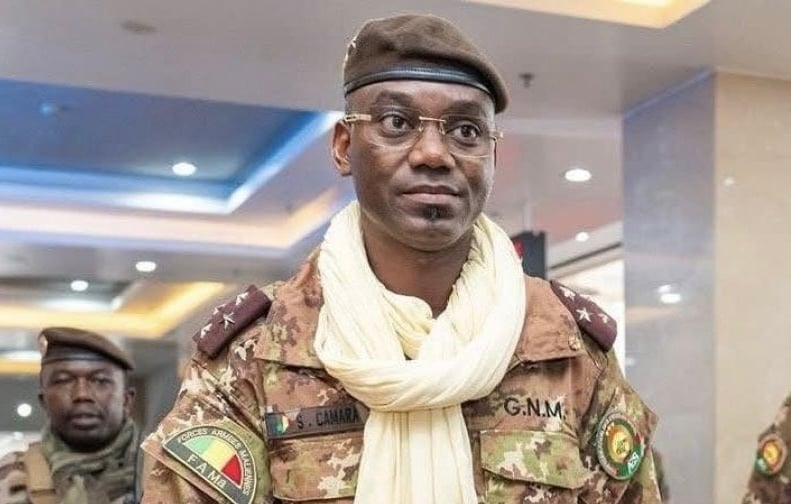
The devastating surprise attack on April 25th, which ransacked part of Mali and reportedly claimed the life of Defence Minister General Sadio Camara, has ignited profound fear over the rapidly evolving nature of terrorism in the Sahel. Previously fragmented rebel groups like Jama ‘at Nusrat al-Islam wal-Muslimin (JNIM) and the Front de Libération de Azawad – Azawad Liberation Front (FLA), once bitter rivals, have joined forces to seize territory across the region during the April 25th attack. What is most troubling is that as terrorists unite and expand their reach, the Sahel nations remain deeply divided and continue to lose ground despite the efforts of the authorities to contain the violence. “As terrorist groups coordinate across borders, the Sahelian states remain politically fragmented and militarily overstretched.” — Augustine Anwuchie A Crisis Rooted in Historical Grievances and Structural Collapse The crisis in Mali is not limited to terrorism but has its roots in historical grievances, corruption and structural collapse. The origins of the crisis date back to 2012, when Tuareg rebels allied with Jihadist groups to launch an armed rebellion for an independent state of Azawad in the Northern region. This instability prompted the 2013 French military intervention, culminating in the launch of Operation Serval, which later evolved into Operation Barkhane in 2014 and finally led to a peace agreement with the Forces of Liberation of Azawad in 2015. However, years of political corruption in Bamako and the failure of French Forces to successfully eradicate the insurgency fuelled intense anti-French sentiment and widespread domestic frustration. This political instability culminated in a 2021 military coup led by Assimi Goïta, whose nationalist junta eventually expelled French forces and, by 2024, officially abrogated the 2015 peace accord. The collapse of the peace framework contributed to an emerging ethno-political alliance between JNIM and the Front de Libération de l’Azawad (FLA), who launched coordinated attacks across parts of Bamako, Kati, Gao, Mopti and Sevare on 25th April 2026. Mali now faces a severe dual crisis, simultaneously battling the Tuareg Azawad separatists and the jihadist insurgency seeking Islamic rule. While the military government in Bamako accuses France of engineering the latest attack in an attempt to overthrow the government, an allegation France denies, the security situation on the ground remains highly volatile. Despite government claims of control, recent suspected Al-Qaeda attacks in Mopti killed 50 villagers, highlighting the extreme difficulty of combating an asymmetric enemy that has heavily infiltrated the local population. The Dangers of a Fragmented Sahel The Sahel has emerged as a global epicentre of terrorism, now accounting for 51% of all terrorism-related deaths globally. The region is ravaged by an array of insurgent groups, including the FLA, JNIM, and the Islamic State Sahel Province (ISSP/ISGS). This threat is rapidly expanding southwards into the coastal regions of Benin and Togo. At the same time, landlocked Burkina Faso faces multi-front assaults, and the Niger Republic simultaneously battles distinct terrorist factions across its western, southwestern and southeastern borders. A recent example of this volatility was on May 4th, when Boko Haram attacked a military base in the Barka Toloron region of Lake Chad, killing 23 soldiers and injuring 26 others. Compounding this crisis is the growing and dangerous pattern of collaboration among these terrorist factions, who are actively exploiting regional instability to seize control of vast territories. “The Sahel now accounts for more than half of all terrorism-related deaths globally.” — Augustine Anwuchie According to Peter Bouckaert, a senior director at Fortify Rights, the Sahel currently represents the greatest opportunity for the worldwide jihadist movement. The purely military solution to the rise of these insurgent groups, as well as operations involving heavy-handed tactics or military massacres of civilians and young men, has driven aggrieved local populations directly into the arms of jihadist movements for protection or retaliation, thereby fuelling the cycle of recruitment and violence. This vulnerability is driven by a combination of weak regional governments, a climate-related food crisis, and the security vacuum left by the withdrawal of French forces, which previously held these Islamist groups at bay. Bouckaert warns that, without urgent intervention, the region will face the severe threat of a Somalia-like state collapse, jeopardizing both regional and global security. Ultimately, the fight against terrorism is severely hampered by deep political fractures as the region is split between the newly formed Alliance of Sahel States (AES), comprising Mali, Niger and Burkina Faso, and the ECOWAS bloc. “A divided Sahel risks becoming a permanent corridor of insurgency stretching across West Africa.” — Augustine Anwuchie While a strong and united Sahel could fundamentally change the course of the war, the deep-seated distrust, dirty politics, corruption, and regional ego make this impossible. If the Sahelian governments do not put aside their divisions and unite against this expanding network of armed extremist groups, the region risks devolving into a highly fractured zone of competing terrorist factions, mirroring the long-term instability of the Middle East.
The Sahel at Risk: Mali’s Experience and Dangers of a Divided Sahel Read More »