Pan-African Catholic Theology and Pastoral Network

Dilexi Te

Celebrating One Year of Pope Leo’s Transformation of the Church: Lessons for Africa

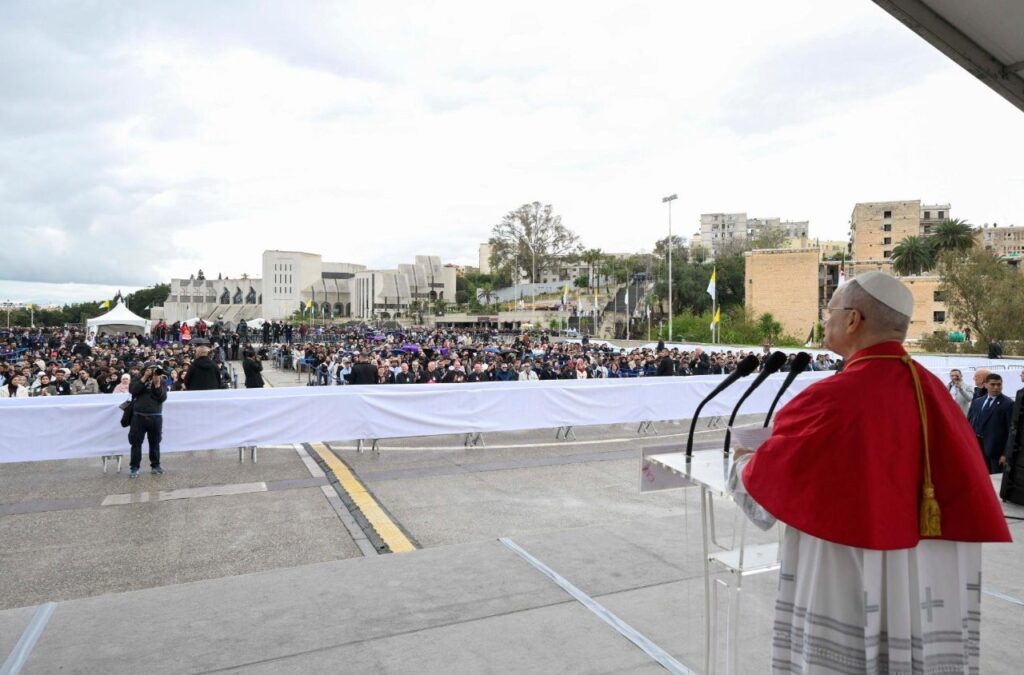
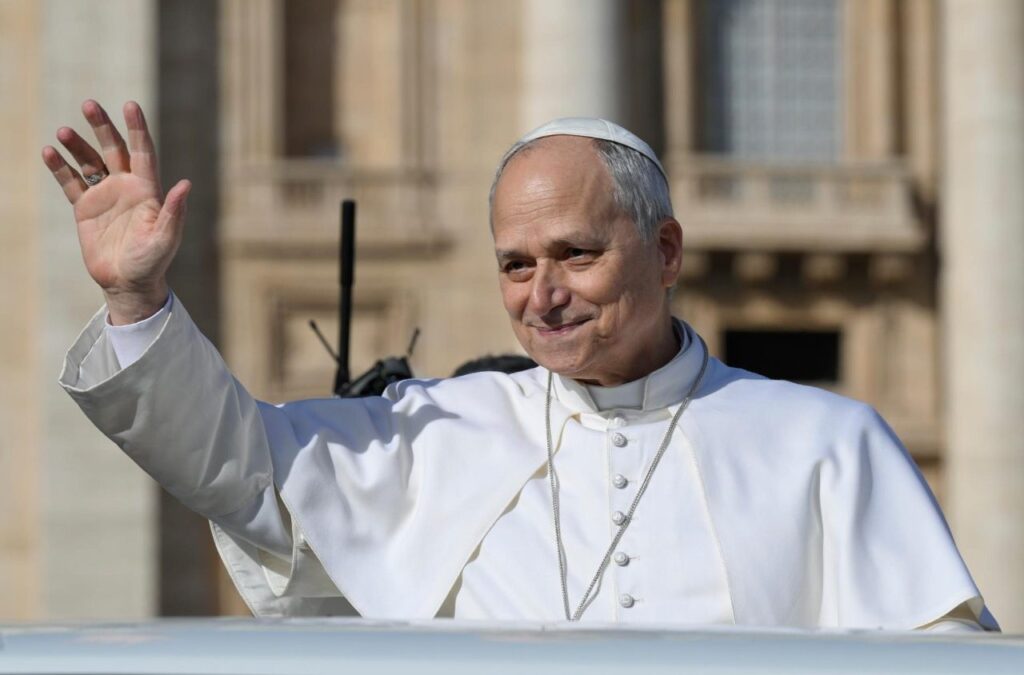
In the first year of his pontificate, Pope Leo is quietly transforming the Church through a transformation of the papacy itself. His recent Apostolic Visit to Africa offered him the stage to bring together, in an illuminating and effective way, the priorities of his papacy. The practical manifesto of the Leonine papacy as a courageous pursuit of peace, healing for a divided world and a divided Church, reverence for the Church’s traditions, and love for those at the existential peripheries of life was on full display during his trip to Africa. Africa became the stage upon which Pope Leo revealed his understanding of the papacy’s role today and his effective use of the papal pulpit for proclaiming a prophetic theology: a battle cry for the recovery of a moral vision and a social ethic of care, recognition, reconciliation, and community; a spiritual proclamation in a fractured world yearning for moral clarity, justice, solidarity, and hope. His African visit presents five defining messages that together form a coherent vision of Pope Leo’s leadership style, pastoral agenda, and clear articulation and embodiment of the global mission of the Church amid the complexities of our time. The Five Messages from Africa: A Practical Manifesto Pope Leo, in his reflection during the first General Audience after his visit to Africa, spoke first of listening to Africa. He noted that his visit helped to make “the voices of Africa heard,” even as the continent offered him “an inestimable treasure” for his heart and ministry. This mutual exchange reflects his agenda for a synodal Church that listens before it speaks, a Church that receives before it gives. It points to his determination to expand the spaces for dialogue and encounter in the Catholic Church for all people, and to place Africa at the center of his papacy, rather than at the peripheries where it is often confined in global politics and ecclesial imagination. In this, one hears a direct echo of Gaudium et Spes, which calls the Church to read the signs of the times not from above history, but from within it, attentive to the joys and sorrows of the people of God, especially the poor and the forgotten. Pope Leo signals, in his first major teaching, Dilexi Te, that the plight of the poor should be at the center of the Church’s mission. He warns against revictimizing the poor by blaming them for their own misfortune and suffering and instead insists that society must confront the structural causes of poverty. For him, the beginning of justice is listening to people experiencing poverty and walking with them in solidarity, recognizing their agency rather than dismissing them as burdens. Second, the Pope’s journey to Africa was marked by an unmistakable commitment to peace in a fractured world. This has been his signature papal message. Vatican News reports that, in the first year of his papacy, Leo has used the word ‘peace’ more than 400 times in his speeches. He described his visit to Africa as a proclamation “of peace at a time in history marked by wars and serious and frequent violations of international law.” In Africa, as in many parts of the world, violence has become commonplace and relates not only to war, conflicts, and civil strife, but also to structural, economic, and political violence. “Pope Leo’s insistence on peace situates his papacy within the Church’s mission of proclaiming the peace of the Lord Jesus Christ to all men and women of goodwill, as well as within a broader call to renew international co-operation and global solidarity at a time when both are under severe strain.?” — Stan Chu Ilo Third, Pope Leo highlighted what he called the joyful faith and resilient hope of African peoples. Even amid hardship, he encountered communities whose faith is not diminished by suffering but deepened through it. But he notes in both Angola and Equatorial Guinea that this faith should not be manipulative through superstitious beliefs and other forms of religious enchantment. On the contrary, faith in the Lord, embracing the Gospel message, and entry into the Church should be a resource for healing, liberating people, and promoting human flourishing. Everywhere he went during his pilgrimage, he affirmed the dignity, resilience, joy, and hope of Africans. In his vision, people experiencing poverty are not objects of compassion, nor should they be condemned and abandoned as the authors of their own misfortune. They are subjects of history. For a world increasingly marked by despair, Africa becomes not a problem to be solved but a witness to be received and a treasure to be harvested for the good of its peoples. “Faith, for Pope Leo, is a principle of joy, but that joy must be grounded in both a person’s encounter with the Lord in the intimacy of the heart and the experience of abundant life in just communities ordered by love and actively promoting the common good for all. ” — Stan Chu Ilo Fourth, the Pope spoke candidly of Africa as a land “thirsting and hungry for justice and peace.” Yet he was equally clear that these cannot be realized without concrete political and economic reform and transformation. Love, in his vision, must become a force for social restoration. Here, his Augustinian roots are evident, as in Augustine, God is closer to the human person than we are to ourselves. Thus, social or ecclesial transformation must begin with the inner transformation of the heart from all forms of idolatry and power to dominate, and from an exaggerated love of the self to the forgetfulness of God and others. The same is also true of peace. Peace must be unarmed and begins with disarming the heart and our words because peace proceeds from “an interior movement” and then flows outward. Pope Leo called for good governance and a collective commitment to “promoting integral and sustainable development,” while urging the global community to counter “the various forms of neo-colonialism with far-sighted international cooperation.” He moves beyond vague appeals and names

Celebrating One Year of Pope Leo’s Transformation of the Church: Lessons for Africa Read More »
Pope Leo’s African Moment: A Prophetic Political Theology— A Test for African Bishops and Theologians, Part II

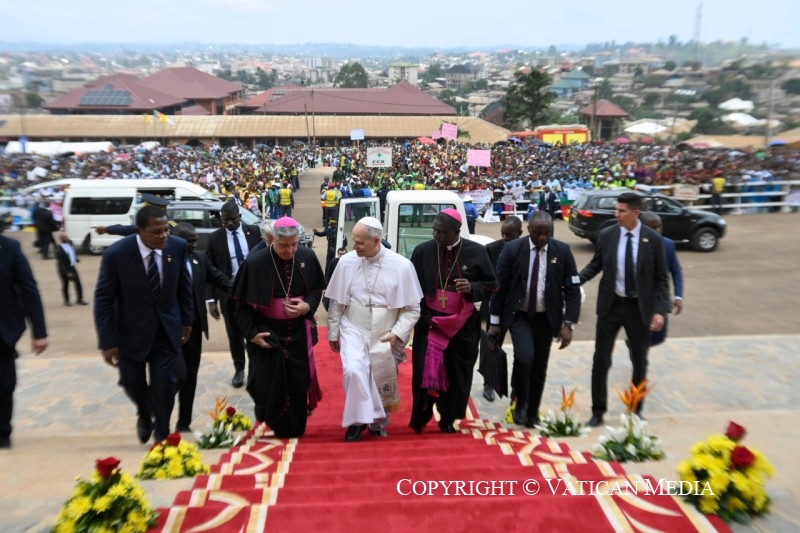
Pope Leo’s African moment is an epiphany, revealing to the Church and the world the kind of Pope God has given us. We are at the early stages of a papacy rooted in our ancient tradition and bold in proclaiming the truth of the faith with humility and joy. It is a papacy marked by deep respect for the many pathways and the diversity of cultures, races, nations, and religions that flow into the vast ocean of God’s mission, within which the Catholic Church carries on her fragile yet sacred vocation. What stands out most clearly in Pope Leo’s mission to Africa, amid today’s complex socio-political and ideological divisions, is his enunciation of a prophetic political theology. In this, he not only retrieves Catholic Social Teaching but applies it with remarkable boldness to the moral and spiritual crisis of our confused world, addressing national and global politics, the dignity and rights of all peoples, the ethics of war and peace, love of neighbor especially the poor and suffering, and offering a critique of the sinful structures of domination, corruption, and manipulation in defense of the common good. What is Pope Leo’s Prophetic Political Theology? This prophetic political theology, in Leo’s emerging usage, is not partisan theory, clerical statecraft, or papal overreach, as some whose consciences have been whipped by the prophetic sting from the mouth of the Pope might claim. Rather, it is a Gospel grounded reading of political life that makes an ethical judgment of the social order according to how far it is ordered to peace, justice, social friendship, truth, human dignity, the participation of all citizens, and the common good, while calling rulers, citizens, and institutions to conversion so that the reign of God may emerge in history. “The heart of this prophetic political theology is articulated through a closer reading of Pope Leo’s speeches and in-flight interviews during his ongoing pilgrimage of peace to Africa. ” — Stan Chu Ilo This prophetic political theology could be understood, I argue, through a set of interrelated questions about the right ordering of society in light of the Gospel, namely: How is authority and power exercised as a form of service, ordered to the common good and the flourishing of all, especially the poor and most vulnerable? How are structures of governance shaped to foster certain outcomes: participation, co-responsibility, and the dignity of every person in a spirit of communion akin to the African ubuntu? How are the diverse identities, interests, and aspirations of people discerned, reconciled, and integrated within a social order that respects difference while nurturing unity, solidarity, and social friendship? By what means are collaboration, coordination, and mutual accountability cultivated among persons, communities, and institutions, so that subsidiarity and solidarity work together in advancing the common good, shared purposes, and promoting human and cosmic flourishing? And how are questions of justice, equity, and fairness discerned in light of the dignity of the human person and the demands of the Gospel, so that social, economic, and political arrangements are rightly ordered, relationships are restored, and all people participate through their assets to building a society of abundant life for all where no one is excluded from the goods of creation? All these questions, I believe, can be understood within what I see as the Church’s preference for institutionalism as a political theory. Here, to borrow an idea from Lowndes, Marsh, and Stoker in Theory and Methods in Political Science, there is a focus on the “rules, norms, and values” that govern politics and governance, and on the institutions that regulate and promote the common life and the good of order. These norms are derived from natural law, divine positive law, the Gospel message, and the living Tradition and Magisterial teaching of the Church, discerned within history, human experience, and ecclesial life. They are universally applicable because they relate to the good of all human beings, whether they are Christians or not. However, in Pope Leo’s view, these values are not arbitrarily dictated, nor should the institutions that govern our common life locally or globally be imposed on the populace or the rest of the world by a few individuals or a few nations, and sustained by a tightly knit, narrow political class. “This is the problem in a country like Cameroon or Equatorial Guinea, where a thin top layer of the political class, or a cabal of patrons who has captured the state, as it were, turns statecraft into thievery, extraction, prebendalism, and extraversion, while using the state’s monopoly of violence to maintain tight control over a restive and disinherited masses who cry daily to God.” — Stan Chu Ilo This is also the challenge the world faces in America’s unilateralism or exceptionalism, where it uses its military or economic might to advance a narrow vision of history, spiced with a warped Christian eschatology that, sadly, has the ugly face of a new form of idolatry, having nothing to do with the reign of God, and the God of peace and love revealed to the world by our Lord Jesus Christ. Pope Leo is inviting the world and Christians to take away the robe of Christianity from right-wing white Christian nationalists, who wish to resurrect the ideals and projects of a defunct Christendom. “I think Pope Leo is inviting Christians to infuse their societies with Christian values rather than to dominate them through Christian politics or a Christian theocracy.” — Stan Chu Ilo From this perspective, it seems that Pope Leo invites the world to recognize that institutions of power should be continually renewed through reflective practices. This renewal should be informed by a social imagination that connects an understanding of people\’s daily joys and sorrows with the norms and ideals of good governance. These norms should arise from, resonate with, and address the social conditions to ensure that the social order is just, equitable, and promotes human security and the common good, which everyone should be able to access like a wellspring. How has Pope

Pope Leo’s African Moment: A Prophetic Political Theology— A Test for African Bishops and Theologians, Part II Read More »

Pope Leo’s African Moment: A Prophetic Political Theology— A Test for African Bishops and Theologians, Part I

The world has been quite fascinated by what is emerging as the prophetic political theology of Pope Leo. Forbes, for instance, calls Pope Leo’s proclamation of the social gospel “a masterclass in moral courage.” CNN’s Christopher Lamb writes that Pope Leo is “reclaiming Christian values from the Trump administration.” The Financial Times similarly observes that Leo’s early interventions suggest a return to a morally assertive papacy in global affairs, while The Economist interprets his voice as part of a renewed Catholic willingness to offer a moral critique of political and economic power. The New York Times has described Leo as reasserting the moral voice of the papacy in an age of political fragmentation, and The Guardian highlights his readiness to challenge power across ideological divides in the name of human dignity and justice. Even the BBC notes the distinctive character of his leadership: a pastoral voice that speaks with unusual directness into the political crises of our time. “These positive affirmations of the Pope’s message and courageous moral voice reveal that, despite its own weaknesses and limitations, the Catholic Church, represented by the papacy, remains the world’s most visible moral authority today.” — Stan Chu Ilo In the face of the moral and spiritual bankruptcy of many political leaders across the globe, and the crisis of history unfolding in the epidemic of war and violence in our world, there is a pressing need. As Pope Leo says, there is a need for someone to speak out against these evils. There must also be a convincing message of an alternative path to a peaceful world, one that spreads love, prosperity, and happiness rather than hate, violence, and suffering among the majority of God’s people. “Pope Leo’s message offers an alternative path through what I call his prophetic political theology, which transcends his person. He speaks from within a deep and living tradition, with both Augustinian and Gospel roots, as articulated in Catholic Social Teaching.” — Stan Chu Ilo This tradition has consistently upheld the ordering of society toward the promotion of the common good, understood not merely as social stability or the absence of war, but as a moral and spiritual horizon oriented toward justice, the good life, and the flourishing of all. In this vision, the dignity, rights, and vocation of every person are safeguarded and advanced, so that society may foster sustainable and integral human development, and the ordination of all things toward the fulfillment of history in acts of love and solidarity. As I argue in my book on Pope Leo, Dilexi Te: A Church Formed by Love, he is quietly reinventing Catholic social teaching to meet the fragmented post-liberal world of today, where the erstwhile global institutions designed after World War II are exhausted and fraying under the weight of the inner contradictions of modernity’s lies about a convergent trajectory of history. “In Pope Leo’s speeches in Africa, we see a direct and unambiguous retrieval and application of Catholic Social Teaching to concrete historical realities, and, more importantly, the courageous naming of the actors whose invisible hands weave the tangled yarn of structural violence, spinning, knotting, and tightening the threads of injustice into rough fabrics of exclusion, exploitation, and suffering.” — Stan Chu Ilo These are the architects and custodians of structures of sin, who stitch together systems that bind, entrap, and hold a majority of God’s people in conditions of quiet bondage.  Leo does not allow these structures to remain faceless or abstract; he exposes the patterns, unmasks the agents, and calls them to account, even as he summons the whole human community to the harder work of unweaving these fabrics of injustice and reweaving the social order according to the demands of justice, truth, and the dignity of all. Leo’s denunciation of leaders who invoke God in the service of domination is deeply Augustinian. It recalls Augustine’s critique of the libido dominandi as the root of political disorder and the great threat to the tranquility of order. Yet Leo is not naïve about the nature of political life. Like Augustine’s vision of the two cities interwoven in history, his approach acknowledges the persistence of conflict between competing values and visions of the good. “In this sense, his political theology resonates with what contemporary theory describes as an agonistic understanding of democracy: the recognition that conflict is enduring. However, Leo refuses to absolutize conflict. His insistence on dialogue is a call to transform antagonism into a space where differences can be expressed, contested, and discerned within an ethical horizon ordered to the common good, to the love of God and others, to the dignity of the human person, and to the flourishing of all.” — Stan Chu Ilo What is this prophetic political theology and how did Pope Leo capture it so far in his messages in Algeria and Cameroon? I will address this question in the second part of this essay.

Pope Leo’s African Moment: A Prophetic Political Theology— A Test for African Bishops and Theologians, Part I Read More »