Pan-African Catholic Theology and Pastoral Network

Human Dignity

Which Way Nigerian Catholics? Can the Church Lead a Nation in Crisis?

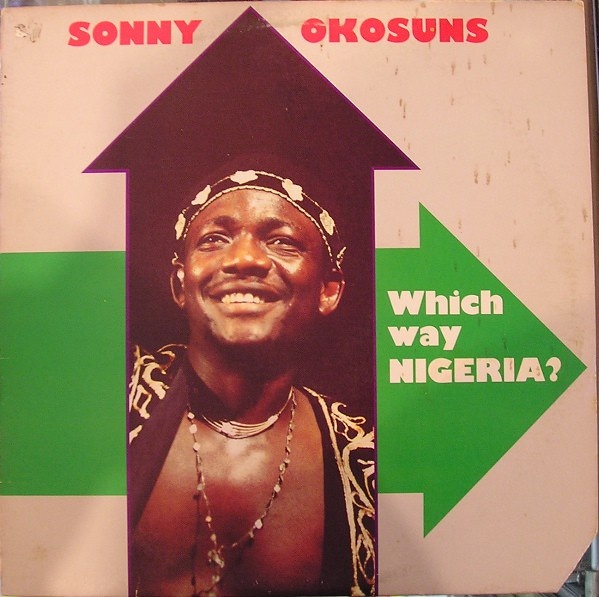
At one of the lowest moments in Nigeria’s history in 1984, when the country faced political instability, economic hardship, and corruption under an oppressive military government, the famed Nigerian musician, Sonny Okosun, sang that iconic protest song, “Which way Nigeria?” asking us Nigerians to reflect on which way Nigeria is heading. Today, that question has become more pressing because the condition of life has become more depressing for the masses of our people. And for me, the Catholic Church in Nigeria is one institution that can help effect an urgent course correction for Nigeria. However, it must also answer the fundamental question: which way for Nigerian Catholics? In other words, are we as a Church capable of leading the country in a different direction, or are we unthinkingly following this precipitous path with the rest of the country into the valley of darkness? Is the Catholic Church in Nigeria led by Catholic doctrine, by Catholic Social Teaching, by Catholic liturgical tradition, by the Catholic intellectual tradition, and by her time-tested principles on the relationship between the Church and the state? Or are Nigerian Catholics heedlessly following the dysfunctional values of a blind and selfish political class, whose extractive appetite has stripped the nation of its material and natural resources, impoverished our citizens, and nailed God’s people to a permanent cross of pain and misery? “And for me, the Catholic Church in Nigeria is one institution that can help effect an urgent course correction for Nigeria. However, it must also answer the fundamental question: which way for Nigerian Catholics?” — Stan Chu Ilo Many Nigerians are watching helplessly as an irresponsible and insensitive political class ravages their beautiful nation. Most Nigerians have disengaged from the political process, and others have sought refuge in different forms of religiosity and religious enchantment as a coping strategy, hoping in God, who, they believe, cannot fail them when everything around them shows signs of instability and decay. Other Nigerians put their hope in a sudden emergence of a saviour, perhaps Peter Obi or any other putative messiah, to rewrite our broken history and heal our wounded land. Yet others, surprisingly, put their hope in external agents, such as Trump, for redemption and liberation. Wherever anyone stands as a Nigerian citizen today, the reality that faces us is shocking and worrisome: how do we unmake the current Nigerian state; how do we radically reform our institutions; how do we cleanse our polluting ethical and social norms, and develop the virtues and practices of an inclusive state that is governed by civic and ethical culture that are transformative and generative of life and social transformation for everyone. The current state of Nigeria continues to shock the conscience as to how a greatly blessed nation with the most extraordinarily gifted citizens can be so poor, so unsafe, and so hopeless because a few thin top layers of religious and political elites have held the country in an internal perpetual bondage for decades now. Nigeria today stands as a troubling paradox of immense potential weighed down by deep structural crises that touch nearly every dimension of our national life. With an unemployment rate hovering around 22.6% and inflation exceeding 30% in recent years, millions of our people are pushed into precarity, reflected in the reality that roughly one-third of the population survives on less than $2.15 a day. This unacceptable manufactured economic fragility is compounded by systemic corruption and patron-client relations between those in power and Nigerian citizens, through an unethical governance structure that has become a transactional cesspool of impunity operated by rogues dressed in agbada, whose extractive leadership is all about the politics of the stomach;emi lókàn—(it is my turn to chop the national cake). According to Transparency International, Nigeria scores just 26 out of 100, ranking about 140th out of 180 countries, a stark indicator of weak institutions and compromised governance. “How do we unmake the current Nigerian state; how do we radically reform our institutions; how do we cleanse our polluting ethical and social norms and develop the virtues and practices of an inclusive state that is governed by civic and ethical culture that are transformative and generative of life and social transformation for everyone.” — Stan Chu Ilo  Insecurity has further eroded public confidence and daily life; the U.S. Department of State maintains a Level 3 travel advisory for Nigeria, with several regions designated “Do Not Travel” due to terrorism, kidnapping, and armed violence, conditions that have normalized fear as part of everyday existence and weakened national and international trade and movements of peoples severely hampering productivity, social innovation, and social connectivity for business and collaborative partnerships. At the same time, Nigeria hemorrhages its most vital resource: more than 100,000 barrels of oil are stolen daily, translating into billions in annual losses in a sector that should anchor national prosperity. Even in moments of global opportunity, such as price spikes linked to conflicts in the Gulf, Nigeria struggles to benefit meaningfully because production shortfalls, subsidy burdens, and theft by conscienceless gatekeepers of our oil wealth offset potential gains. This is not new but part of a troubling continuity. The $12.4 billion Gulf War windfall of 1990, effectively embezzled under the Ibrahim Babangida regime, set a pattern of opaque management of extraordinary oil revenues. The Okigbo Panel noted that this sum alone could have provided water, electricity, and nationwide road and rail links, yet no one was held accountable. Today, a similar dynamic persists: windfall gains from global price shocks remain insufficiently accounted for, while leakages through theft and mismanagement continue, even as Nigeria accumulates rising debt at both federal and state levels despite vast oil earnings. “Nigeria hemorrhages its most vital resource: more than 100,000 barrels of oil are stolen daily, translating into billions in annual losses… Nigeria struggles to benefit meaningfully… ” — Stan Chu Ilo The human cost of this systemic dysfunction is stark. Life expectancy remains low at about 54 to 55 years. In contrast, the disease burden—measured in DALYs—remains

Which Way Nigerian Catholics? Can the Church Lead a Nation in Crisis? Read More »

Leadership Without a Moral Compass: Who Pays the Price?

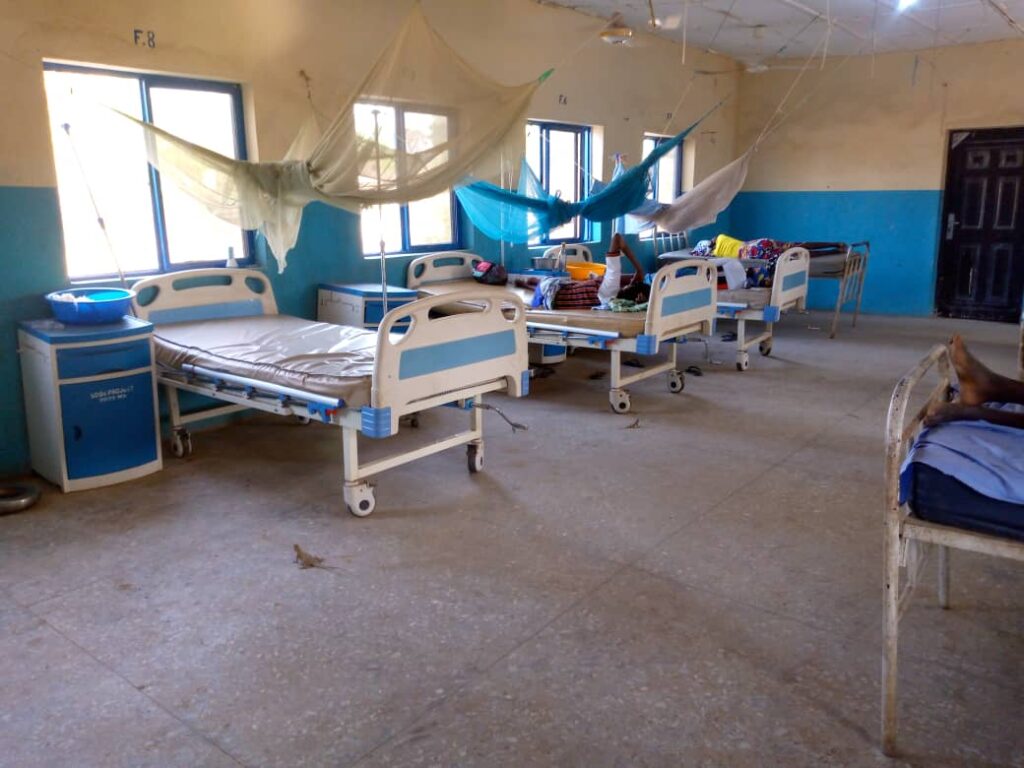
I went to the hospital not as a researcher or policy analyst, but as a priest responding to a pastoral call. A parishioner had been admitted, and my intention was simply to offer prayers and presence. What I encountered was not only illness, but quiet abandonment. The corridor was heavy with heat. Electricity failed intermittently. A nurse apologized repeatedly for delays she clearly did not cause. Essential drugs were unavailable. A young mother sat holding her feverish child, her eyes fixed on the floor—not in protest, but in resignation. Nothing about that hospital suggested the absence of leadership. The building stood. Budgets had been approved. Committees had met. Files had moved. Yet care was absent. The distance between policy and practice revealed something deeper than inefficiency. It revealed moral absence: the severing of power from responsibility, authority from conscience. Suffering had become ordinary. “Leadership without an ethical compass produces institutions that function procedurally while failing humanely.” — — Kizito C. Umennadi This essay argues that Nigeria’s crisis in healthcare is not merely administrative or economic, but fundamentally moral. Leadership without an ethical compass produces institutions that function procedurally while failing humanely. When leadership loses its moral center, structures remain standing, but human dignity collapses within them. The hospital corridor is only one example. In overcrowded classrooms, teachers improvise without resources. In government offices, files move only when conscience is bribed. In markets, inflation steadily erodes livelihoods. In communities plagued by insecurity, citizens adapt to fear as routine. Institutions function, but people are wounded. Leadership remains procedural while ethical direction disappears. The question is unavoidable: When leadership loses its moral compass, who pays the price? At its core, leadership is not simply the possession of power; it is custody over human life. A moral compass refers to the interior capacity to discern right from wrong and to act consistently for justice and the common good. Thomas Aquinas maintained that authority loses legitimacy when it departs from reason and the common good, becoming coercion rather than justice (Summa Theologica, I–II, q. 90). Augustine of Hippo warned that kingdoms without justice are little more than organized robbery (City of God, IV.4). Immanuel Kant insisted that human beings must never be treated merely as means, regardless of efficiency or legality. Modern scholarship explains how moral erosion often occurs quietly. Hannah Arendt described the “banality of evil,” the frightening normalcy with which harm can be carried out through routine bureaucracy. Zygmunt Bauman showed how institutional distance dulls moral responsibility. Ronald Heifetz distinguished technical authority from adaptive leadership, arguing that genuine leadership requires courage to confront ethical complexity rather than hide behind procedure. Nigeria’s healthcare sector gives these insights concrete expression. Preventable suffering becomes routine not only because of limited resources, but because accountability is diffused and moral urgency blunted. Moral leadership in healthcare would mean transparent procurement systems, regular maintenance of equipment, protection for whistleblowers, and investment in staff welfare. It would require leaders who measure success not merely by budget allocation, but by reductions in preventable deaths and restoration of public trust. Leadership failure also leaves psychological scars. Repeated exposure to broken systems fosters what psychologist Martin Seligman described as learned helplessness—a condition in which individuals cease attempting change because effort no longer appears connected to outcome. Closely related is moral disengagement, a concept developed by Albert Bandura, whereby individuals detach ethical standards from behavior in order to survive within corrupt environments. “The greatest danger is not crisis, but normalization—when injustice becomes expected and moral compromise passes for realism.” — Obi Ifeoma E. In counselling encounters, many young Nigerians voice a painful contradiction: they know what is right, yet feel punished for doing it. Over time, conscience weakens. Cynicism replaces hope. Integrity begins to look naïve. The crisis, however, is not only structural; it is interior. Power does not heal psychological wounds; it magnifies them. Unexamined fears—fear of losing office, fear of exposure, fear of inadequacy—can drive leaders toward control and intolerance of dissent. Rather than engage criticism reflectively, fearful leaders silence it. Unresolved trauma may further distort governance. Leaders who have not processed experiences of deprivation or humiliation may unconsciously reenact these wounds through defensive or authoritarian decision-making. Trauma that remains unacknowledged does not disappear; it becomes policy. Unchecked narcissism deepens the distortion. Institutions become extensions of the self. Accountability feels like attack. Empathy diminishes. Erik Erikson described identity diffusion as a failure to integrate values and responsibility coherently. When such fragmentation exists in those who wield authority, leadership lacks direction. As M. Scott Peck observed, avoidance of self-examination often lies at the root of social harm. Scripture underscores the moral gravity of leadership. The Prophet Ezekiel condemned shepherds who fed themselves rather than the flock (Ezek. 34:2–10). The Letter of James warns that leaders will face stricter judgment (James 3:1). Christ redefined authority as service rather than domination (Matt. 20:25–28). Pope John Paul II described the embedding of personal moral failure into institutions as “social sin.” (Sollicitudo Rei Socialis, 1987). So who pays the price? Not primarily those who wield power. It is the poor whose suffering becomes normalized. The youth whose moral imagination is wounded. Families strained by economic instability. Society itself, which gradually replaces hope with cynicism. “Until conscience is restored to public authority, the vulnerable will continue to pay the price.” — Aliyu Adaora E. The greatest danger is not crisis, but normalization—when injustice becomes expected and moral compromise passes for realism. To be sure, moral language alone cannot repair structural deficits. Underfunding, demographic pressures, and institutional complexity constrain even well-intentioned leaders. Not every failure stems from personal vice. Yet structural weaknesses become tragedies when leaders lack the ethical clarity and courage to confront them honestly. Moral courage does not eliminate scarcity; it determines how scarcity is managed and who bears its burden. Sustainable reform therefore requires more than policy change. It demands moral formation and interior integration: leadership education grounded in ethics; transparent accountability mechanisms; psychological self-awareness supported by reflective practice; and cultural norms that reward integrity

Leadership Without a Moral Compass: Who Pays the Price? Read More »