Which Way Nigerian Catholics? Can the Church Lead a Nation in Crisis?
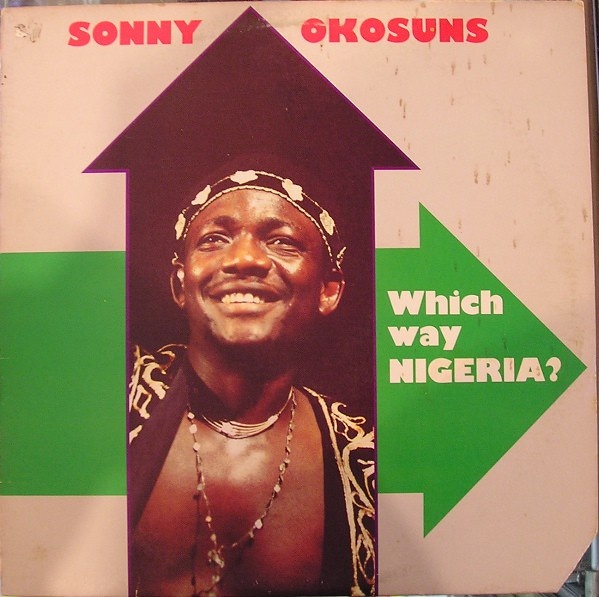
At one of the lowest moments in Nigeria’s history in 1984, when the country faced political instability, economic hardship, and corruption under an oppressive military government, the famed Nigerian musician, Sonny Okosun, sang that iconic protest song, “Which way Nigeria?” asking us Nigerians to reflect on which way Nigeria is heading. Today, that question has become more pressing because the condition of life has become more depressing for the masses of our people. And for me, the Catholic Church in Nigeria is one institution that can help effect an urgent course correction for Nigeria. However, it must also answer the fundamental question: which way for Nigerian Catholics? In other words, are we as a Church capable of leading the country in a different direction, or are we unthinkingly following this precipitous path with the rest of the country into the valley of darkness? Is the Catholic Church in Nigeria led by Catholic doctrine, by Catholic Social Teaching, by Catholic liturgical tradition, by the Catholic intellectual tradition, and by her time-tested principles on the relationship between the Church and the state? Or are Nigerian Catholics heedlessly following the dysfunctional values of a blind and selfish political class, whose extractive appetite has stripped the nation of its material and natural resources, impoverished our citizens, and nailed God’s people to a permanent cross of pain and misery? “And for me, the Catholic Church in Nigeria is one institution that can help effect an urgent course correction for Nigeria. However, it must also answer the fundamental question: which way for Nigerian Catholics?” — Stan Chu Ilo Many Nigerians are watching helplessly as an irresponsible and insensitive political class ravages their beautiful nation. Most Nigerians have disengaged from the political process, and others have sought refuge in different forms of religiosity and religious enchantment as a coping strategy, hoping in God, who, they believe, cannot fail them when everything around them shows signs of instability and decay. Other Nigerians put their hope in a sudden emergence of a saviour, perhaps Peter Obi or any other putative messiah, to rewrite our broken history and heal our wounded land. Yet others, surprisingly, put their hope in external agents, such as Trump, for redemption and liberation. Wherever anyone stands as a Nigerian citizen today, the reality that faces us is shocking and worrisome: how do we unmake the current Nigerian state; how do we radically reform our institutions; how do we cleanse our polluting ethical and social norms, and develop the virtues and practices of an inclusive state that is governed by civic and ethical culture that are transformative and generative of life and social transformation for everyone. The current state of Nigeria continues to shock the conscience as to how a greatly blessed nation with the most extraordinarily gifted citizens can be so poor, so unsafe, and so hopeless because a few thin top layers of religious and political elites have held the country in an internal perpetual bondage for decades now. Nigeria today stands as a troubling paradox of immense potential weighed down by deep structural crises that touch nearly every dimension of our national life. With an unemployment rate hovering around 22.6% and inflation exceeding 30% in recent years, millions of our people are pushed into precarity, reflected in the reality that roughly one-third of the population survives on less than $2.15 a day. This unacceptable manufactured economic fragility is compounded by systemic corruption and patron-client relations between those in power and Nigerian citizens, through an unethical governance structure that has become a transactional cesspool of impunity operated by rogues dressed in agbada, whose extractive leadership is all about the politics of the stomach;emi lókàn—(it is my turn to chop the national cake). According to Transparency International, Nigeria scores just 26 out of 100, ranking about 140th out of 180 countries, a stark indicator of weak institutions and compromised governance. “How do we unmake the current Nigerian state; how do we radically reform our institutions; how do we cleanse our polluting ethical and social norms and develop the virtues and practices of an inclusive state that is governed by civic and ethical culture that are transformative and generative of life and social transformation for everyone.” — Stan Chu Ilo Insecurity has further eroded public confidence and daily life; the U.S. Department of State maintains a Level 3 travel advisory for Nigeria, with several regions designated “Do Not Travel” due to terrorism, kidnapping, and armed violence, conditions that have normalized fear as part of everyday existence and weakened national and international trade and movements of peoples severely hampering productivity, social innovation, and social connectivity for business and collaborative partnerships. At the same time, Nigeria hemorrhages its most vital resource: more than 100,000 barrels of oil are stolen daily, translating into billions in annual losses in a sector that should anchor national prosperity. Even in moments of global opportunity, such as price spikes linked to conflicts in the Gulf, Nigeria struggles to benefit meaningfully because production shortfalls, subsidy burdens, and theft by conscienceless gatekeepers of our oil wealth offset potential gains. This is not new but part of a troubling continuity. The $12.4 billion Gulf War windfall of 1990, effectively embezzled under the Ibrahim Babangida regime, set a pattern of opaque management of extraordinary oil revenues. The Okigbo Panel noted that this sum alone could have provided water, electricity, and nationwide road and rail links, yet no one was held accountable. Today, a similar dynamic persists: windfall gains from global price shocks remain insufficiently accounted for, while leakages through theft and mismanagement continue, even as Nigeria accumulates rising debt at both federal and state levels despite vast oil earnings. “Nigeria hemorrhages its most vital resource: more than 100,000 barrels of oil are stolen daily, translating into billions in annual losses… Nigeria struggles to benefit meaningfully… ” — Stan Chu Ilo The human cost of this systemic dysfunction is stark. Life expectancy remains low at about 54 to 55 years. In contrast, the disease burden—measured in DALYs—remains
Which Way Nigerian Catholics? Can the Church Lead a Nation in Crisis? Read More »