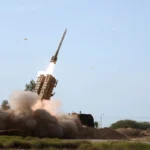

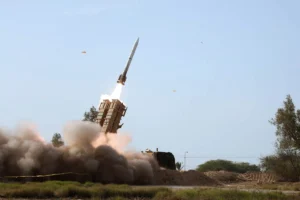
One month into escalating tensions between the United States, Israel, and Iran, the conflict is no longer confined to the Middle East. Its effects are already visible across global markets, supply chains, and political systems. Yet far from the battlefield—in Juba, Abuja, Lusaka, Algiers, and Nairobi—a different question is taking shape: what does this crisis mean for Africa? At first glance, the continent appears distant from the missiles and military maneuvers. In reality, it is already feeling the consequences—rising fuel prices, higher shipping costs, strained aid routes, and growing pressure on governments to respond to a crisis not of their making. “Africa may be far from the battlefield, but it is already paying the price.” — Nnaemeka Ali In economies where reliance on imports persists significantly and fiscal capacity is constrained, such shocks are not readily absorbed. It is tempting to assume that Africa’s oil exporters will benefit from higher prices. Therefore, while some may, briefly, experience advantages, the deeper reality for most countries is exposure to risk. External shocks—particularly those transmitted through energy and trade—have historically had disproportionately severe consequences across the continent. What makes this crisis globally significant is not just its location, but what it endangers. The Strait of Hormuz, through which a large portion of the world’s oil and liquefied natural gas is transported, has become a major concern. As tensions around Gulf infrastructure escalate, oil prices have surged sharply, surpassing $100 per barrel and occasionally nearing $115 (Reuters, March 2026). For many African economies, that shift is immediate. Most depend on imported fuel, so higher global prices quickly translate into increased transport costs, rising food prices, and mounting pressure on household incomes. Policymakers across the continent are already warning that this latest oil shock could spread across key sectors and complicate efforts to contain inflation. Governments now face difficult choices. They can absorb part of the shock through subsidies, placing further strain on already tight budgets, or pass the cost on to citizens, risking social tension. The International Monetary Fund (IMF) has repeatedly warned that many African economies are entering this period with high debt and limited fiscal space, leaving them poorly positioned to absorb external shocks. The first impact of this crisis is therefore not ideological, but fiscal. It deepens vulnerability for importers while offering uncertain gains for exporters. “This is not just a war of missiles—it is a war of prices, and Africa is on the frontline of its consequences” — Nnaemeka Ali This divide is already visible. In Nigeria, higher oil prices do not necessarily lead to stability. Despite being Africa’s largest oil producer, the country remains heavily reliant on imported refined fuel. Recent subsidy reforms have made households more directly exposed to price fluctuations, causing global increases to lead to domestic hardship quickly. For net importers, particularly in East Africa, the effects are more immediate. In Kenya, rising fuel prices affect transport, food distribution, and daily living costs. In Nairobi, this distant geopolitical crisis is already becoming a lived economic reality. Geography sharpens the impact. Countries along the Red Sea corridor—Djibouti, Sudan, Somalia, and Egypt—are at increased risk. Egypt, in particular, is vulnerable through the Suez Canal, a vital route for global trade. World Bank analysis indicates that traffic through the Suez Canal and Bab el-Mandeb Strait drops significantly during times of instability, directly affecting global trade and delivery times. This is not only an energy crisis. It is also a crisis of trade routes. As security threats interfere with essential maritime routes, ships are being diverted around the Cape of Good Hope. This detour prolongs travel durations, escalates expenses, and exerts additional pressure on supply chains. The United Nations Conference on Trade and Development has cautioned that these disruptions are already extending shipping distances and escalating costs throughout global trade networks. Africa is not only paying more for fuel; it is also paying for distance. Longer routes lead to higher freight costs, delays in deliveries, and increased pressure on economies that depend heavily on imports. The strain quickly spreads from ports to markets, transport systems, and households. African leaders are beginning to acknowledge these pressures. On March 4, South Africa’s President Cyril Ramaphosa warned that escalating tensions in the Middle East were already “putting strain on the African continent’s supply chains and causing higher energy prices.” The pressure extends into agriculture. Many African countries depend heavily on fertilizer imports routed through the Middle East. Disruptions are driving prices upward, in some cases sharply. For economies already struggling with food security, higher input costs threaten to reduce output and increase food prices. The consequences are especially severe in places like Sudan, where agricultural systems are already under strain and rising costs risk deepening an existing humanitarian crisis. This is where geopolitics becomes personal. In numerous African nations, governments are assessed less by their foreign policy stances than by the expenses associated with fuel, food, and transportation. When these three costs simultaneously escalate, pressure on authorities intensifies rapidly. The International Monetary Fund (IMF) has observed that inflationary shocks in low-income economies frequently precipitate social unrest, especially in contexts where living conditions are already delicate. At this stage, social institutions become essential. In African cities, churches and mosques are more than just places of worship—they serve as support systems. They handle pressure, provide relief, and give purpose to hardship. As economic pressure increases, they often become the first places people turn to. The humanitarian consequences are increasingly apparent. Disruptions to shipping and logistics are decelerating aid deliveries, elevating costs, and complicating operations in regions already characterized by fragility. For communities dependent on prompt assistance, even minor delays can result in severe consequences. The crisis did not give rise to these vulnerabilities; however, it is intensifying them—augmenting budgets, overburdening supply chains, and applying additional pressure on already fragile systems. African governments are responding cautiously. The African Union has called for de-escalation, reflecting a broader preference for stability over alignment. Many states are hesitant to be drawn into geopolitical blocs, even as external pressure

It was an ordinary Sunday for many on February 22. However, for the residents of Edikwu G’Icho, Ole-G’ijamu, and Ukpogo in the Apa Local Government Area of Benue State, it was anything but. The residents started their day as usual, unaware that it would be their final day on earth. Unannounced, herders invaded and ransacked their villages, resulting in the death of a pastor returning from church and another individual, and the alleged sexual assault of two additional women. They were victims of the senseless routine killings that have become the sad reality of Nigeria’s national life in the last decade or so. Many Christian communities across Nigeria now live in constant fear of kidnappers and armed groups. From the North West through the North East, into the Middle Belt and parts of the South, armed militias, insurgents, and criminal bandits have terrorized villages with alarming frequency — a situation that prompted the United States government to designate Nigeria as a Country of Particular Concern (CPC). The problem, however, is that since Nigeria was designated a Country of Particular Concern, the situation for Nigerian Christians has not improved. Despite diplomatic visits from Washington and even a Christmas Day strike by the U.S. military, despite the arrival of some U.S. military personnel, the killings continue. Villages are still attacked. Clergy are still abducted. Families are still displaced. “Since Nigeria was designated a Country of Particular Concern, the situation for Nigerian Christians has not improved.” — Nnaemeka Ali, O.M.I. This has raised a troubling question for many Nigerians: whose interests are truly served by the dialogue between Washington and Abuja? When U.S. President Donald Trump announced sanctions against the government of Bola Ahmed Tinubu on Truth Social in October 2025, Nigerians were divided. Some celebrated the move as a long-overdue protection for persecuted Christians. Others questioned whether Washington was genuinely concerned about the suffering of Nigerians or merely advancing a strategic agenda. Many suspected that behind the strong language lay carefully concealed diplomatic calculations for regional political control. “Christianity is facing an existential threat in Nigeria,” Mr. Trump declared. “Thousands of Christians are being killed. Radical Islamists are responsible for this mass slaughter. I am hereby making Nigeria a ‘Country of Particular Concern.’” Yet when the U.S. Africa Command (AFRICOM) launched a strike against ISIS-linked targets in Sokoto — a move described as a Christmas gift to Nigerians — questions emerged. Why Sokoto? Why then? And why did the attacks on vulnerable Christian villages continue almost uninterrupted? In the months that followed, American delegations visited Nigeria. Nigerian religious leaders travelled to Washington to testify about the horrors their communities endured. On February 16, 100 U.S. soldiers arrived in Nigeria, with 200 more expected later. Although it may be too early to assess the outcome of this deployment, past cooperation between Nigeria and the United States against Boko Haram produced no visible results; in fact, Boko Haram grew stronger over the years. Moreover, the terms of this recent partnership remain nebulous. There has been no transparency about the negotiations, no meaningful dialogue with Nigeria’s governing institutions to reassure citizens that this arrangement truly serves their interests. Despite the increased military presence and diplomatic exchanges, the death toll has not declined significantly. The bandits persist in their raids, kidnappings continue, and communities remain exposed. Meanwhile, policymakers in the United States formed a commission. They took their time to study the situation thoroughly. They listened to victims and spent hours online, presenting themselves as defenders of the persecuted in Nigeria. And because they know we are a deeply religious people, they presented themselves as acting in defense of Christian communities. Then, on February 23, 2026, after reviewing submissions and testimony, the U.S. House Appropriations Committee and the House Foreign Affairs Committee issued a joint report on the persecution of Christians in Nigeria. The report opened with a forceful declaration, stating that “Nigeria is the deadliest place in the world to be a Christian.” It detailed violent attacks by armed militias and terrorist groups, the killing of pastors and priests, the destruction of churches and schools, and widespread kidnappings. At first glance, the report appears to stand firmly with Nigerian Christians. It proposes a bilateral agreement to protect vulnerable Christian communities and urges the Nigerian government to deploy sufficient security forces to the Middle Belt and other affected regions. It demands that militias be removed from confiscated farmland and that displaced communities be allowed to return home voluntarily. The report also addressed religious freedom, calling for sanctions against groups and individuals who participate in or tolerate violence against Christians, and even raising the question of Sharia law in some states. However, a closer reading reveals something more. Very quickly, the crisis of Nigerian Christians is reframed as a matter of U.S. homeland security. The report calls for comprehensive counterterrorism cooperation to eliminate Foreign Terrorist Organizations that pose a direct threat to the American homeland. It goes further, urging Nigeria to reduce its military dependence on Russia and deepen defence procurement ties with the United States. It also calls for countering Chinese and Russian influence in Nigeria. “Very quickly, the crisis of Nigerian Christians is reframed as a matter of U.S. homeland security.” — Nnaemeka Ali, O.M.I. In addition, the report recommends that the U.S. Treasury Department strengthen oversight of Nigeria’s financial system to safeguard U.S. national security and enhance America’s favourable trade balance. While discouraging Nigeria from collaborating with China and Russia, the report advises Abuja to seek support from France, Hungary, and the United Kingdom. At this point, the humanitarian tragedy of Nigerian Christians appears intertwined with broader geopolitical objectives. And while these negotiations unfold, Nigerian Christians continue to die. Many Nigerians once hoped that international pressure would bring relief. But the emerging pattern suggests that foreign involvement may be driven as much by strategic calculations for economic and regional political control. Yet to this day, nothing has changed. Christians keep dying in their villages under Abuja’s watch and amid Washington’s geopolitical ambitions. And

Co-Responsibility in the Church is the Path to UnIn an era marked by division and strife, the Church stands as a beacon of hope, a family where unity can be realized through the power of shared responsibility. During the 13th series of the African Synodal Conversations, a resounding call was made: Co-responsibility is the key to uniting the Church in its pastoral and synodal mission. On Friday, August 30, 2024, nearly 200 devoted participants—spanning theologians, priests, religious, and laypeople—gathered online to explore this critical theme. Father Francis Appiah-Kubi’s profound insights illuminated the path forward, offering a vision that is both deeply theological and urgently practical. The Sacred Foundation of Co-Responsibility Father Appiah-Kubi’s message cut to the core of what it means to be a Church family: “Co-responsibility is not merely about institutional collaboration—it is a divine call rooted in our shared identity as God’s children,” he explained. He emphasized that within the Church, there is no room for hierarchy based on superiority or competition. “Our relationships are not defined by domination or servitude, but by the profound truth that we are all brothers and sisters in Christ.” This vision, he pointed out, is grounded in the Trinitarian nature of God, where mutual love and service define the relationships among the Father, Son, and Holy Spirit. “In the Church family of God,” he continued, “our filiation to God the Father and our fraternal bond with one another in Jesus Christ transcend ethnic and tribal particularisms, uniting us in a journey towards the fullness of the Kingdom.” Breaking Down the Barriers to Unity As the discussion unfolded, the deep-seated issues that divide the Church in Africa were brought to light. “Tribalism, clannishness, and favoritism are not just societal issues—they are spiritual wounds that disrupt our mission,” Father Appiah-Kubi warned. He called for a courageous and honest confrontation of these evils, urging the Church to embody a true spirit of synodality. “Synodality,” he said, “is about walking together as a family, where every voice is valued, and every person’s participation is respected, even beyond the divisions that characterize our societies.” He highlighted that this approach demands solidarity, mutual support, and a deep attention to the needs and contributions of each member of the Church. Father Appiah-Kubi further stressed that “synodality is not about creating new structures within the Church, but about living the Gospel in a renewed way—one that prioritizes communion and inclusivity over division and exclusion.” Envisioning a Church of Service and Communion Moving from diagnosis to action, Father Appiah-Kubi painted a vivid picture of what a truly co-responsible Church looks like: “The Church should not become a hierarchy of leaders and subordinates but must be a community of service and communion.” He urged the faithful to abandon the pursuit of power and instead embrace a life of service, following the example set by Christ himself. “Our mission is to serve,” he reminded everyone, “not by seeking power or recognition, but by loving and serving one another as Christ loved and served us.” He pointed out that the true measure of leadership in the Church is found not in authority or status, but in the willingness to serve others, especially the marginalized and the suffering Father Appiah-Kubi’s words echoed with the conviction that “a synodal Church must not make alliances with any form of ethnic or tribal discrimination—it must instead be a living witness to the Trinitarian love that unites us as one family of God.” This, he argued, is the only path to a Church that is truly missionary, united in its diversity, and faithful to its calling. A Clarion Call to the Church in Africa As the conversation drew to a close, the urgency of Father Appiah-Kubi’s call to action resonated deeply with all who were present. “The future of our Church depends on our willingness to share the burden of responsibility,” he asserted. He encouraged the participants to see themselves as co-responsible for the Church’s well-being, to prioritize the mission of the Church over personal interests, and to engage in the communal discernment necessary for true unity. “Each member of the Church, no matter how insignificant they may seem in the eyes of the world, has a vital role to play,” he emphasized. He likened the Church to a symphony, where “every instrument and voice counts, creating harmony and dynamism when each one plays its part.” This message of co-responsibility did not end with the session; it spread like wildfire, igniting a renewed commitment to unity and service among the participants. The vision of a Church united in co-responsibility is not just an ideal—it is a tangible reality that is within reach, but only if every believer steps forward, takes up their role, and walks together on this sacred journey.

The Pan-African Catholic Theology and Pastoral Network (PACTPAN) is a group of African scholars and pastoral agents who work in the Catholic tradition. They aim to create a better Church and society in Africa by engaging with the challenges and opportunities of Christian expansion in the continent. They do this by thinking differently and working collaboratively in new ways every day.
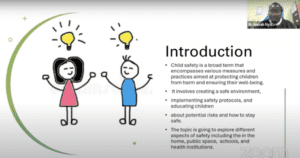
During the webinar, various issues affecting the children of Africa were discussed. The primary focus was on the social impact of these issues and how they impact the overall development of the children. The webinar highlighted the importance of understanding and addressing the needs and challenges of children holistically. Additionally, the webinar covered the topic of child safety, including measures and practices to ensure a safe environment for children. The importance of educating children about potential risks was also emphasized. The issue of child labour in Africa was discussed with a focus on its economic drivers and the need for improved vocational training. The webinar also highlighted the church’s role in creating safe spaces for children and addressing poverty.