Pan-African Catholic Theology and Pastoral Network

The Slow, Sweet Death of the Eurocentric Christianity

While I may not have the gift of prophecy, I am convinced that change is coming. The era of European theology is ending, paving the way for a new form of theology comparable to Ubuntu, for it is centred around the people. Christianity is facing a new reality that it is hesitant to accept – it is no longer a European religion. While this might not sound obvious presently, the transition from one state to another is always met with resistance. In its current form, Christianity is on its last legs. But we can agree that this is not the first time Christianity has undergone such a transformation.

The Slow, Sweet Death of the Eurocentric Christianity Read More »

Laudato Si in Tangaza University College-Kenya by Kinikonda Okemasisi

Some faculty members from Tangaza University College in Kenya, in partnership with the “Laudato Si team” of the Pan-African Catholic Theology and Pastoral Network, initiated an ecological project on April 29, 2023. Together, the team established a sustainable agroforestry garden at the Endonyo Sidai primary school in Kajiado County, Kenya. The project aims to provide food for primary school pupils.It was a grandiose event as the University students and faculty members worked with their younger siblings to realize the project successfully. The pupils were delighted to acquire knowledge from their elders regarding environmental responsibility. The African proverb, “When the mother goat grazes, the kids watch her mouth,” was evident as the younger children at Endonyo Sidai Primary School watched and imitated their elders’ actions. It was heartwarming to see everyone working together to protect our planet.The proposed initiative aims to enhance the educational attainment of all educational institutions within the local community. Moreover, this joint project of the Laudato Si group and Tangaza University College staff responds to Pope Francis’s call for environmental protection. For example, in a speech he gave in January 2015 to a group of youth in Manila, the holy father reminded us, “As stewards of God’s creation, we are called to make the earth a beautiful garden for the human family.” The Holy Father insisted that this was vital when he said: “When we destroy our forests, ravage our soil, and pollute our seas, we betray that noble calling.” The purpose of this event was to foster a passion for environmental protection among the younger generation of Africans.The team raised funds locally to plant various fruit trees such as paw-paws, oranges, mangoes, and avocados, as well as local vegetables such as Sukumawiki, spinach, Managu Saget, Sorghum, and many more. As determined as they are, this is only the beginning of their project to assume their responsibility as true custodians of God’s creation.  

Laudato Si in Tangaza University College-Kenya by Kinikonda Okemasisi Read More »

Uganda Cohort Extends Charity to Kayunga-Galiraya Community by Devis Ampereza

St. Charles Lwanga Catholic Community and MUBS-Uganda youth conducted a charity visit to Kayunga-Galiraya on Easter Monday as part of the Building Bridges Initiative. They provided items such as clothing, food, and educational materials collected during the Lenten season to the vulnerable members of the Kayunga-Galiraya community. This visit continues an online conversation between Pope Francis and African University students on November 1st, 2022. In that great event, Pope Francis listened to young Africans and heard what they wanted to do for God, the Church, and society in Africa and how the church leadership in Africa could help them realize their dreams.  Uganda was selected to participate in this online conversation with Pope Francis, and Devis Ampereza passionately narrated their question to the Holy Father. Their question mainly focused on immigration, citing why most young African men and women leave their homes to seek asylum. Since the Republic of Uganda is the African country hosting the most refugees, the youth are concerned about realizing their dream of ending poverty, war and sales of arms. Nevertheless, despite Uganda’s policies for welcoming refugees, the country still faces economic migration challenges. Furthermore, many young Ugandans are leaving the country to work abroad because they cannot afford to live a sustainable life in the country. Therefore, youth are concerned about working together to end the war, poverty, and young Africans’ voluntary search for asylum in Europe, North America and other developed countries. Even so, the youth still have a spirit of brotherhood and wish all people to live together in harmony with all that is required to sustain their lives. Consequently, the youth conducted a charity visit to embrace inclusivity, welcome everyone as brothers and sisters in one Holy Church and continue with the Holy Father’s Building Bridges Initiative. The youth participated in the celebration of the Holy Mass at St. Charles Lwanga Catholic Community. During his homily, the Assistant Chaplain, Fr. Charles Mpiima, noted that we are today’s church and must make the church what we want it to be. He stated that acts of charity are essential in the Catholic Church because they demonstrate a spirit of brotherhood and hope for the less advantaged. He emphasized that the happiness of those in need is the happiness of God. He therefore concluded by advising the youth to be humble and always learn from the Holy Father, Pope Francis’ humility.  Similarly, the Deputy Chaplain, Fr. Raphael Ddamba encouraged the young people to reflect on Matthew 25:35-40 because, whatever we have done for the people of Galiraya, we have done it for God. The caretaker of the area, Fr. Jude Matovu, explained that they serve over 25 sub-parishes, and the people are basically fishermen, farmers, and cattle herders who are always in great need and unable to provide for their families. He greatly appreciated the donated items and thanked the students for thinking about those in need. Additionally, the Parish Council chairperson appreciated the University students for thinking about them and sharing the Easter message with them. This community, displaced from their homes and living temporarily in that area, was pleased that the university students have decided to start their Building Bridges Initiative project with them. They received the gifts items with deep expression of appreciation and happiness.  

Uganda Cohort Extends Charity to Kayunga-Galiraya Community by Devis Ampereza Read More »

The Malawian BBI Cohort took part in Maula Deanery Youth Recollection by Fr Jean KESSE.

On November 1, 2022, Pope Francis had a virtual encounter with University Students from different parts of the continent. At that event that became the official inauguration of the Building Bridges Initiative, the Pope encouraged the youth to become the architects of their futures. “Young people, says the Holy Father, have to be involved socially, politically, religiously, culturally and intellectually.” They must fight to protect their society from those threatening to destroy it. And this must begin today, not tomorrow, insists the holy father. But this involvement in the life of their Church requires that they be well-equipped both intellectually and spiritually to maintain a balance as they soar in the vast space of the planet. Consequently, some Malawian BBI cohort members participated in Maula Deanery Youth Recollection to replenish their spiritual treasures. The spiritual exercise that took place on March 25th gathered more than 750 youths under the theme “May they all be one” (John 17:21). The recollection included several spiritual activities, starting with the Way of the Cross, followed by a Mass and lunch.  To be faithful to the African holistic view of spirituality, the recollection did not stop with teachings and liturgical activities. The youth entertained themselves with different cultural and sports activities.  Throughout the day, the speakers encouraged youth to reflect on the importance of unity in their lives and in the world around them. The Way of the Cross helped them meditate on Jesus’ sacrifice and his love for all of humanity. It was also their way of spiritually preparing themselves to work for their future and all the youths on the continent. This brings to mind the words of the pope to the participants of the virtual encounter:   “Please continue working, striving for your future; don’t allow yourselves to be enslaved; be cautious and make sure you stay alive,” During Mass, the youth prayed together and received the Eucharist, strengthening their connection with God and each other. The theme “May they all be one” from John 17:21 reminded them of Jesus’ call for unity among his followers and encouraged them to strive for peace and understanding in their relationships with others. The entertainment also had a spiritual component, with music and performances that uplifted and inspired the youth to live out their faith with joy and enthusiasm. The recollection provided a meaningful and transformative experience for all who participated.

The Malawian BBI Cohort took part in Maula Deanery Youth Recollection by Fr Jean KESSE. Read More »

Unmasking the “Foreigner”: Xenophobia and the Crisis of the African Soul

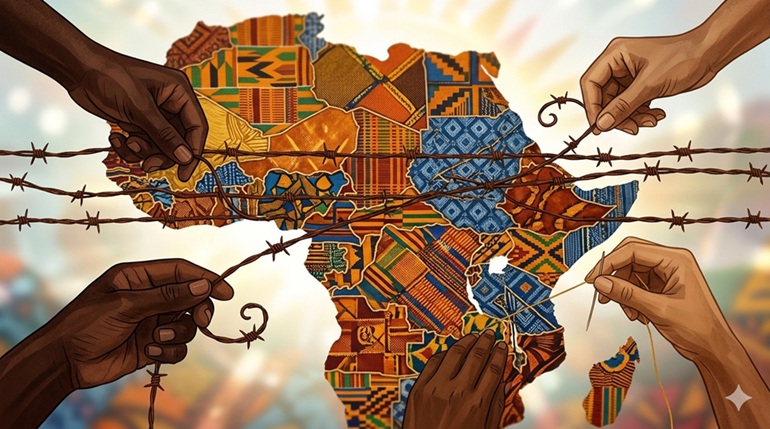
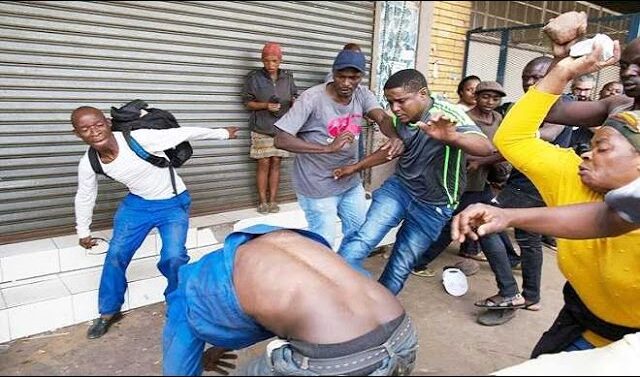
The periodic flares of xenophobia in South Africa—most notably the 2008 riots and subsequent attacks on Somali, Zimbabwean, and Nigerian nationals—are often viewed as isolated incidents of local frustration. However, these eruptions reveal a deeper fracture within the African continent. To understand the violence, we must examine the history of intra-African divisions, the artificial borders left by colonialism, and the urgent need to reclaim an African ethic of solidarity, dignity, and belonging. A Recurring Pattern of Intra-African Expulsion South Africa is not unique in its hostility toward “foreign” Africans. Post-independence Africa has repeatedly seen nations turn against their neighbors during times of economic or political stress. In 1969, Ghana’s Aliens Compliance Order led to the expulsion of hundreds of thousands of Nigerians, accused of dominating retail trade. Nigeria, facing its own economic crisis, retaliated dramatically in 1983, expelling over two million migrants, mostly Ghanaians — an event that popularized the bitter phrase “Ghana Must Go,” referring to the checkered bags carried by those fleeing the country. Equatorial Guinea and Gabon have similarly deported West Africans and Cameroonians, citing job protection and security. Even within countries, divisions persist, such as the anglophone-francophone tensions in Cameroon. The pattern is clear: when internal pressures mount, fellow Africans across the border (or across ethnic lines) become the first scapegoats. “The ‘foreigner’ in Africa today is largely a colonial hangover that the continent is still struggling to sleep off.” — Jackie Nsom, SST A Division with Deep Colonial Roots This form of institutionalized hostility was largely intensified and formalized through colonial rule and is rooted primarily in the 1884 Berlin Conference, where European powers carved up the continent with arbitrary borders that split ethnic communities and lumped rivals together. Colonial administrations introduced rigid concepts of “indigeneity” and citizenship tied to specific territories, creating the modern legal category of the “foreigner.” Colonialism replaced the African philosophy of fluid movement and shared identity with a rigid, competitive, market-based identity in which neighbours are viewed as “competitors” for scarce resources. In Africa, the stranger was often welcomed as a potential source of skills and trade, and integration followed respect for local customs and contributions to the community. Frontiers were ecological and social rather than hard political lines. “Foreignness” was temporary, not a permanent barrier. Newly independent states inherited the borders and the jurisprudence of exclusion. The attitude toward migrants shifted from pre-colonial hospitality, through colonial segregation, to post-colonial political scapegoating. The “foreigner” in Africa today is largely a colonial hangover that the continent is still struggling to sleep off. Political Entrepreneurship and the Scapegoat Strategy Contemporary politicians have further weaponized the colonial “foreigner” for short-term gain. When governments fail to deliver jobs, housing, or services, it is politically easier to blame visible outsiders than to admit systemic shortcomings. Rhetoric about ‘our people first,’ reclaiming cities, or militarized border operations often becomes political theatre designed to redirect public frustration. This marks a troubling shift away from the Pan-African vision of leaders such as Kwame Nkrumah and Julius Nyerere toward narrow micronationalism. Such rhetoric ignores the deep interdependence of African economies. Attacking a Nigerian trader in Johannesburg or a Zimbabwean worker in Limpopo undermines the regional stability on which all nations depend. “When internal pressures mount, fellow Africans become the first scapegoats.” — Jackie Nsom, SST A Christian and Moral Response Catholic Social Teaching offers a powerful framework for healing. Pope Leo XIII’s 1891 encyclical Rerum Novarum placed the dignity of the human person and the common good above narrow national interests. Later popes developed the principle of the “Universal Destination of Goods” — that the earth’s resources are intended for all humanity, not just those within a specific border. The Church affirms the right of nations to regulate borders but insists on a prior duty to welcome the stranger, especially those fleeing poverty or violence. Every person bears the “Imago Dei” — the image of God. Violence against a migrant is therefore an offence against the Creator. Pope John Paul II described xenophobia, when embedded in laws and systems, as a “structure of sin.” He reminded Africans that baptismal identity transcends national passports and that solidarity is a commitment to the good of others. In an African context, this mirrors the philosophy of ‘Ubuntu’ — “I am because we are.” Pope Benedict XVI warned that globalization without ethics turns neighbors into strangers and called on governments to protect the right of others to flourish. For South Africa, this means moving beyond “tolerance” to “integration.” Pope Francis’ 2020 encyclical, Fratelli Tutti, directly confronts the “culture of walls” and criticizes the populist rhetoric that uses fear of the “other” to gain political power. “Africa cannot reclaim its soul while Africans continue to fear and reject one another.” — Jackie Nsom, SST The Way Forward: Spiritual Reparation and Practical Change Overcoming xenophobia demands both policy reform and a conversion of heart. It also demands more than border control or political speeches. Governments must confront the structural realities of poverty, unemployment, corruption, and exclusion that fuel resentment. African leaders must also reject colonial definitions of belonging, recover a more authentic Pan-Africanism, shift political discourse from competition to complementarity, and ensure regional accountability by speaking out against xenophobia. Churches, schools, and civic institutions have a responsibility to form consciences capable of seeing migrants not as threats to fear, but as neighbours to welcome.

Unmasking the “Foreigner”: Xenophobia and the Crisis of the African Soul Read More »

Easter’s Joyful Hope Is Not Sentimental

As Christians across Africa join the global Church in celebrating Easter, they await the season’s ancient message of joyful hope with urgent expectancy. Many individuals and communities enter the Holy Week carrying the weight of sin, frustration, economic strain, political uncertainty, and social fragmentation. Yet it is precisely into this landscape that Easter’s central proclamation, that life, not death, has the final word, continues to resonate with force and bold proclamation. Every year, Easter returns with the same bold claim: that hope is stronger than despair, that life is stronger than death, and that God’s promise is stronger than the chaos that surrounds us. In a world like ours, which is fractured, exhausted, and often teetering between scepticism and survival, this claim is nothing short of profound. For millions of African Christians, Easter is not simply a liturgical highlight; it is a spiritual moment, a reminder that hope is not naïve optimism, but a doctrinal virtue rooted in the resurrection of Jesus Christ. And in a continent where faith is woven into daily life, this hope becomes an indispensable resource, shaping resilience, inspiring activism, and sustaining communities through hardship. A Hope That Transforms the Present Theologians have long insisted that Christian hope is not escapist. Pope Benedict XVI, in his encyclical Spe Salvi, famously wrote, “In hope we were saved”, describing hope as a transformative encounter with a God who knows and loves humanity. He illustrated this through the life of St. Josephine Bakhita, the Sudanese woman who survived enslavement and found liberation and new life in Christ. Her story, familiar to many African Catholics, embodies the Easter conviction that no human suffering is beyond redemption. This is the kind of hope that animates African Christian communities today — a hope that strengthens people to face unemployment, displacement, corruption, kidnapping, and violence without surrendering to despair. It is a hope that insists that the present can be transformed because God has already vanquished the greatest enemy: death itself. Similarly, the Second Vatican Council\’s Gaudium et Spes (Pastoral Constitution on the Church in the Modern World) highlights the intrinsic link between humanity\’s joys, hopes, griefs, and anxieties and the Church\’s mission. It states that the hope rooted in Christ\’s resurrection is the foundation of confidence and the source of joy, a gift of the Spirit that sustains Christians in their pilgrimage. This document emphasises the Church\’s solidarity with humanity, offering the light of the Gospel and the saving resources of Christ to address the perennial questions of life and destiny. Furthermore, Jürgen Moltmann, in his book titled Theology of Hope, argues that Christian theology is inherently eschatological, meaning it is oriented towards the future and God\’s promises. For him, the resurrection of Christ is not merely a past event but a future-oriented reality that inaugurates a new creation and provides the basis for an active, transformative hope. This hope is not passive waiting but an impetus for engagement with the world, striving for justice and peace in anticipation of God\’s coming kingdom. Hence, Moltmann emphasises that Easter hope is a dynamic force that challenges the present and inspires believers to work for a better future, even amidst suffering and despair. The Empty Tomb and the African Story In African Christianity, symbols matter, and few symbols are as powerful as the empty tomb. Here, the empty tomb is not a sign of absence but of divine disruption. It proclaims that suffering does not have the final word, that violence does not define destiny, and that death is not the end of the story. Across the continent, this message takes on local colour. For instance, in South Sudan, it is heard in the prayers of mothers longing for peace. In Nigeria, it echoes in the songs of youth choirs who refuse to let insecurity silence their joy. In Kenya, it shapes the courage of communities rebuilding after tragedy. Easter hope becomes a shared language of resilience. Thus, for Africa, a continent whose story is often told through the lens of crisis, Easter offers a counter‑narrative: that renewal is possible, that communities can rise again, and that joy can coexist with struggle. Through these, the Church’s mission is lived out in concrete acts of solidarity. For example, the youth groups in Cameroon can organise peace marches, and those in Zimbabwe can coordinate parish-based food banks. Again, Easter joy and hope strengthen this mission by reminding Christians that the resurrection of Jesus Christ is not a private consolation but a public call to action. Conclusion As we enter the season of Easter, the Church’s proclamation remains clear: joyful hope is not a seasonal sentiment but a way of seeing the world. It is a force that shapes how individuals endure hardship, how communities organise for justice, and how nations imagine their future. In a time when many feel overwhelmed by uncertainty, Easter’s enduring message stands as a signal – calling Africa and the entire world to lift their gaze toward a horizon where God’s promise of life, justice, and peace still holds firm. This call reiterates that ‘hope’ is not the denial of suffering. However, it is the insistence that suffering does not define our story. And that is why Easter still matters, not because it comforts us, but because it confronts us. It calls us to rise, again and again, in a world that keeps trying to bury us.

Easter’s Joyful Hope Is Not Sentimental Read More »

Why Psychosexual Integration is no Longer Optional in Formation

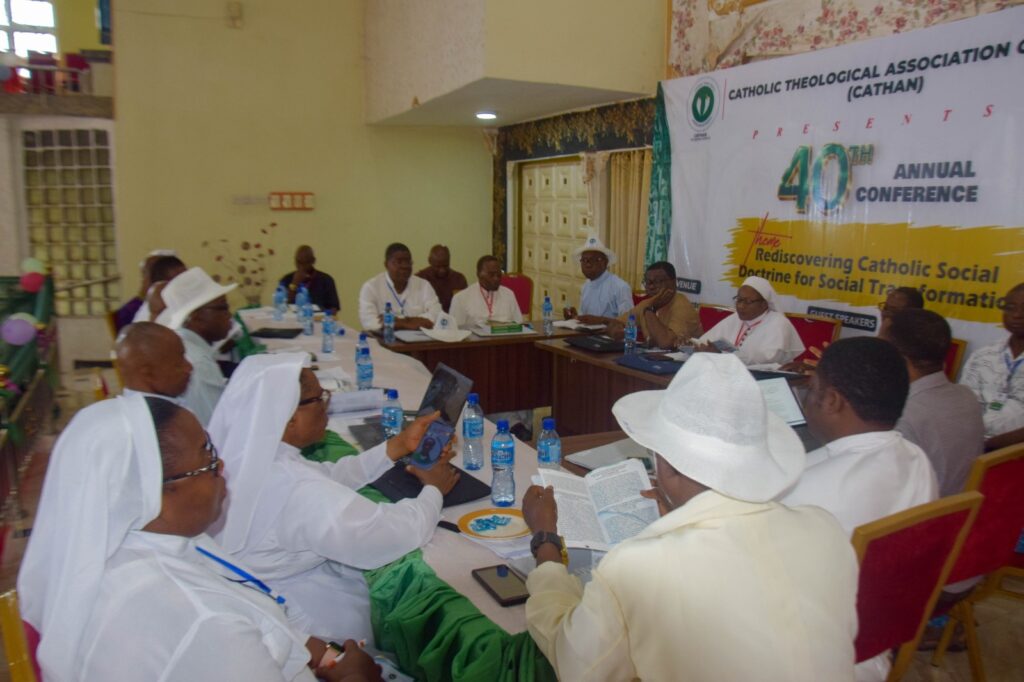
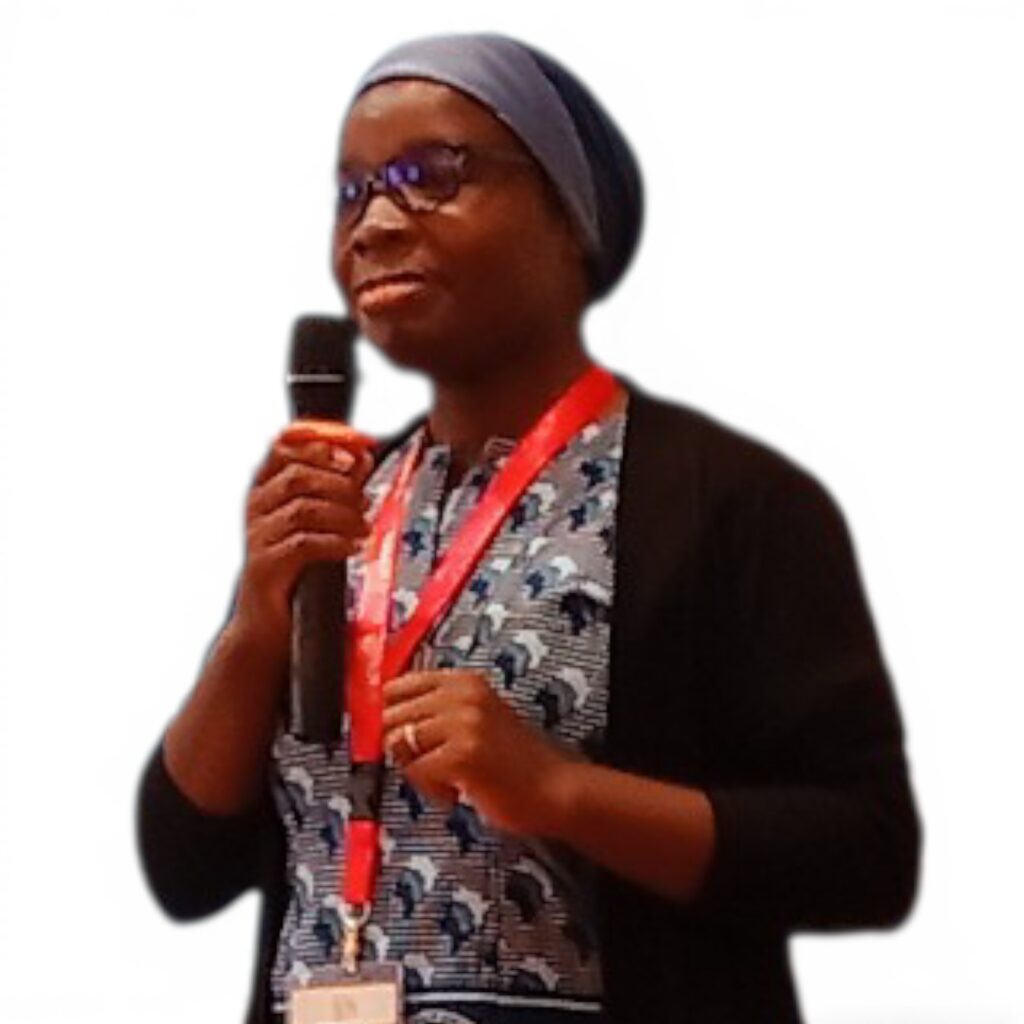
In an era marked by histories of abuse and secrecy that afflict the Church, a religious sister bears an ethical obligation to disclose the truth regarding humanity. For an extended period, the notion of the \”spiritual self\” has served as a veneer concealing a fragmented \”human self,\” thereby fostering an environment in which repression is erroneously equated with holiness. Nevertheless, as the Church in Africa confronts a modern era that demands transparency and safeguarding, traditional approaches to religious training are under scrutiny. In a recent webinar hosted by the Pan-African Catholic Theology and Pastoral Network (PACTPAN), in collaboration with the Association of Religious Formators of Kenya (ARFK), Sister Linah Siabana, MSOLA, a Zambian psychologist and Missionary Sister of Our Lady of Africa currently serving on the front lines in Northern Uganda, presented a compelling challenge to the prevailing status quo. She contended that psychosexual integration is no longer a matter of luxury but a fundamental necessity for the sustainability and integrity of ministerial responsibilities. It is no longer appropriate to require our candidates to forsake their human qualities upon entry. Vows do not negate our biological nature; rather, they necessitate a more profound integration of it, she stated. “Vows do not negate our biological nature; they demand a deeper integration of it.” — Helen Kasaka Moving beyond the spiritual bypass Sr. Siabana challenged the long-standing practice of \”spiritual bypassing,\” wherein candidates are encouraged to address profound emotional or sexual difficulties exclusively through extended periods of prayer within the chapel. While acknowledging the significance of prayer as a foundational element, she emphasized to the audience that blood circulates through our veins irrespective of our vows. She distinguished clearly between celibacy and repression, highlighting that celibacy should be characterized by intentionality and regarded as a conscious expression of love, rather than a fearful suppression of one’s true self. The participants\’ interventions highlighted the tension between traditional piety and psychological reality. When asked how to handle sexual drive, Sr. Siabana was refreshingly direct, stating that we must move toward \”emotional literacy.\” This involves teaching candidates to name their loneliness, attraction, and frustration without the paralyzing grip of shame. She emphasized that sexuality is a God-given energy for love and service; when it is ignored, it becomes a shadow that manifests as addictions, secret lives, or boundary violations. “Silence in the name of purity is a breeding ground for abuse.” — Helen Kasaka Confronting trauma and the misuse of authority A crucial aspect often neglected in traditional formation is the recognition of past trauma. Sr. Siabana pointed out that many candidates who join religious life carry unresolved wounds or histories of abuse. Failure to reconcile these fragmented aspects of identity may lead to their reemergence via the misuse of authority—where ministry is exploited to fulfill unmet emotional needs. Furthermore, it is important to note that \”Silence in the name of purity is a breeding ground for abuse. When we refuse to name the reality of our bodies, we leave the vulnerable defenceless.\” The dialogue became particularly pointed when addressing the cultural taboos that treat sexuality as a \”sacred silence.\” In many African contexts, silence is equated with purity, but Sr. Siabana argued that this silence is a breeding ground for abuse. She cited a heartbreaking case where a sister’s report of inappropriate touching was dismissed by a superior as \”provocation.\” To counter this, she called for robust safeguarding frameworks in which reporting mechanisms are transparent, and whistleblowers are protected, insisting that we must value the truth over institutional optics if we are to heal. A mandate for professionalized formation The pathway ahead requires a radical shift in how we form our brothers and sisters. In collaboration with organizations such as the ARFK, PACTPAN aims to help formators become not mere disciplinarians but mentors proficient in fundamental human development skills. This approach includes structured workshops employing role-plays to address real-world boundary situations, such as managing attraction to a colleague or navigating power dynamics with senior authority figures. It also requires a commitment to professional referrals, recognizing when a candidate needs a psychologist rather than a confessor. Furthermore, the ministry must ensure authentic accompaniment, in which one-on-one direction is a safe space, free from conflicts of interest that arise when formators act as both judges and guides. \”The goal of formation is not to produce \’perfect\’ people, but to foster honest, self-aware persons who live their vocations with integrity,\” she said. “The goal of formation is not to produce ‘perfect’ people, but to form honest, self-aware persons who live their vocation with integrity.” — Helen Kasaka Our lifelong journey of integrity Psychosexual integration is not simply a goal achieved at the time of final vows; rather, it constitutes an ongoing journey towards becoming \”authentically growing and self-aware individuals.\” For the Missionary Sisters of Our Lady of Africa and the broader Church, the message is clear: we can no longer expect our trainees to set aside their humanity. By cultivating a formation environment that is both psychologically informed and spiritually profound, we help our religious live out their vocations with joy and authenticity. Following a challenging past, the silence is ultimately being broken, paving the way for a more honest, human, and sacred Church to emerge.

Why Psychosexual Integration is no Longer Optional in Formation Read More »

Zambian Religious Sisters Trained in Chapter Facilitation at ACWECA Workshop

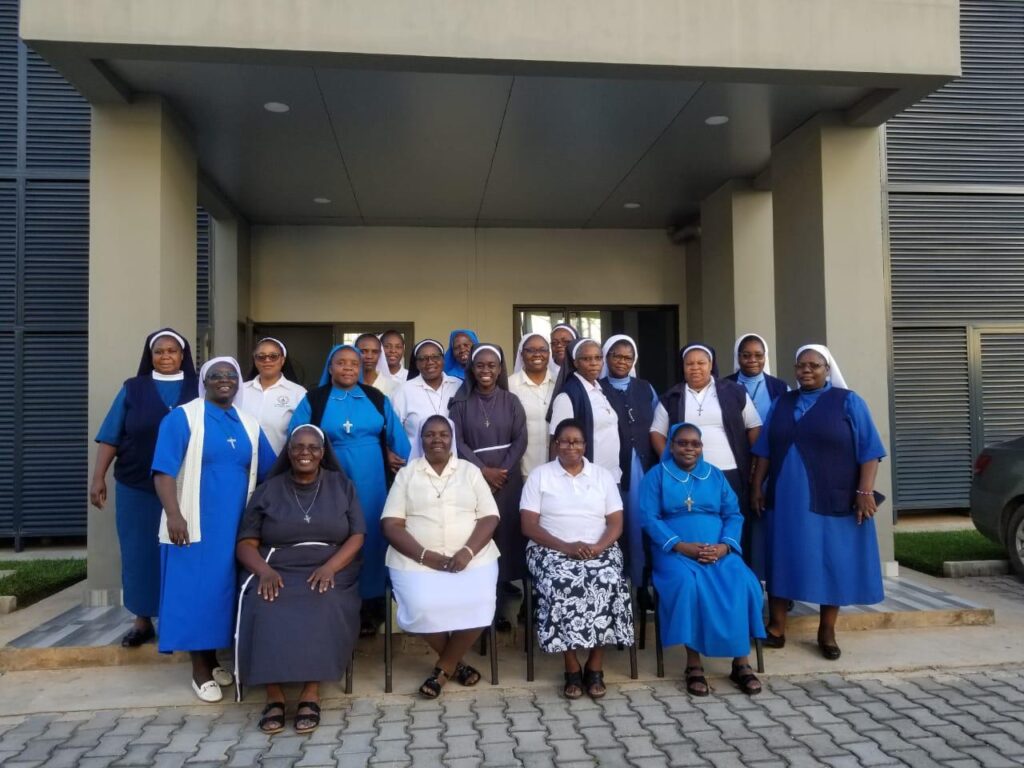
LUSAKA, Zambia – On March 17, 2026, fifteen sisters from seven religious congregations in Zambia completed a week‑long training in chapter facilitation aimed at strengthening leadership and improving the conduct of General Chapters within religious institutes. The workshop, organized by the Association of Consecrated Women in Eastern and Central Africa (ACWECA), took place at the Kalundu Conference Centre in Lusaka and focused on equipping participants with both spiritual and practical skills needed for effective facilitation. The General Chapter of a religious institute is much more than a mere business meeting or a periodic administrative duty; it is a sacred moment of grace, an ecclesial gathering, and a deep celebration of a congregation’s life. The success of this pivotal occasion often depends on the quality of its guidance.  ​The training, specifically designed to bridge the regional gap in the number of skilled facilitators, brought together 15 sisters from seven congregations across Zambia. It was not merely a technical seminar but a holistic formation journey, one that challenged, inspired, and transformed participants both personally and communally. ​The programme\’s curriculum was carefully designed to address the intricacies of contemporary religious experiences. Sr. Theresa Helena Muzeta, a Religious Sister of Charity (RSC), guided the participants in exploring the spirituality of facilitation. She highlighted that a General Chapter serves as a spiritual encounter grounded in discernment, prayer, and mindful listening to the Spirit. ​This was complemented by Sr. Lontia Siakalambwa, a Religious Sister of the Holy Spirit (RSHS), who offered practical tools for conflict transformation, helping participants understand that conflict should not be seen as something to be avoided, but as a reality that, when well handled, can generate growth, new values, and deeper communion. She also reminded the participants that a General Chapter is a spiritual encounter grounded in discernment, prayer, and mindful listening to the Spirit.\” ​Legal and structural integrity remained central to the formation with Sr. Chrisencia Mkume (RSHS), who provided insights from canon law and the five canonical purposes of a Chapter, while Sr. Thérèse Nyoni, the Superior General of the Little Sisters of St. Francis (LSSF), guided participants through the responsibilities of chapter delegates and emphasized the organic relationship between membership and leadership, noting that sound membership naturally gives rise to sound leadership. ​For many participants, the workshop dismantled long-held misconceptions about chapters. Sr. Mutinta of the Holy Spirit Sisters described a profound shift in the perspective, saying: “I was inspired by the fact that the Chapter is a celebration of our life and not a battlefield. It is a time of renewal, where we reflect on what has been and look to the future with hope.” She further reiterated that discernment is not optional but essential, not only within Chapters, but in everyday life. Participants also discovered that facilitation begins within the person. Self-awareness, preparation, and a deep understanding of the group being served emerged as critical foundations. As one insight highlighted, a facilitator must never leave things to chance but must engage deeply with the congregation’s life, charism, and constitutions. ​A recurring theme throughout the workshop was the importance of creating environments where every voice is heard and valued. Sr. Clarina Ndona (LSSF) identified creating safe spaces and active listening as the most valuable skills she has gained. In her own words, she said: “This training has taught me to be impartial and to create a space where everyone feels respected and heard.” She also noted that these skills will be immediately applicable—not only in Chapters, but also in community meetings and congregational assemblies—transforming how dialogue and decision-making unfold at every level. ​The training also touched the participants on a personal level. Sr. Dr. Christine Mwaka Himoonga (HBVM) described the experience as both challenging and enriching, particularly in learning how to guide rather than control discussions: “Facilitation is less about directing and more about guiding conversations in a way that allows everyone to feel heard.” Through role-play and shared experiences, the sisters practice patience, adaptability, and the ability to manage diverse personalities—skills essential for fostering unity in increasingly diverse communities. \”The stronger our facilitation, the stronger our communion; and the stronger our communion, the more credible our witness.\” ​This initiative responds to a long-identified gap in the region. Sr. Christine Mwangi, outgoing ACWECA Coordinator for Leadership for Mission, explained that the lack of trained facilitators has often limited the effectiveness of General Chapters. A well-facilitated chapter, she noted, leads to deeper understanding, stronger unity, and more fruitful outcomes for congregations. More importantly, it shifts the focus of Chapters from merely electing leaders to becoming authentic moments of communal discernment about the future. Going forward, ACWECA is exploring mentorship programmes, follow-up engagements, and a potential “Master Trainers” model to ensure sustainability and continued growth across the region. ​As these sisters return to their respective communities and missions, they carry renewed confidence and strengthened skills to foster unity. ​They also believe in the renewed vision of the General Chapter, not as a procedural obligation, but as a sacred space of listening, discernment, and shared responsibility for the future. In the quiet halls of Kalundu, a new generation of “midwives of communion” has emerged, women ready to guide their congregations towards a future grounded in hope, unity, and faithful witness.

Zambian Religious Sisters Trained in Chapter Facilitation at ACWECA Workshop Read More »

The Sahel at Risk: Mali’s Experience and Dangers of a Divided Sahel

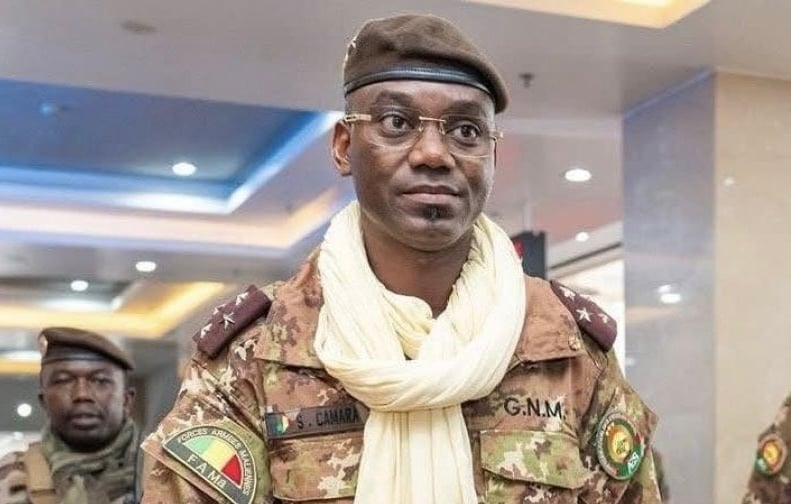
The devastating surprise attack on April 25th, which ransacked part of Mali and reportedly claimed the life of Defence Minister General Sadio Camara, has ignited profound fear over the rapidly evolving nature of terrorism in the Sahel. Previously fragmented rebel groups like Jama ‘at Nusrat al-Islam wal-Muslimin (JNIM) and the Front de Libération de Azawad – Azawad Liberation Front (FLA), once bitter rivals, have joined forces to seize territory across the region during the April 25th attack. What is most troubling is that as terrorists unite and expand their reach, the Sahel nations remain deeply divided and continue to lose ground despite the efforts of the authorities to contain the violence. “As terrorist groups coordinate across borders, the Sahelian states remain politically fragmented and militarily overstretched.” — Augustine Anwuchie A Crisis Rooted in Historical Grievances and Structural Collapse The crisis in Mali is not limited to terrorism but has its roots in historical grievances, corruption and structural collapse. The origins of the crisis date back to 2012, when Tuareg rebels allied with Jihadist groups to launch an armed rebellion for an independent state of Azawad in the Northern region. This instability prompted the 2013 French military intervention, culminating in the launch of Operation Serval, which later evolved into Operation Barkhane in 2014 and finally led to a peace agreement with the Forces of Liberation of Azawad in 2015. However, years of political corruption in Bamako and the failure of French Forces to successfully eradicate the insurgency fuelled intense anti-French sentiment and widespread domestic frustration. This political instability culminated in a 2021 military coup led by Assimi Goïta, whose nationalist junta eventually expelled French forces and, by 2024, officially abrogated the 2015 peace accord. The collapse of the peace framework contributed to an emerging ethno-political alliance between JNIM and the Front de Libération de l’Azawad (FLA), who launched coordinated attacks across parts of Bamako, Kati, Gao, Mopti and Sevare on 25th April 2026. Mali now faces a severe dual crisis, simultaneously battling the Tuareg Azawad separatists and the jihadist insurgency seeking Islamic rule. While the military government in Bamako accuses France of engineering the latest attack in an attempt to overthrow the government, an allegation France denies, the security situation on the ground remains highly volatile. Despite government claims of control, recent suspected Al-Qaeda attacks in Mopti killed 50 villagers, highlighting the extreme difficulty of combating an asymmetric enemy that has heavily infiltrated the local population. The Dangers of a Fragmented Sahel The Sahel has emerged as a global epicentre of terrorism, now accounting for 51% of all terrorism-related deaths globally. The region is ravaged by an array of insurgent groups, including the FLA, JNIM, and the Islamic State Sahel Province (ISSP/ISGS). This threat is rapidly expanding southwards into the coastal regions of Benin and Togo. At the same time, landlocked Burkina Faso faces multi-front assaults, and the Niger Republic simultaneously battles distinct terrorist factions across its western, southwestern and southeastern borders. A recent example of this volatility was on May 4th, when Boko Haram attacked a military base in the Barka Toloron region of Lake Chad, killing 23 soldiers and injuring 26 others. Compounding this crisis is the growing and dangerous pattern of collaboration among these terrorist factions, who are actively exploiting regional instability to seize control of vast territories. “The Sahel now accounts for more than half of all terrorism-related deaths globally.” — Augustine Anwuchie According to Peter Bouckaert, a senior director at Fortify Rights, the Sahel currently represents the greatest opportunity for the worldwide jihadist movement. The purely military solution to the rise of these insurgent groups, as well as operations involving heavy-handed tactics or military massacres of civilians and young men, has driven aggrieved local populations directly into the arms of jihadist movements for protection or retaliation, thereby fuelling the cycle of recruitment and violence. This vulnerability is driven by a combination of weak regional governments, a climate-related food crisis, and the security vacuum left by the withdrawal of French forces, which previously held these Islamist groups at bay. Bouckaert warns that, without urgent intervention, the region will face the severe threat of a Somalia-like state collapse, jeopardizing both regional and global security. Ultimately, the fight against terrorism is severely hampered by deep political fractures as the region is split between the newly formed Alliance of Sahel States (AES), comprising Mali, Niger and Burkina Faso, and the ECOWAS bloc. “A divided Sahel risks becoming a permanent corridor of insurgency stretching across West Africa.” — Augustine Anwuchie While a strong and united Sahel could fundamentally change the course of the war, the deep-seated distrust, dirty politics, corruption, and regional ego make this impossible. If the Sahelian governments do not put aside their divisions and unite against this expanding network of armed extremist groups, the region risks devolving into a highly fractured zone of competing terrorist factions, mirroring the long-term instability of the Middle East.

The Sahel at Risk: Mali’s Experience and Dangers of a Divided Sahel Read More »

South Africa: Xenophobic attacks and the dwindling fortune of Pan-Africanism

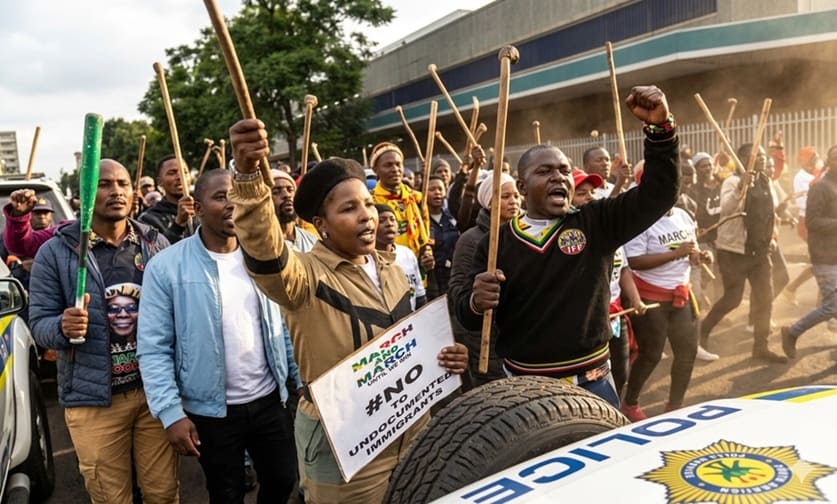
The resurgence is stark; its echoes cast a long shadow over Africa’s rising indices of conflict, violence, and division. In the recent spate of xenophobic attacks, a growing number of young South Africans are sending a clear message: migrants—predominantly from neighboring African nations—are not welcome. Critics accuse foreigners of displacing local labor, escalating crime rates, and, in many instances, residing in the country illegally. These voices are more than mere statements; they reveal a deep-seated perception of African migrants as convenient mirrors reflecting the country’s internal socio-economic failures. What began as a digital war of words has spiraled into physical violence, targeted assaults, and the tragic loss of life. Disturbing footage shows groups storming hospitals and schools in search of foreigners, looting shops, and demanding that migrants leave the country immediately. Scores have been killed, and many more left homeless over the past few weeks. President Cyril Ramaphosa has condemned the attacks, insisting that South Africans must choose the rule of law over mob violence while vowing to hold perpetrators accountable. More than scapegoating foreigners: A crisis rooted in structural failures There are legitimate concerns among young South Africans regarding the strain on public resources, rising crime, and collapsing infrastructure—evidenced by overcrowded classrooms and clinics, poor regulation, and the prevalence of drug and human trafficking. However, beneath these grievances lies a more profound structural reality. While xenophobia in South Africa is rooted in a complex weave of historical, economic, and political factors, the primary driver remains economic frustration among the poor, exacerbated by extreme inequality and governance failures. South Africa remains gripped by profound economic inequality, most visibly manifested in staggering rates of youth unemployment. The unfulfilled promises of the post-apartheid era, contrasted with the perceived success of migrant-owned small businesses—often operating at lower costs and within strong networks—have fueled a volatile mixture of resentment and frustration. Political actors and influencers often exploit the situation, either by fueling inflammatory rhetoric or remaining silent when firm condemnation is required. Patterns of xenophobia in South Africa also reflect unresolved questions of social identity and “othering,” reinforcing a strong “us versus them” mindset that casts migrants as outsiders—even though they are fellow Africans. South African youth are often labeled as entitled, lazy, or unskilled, but many reject this characterization, arguing that they are being blamed for a crisis they did not create. Theoretical analysis unveiling the deeper forces at play This hostility toward foreigners has crystallized into socio-psychological patterns that align with \”structural functionalism\” and \”realist conflict theory.\” From a structural functionalist perspective, South Africa’s social system is under significant strain. When institutions fail to provide stability, the social organism reacts with dysfunction. Rather than addressing the structural roots of the crisis, the most vulnerable members of society—migrants—are scapegoated for broader systemic failures. Xenophobic patterns can also be interpreted through the lens of realist conflict theory, which posits that competition over scarce resources leads to prejudice, discrimination, and hostility. In many ways, xenophobia is a rebranded form of apartheid. While the legal framework of apartheid was dismantled, its shadows continue to loom over modern social identities and divisions. Nationalism vs Pan-Africanism The current wave of violence leaves South Africa caught between narrow nationalist expressions and upholding the sacred tenets of Pan-Africanism. During the struggle against apartheid, South Africa relied heavily on the collective goodwill and solidarity of Pan-African allies. Nigeria gave heavy financial aid, moral and political support to black South Africans anti-apartheid struggle, while revolutionary icons such as Oliver Tambo and Chris Hani were famously welcomed and shielded during their exile in Zambia and other African nations. While the South African government must address the grievances of protesters, the core factors driving tension are structural and extend far beyond the presence of migrants. As wave of anti-immigration protests erupts across the globe, the voice of Pope Leo speaks to us in strong note, insisting that migrants should be treated with dignity and humanity. The crisis unfolding in South Africa serves as a wake-up call not only for the country itself but for all African leaders regarding the urgency of nation-building and true economic independence. It also calls on leaders to promote tolerance, unity, and solidarity across the continent, particularly at a time when global attention is focused on Africa’s internal divisions.

South Africa: Xenophobic attacks and the dwindling fortune of Pan-Africanism Read More »

Le Nonce apostolique face aux défis pastoraux au Burkina Faso et au Niger

Résumé En mission au cœur du Sahel, entre défis sécuritaires, crises humanitaires et espérance chrétienne, le nouveau nonce apostolique au Burkina Faso et au Niger, Son Excellence Éric Suiviguidi, partage sa vision pastorale. Dans cet entretien accordé à VoiceAfrique – Catholic News Analysis, il revient sur sa mission, les réalités du terrain et l’appel à une Église toujours plus proche des plus vulnérables. Accueillir la mission dans la foi VoiceAfrique: Votre récente nomination comme nonce apostolique au Burkina Faso et au Niger vous place au cœur d’un front pastoral parmi les plus délicats de l’Église. Dans quelles dispositions intérieures avez-vous accueilli cette mission, et quelle vision souhaitez-vous y porter? Son Excellence (SE) Éric Suiviguidi : Lorsque l’Église vous appelle à une mission, on l’accueille d’abord dans la foi. Certes, la mission qui m’est confiée n’est ni simple ni facile, mais je l’ai reçue avec confiance. C’est d’ailleurs pour cela que j’ai choisi comme devise : « Il est fidèle, celui qui vous appelle ». Je me suis disposé à vivre cette mission en communion avec les Églises locales. Les évêques, les prêtres, les agents pastoraux, les religieux, les religieuses et les laïcs sont les premiers acteurs de la vie pastorale. Face aux nombreux défis au Burkina Faso et au Niger, leur résilience est pour moi une lumière, un véritable signe d’espérance. Mon rôle est de les accompagner, de les soutenir et de fortifier cette espérance. Une Église au cœur de l’épreuve VoiceAfrique: L’insécurité et le terrorisme marquent profondément la vie des populations. En quoi ces réalités redéfinissent-elles la mission de l’Église? SE Éric Suiviguidi : L’Église au Niger, comme dans d’autres pays de la sous-région, traverse une période particulièrement difficile. Nous puisons dans l’expérience de nos aînés pour vivre cette situation, en la confiant au Seigneur et en demandant la grâce de la traverser avec sérénité. Pour les agents pastoraux, le défi est immense. Ils vivent eux-mêmes des situations traumatisantes, tout en étant appelés à apporter réconfort, confiance et paix aux fidèles. Cela exige une grande proximité et un véritable dépassement de soi : porter la souffrance des autres tout en affrontant la sienne. Au Burkina Faso, j’ai vu des paroisses et des communautés religieuses visiter les camps de déplacés, soutenir les familles, offrir écoute, prière et accompagnement psychologique. Dans ces contextes de douleur, la proximité pastorale est essentielle. Une Église en sortie, malgré les limites VoiceAfrique: Le pape François appelle à une \”Église en sortie\”. Comment cette vision peut-elle s’incarner concrètement dans votre contexte? SE Éric Suiviguidi : Les populations doivent ressentir la proximité de l’Église, non seulement pour les conduire à la foi, mais aussi pour leur révéler l’amour de Dieu. Nous devons être réellement une Église en sortie. Les fidèles ne viendront pas toujours spontanément, surtout dans des contextes où les catholiques sont minoritaires. J’ai visité une paroisse où certains villages sont situés à plus de 10 kilomètres. Se rendre à la messe représente un coût important pour les familles. Avec davantage de prêtres et de moyens, il serait possible de rapprocher les lieux de culte. Mais les défis restent réels : manque de prêtres, ressources limitées. Il nous faut donc réfléchir à des moyens concrets pour rester proches des fidèles malgré ces contraintes. Servir les pauvres avec amour VoiceAfrique: Comment l’Église peut-elle incarner concrètement l’option préférentielle pour les pauvres ? SE Éric Suiviguidi: Jésus a dit : \”Les pauvres, vous en aurez toujours avec vous\”. Le service des pauvres est essentiel, mais il doit être vécu par amour pour le Christ. Nous sommes appelés à prendre soin de nos frères et sœurs dans le besoin avec un cœur habité par cet amour. Dialogue et réconciliation VoiceAfrique: Dans un contexte marqué par les divisions, comment promouvoir le dialogue, la justice et la paix ? SE Éric Suiviguidi: Pour construire la réconciliation, il est nécessaire de dépasser les blessures du passé. Ce n’est pas facile, mais en tant que chrétiens, nous sommes appelés à répondre à tout par l’amour. Même face à la violence ou à la polarisation, nous devons proposer un langage de fraternité. J’ai été témoin de belles initiatives de dialogue, notamment avec la communauté musulmane. J’ai, par exemple, été invité à une prière de fin de Ramadan. Cela montre qu’il est possible de construire des ponts. Tout serviteur de Dieu est un artisan de réconciliation. Espérance au cœur de la crise VoiceAfrique: Face aux déplacements massifs et à la crise humanitaire, où voyez-vous des signes d’espérance? SE Éric Suiviguidi: Il y a de nombreux déplacés internes, et l’Église s’efforce de créer des lieux de culte, d’éducation et d’accompagnement. Les catéchistes, parfois au péril de leur vie, continuent d’annoncer l’Évangile. Certains ont donné leur vie : ce sont de véritables martyrs. Le fait que la foi demeure vivante au cœur de la crise est un grand signe d’espérance. La vocation missionnaire aujourd’hui VoiceAfrique: Comment encourager davantage de prêtres à s’engager dans ces missions difficiles? SE Éric Suiviguidi: On ne peut pas contraindre quelqu’un à être missionnaire dans un contexte aussi exigeant. Il faut une véritable vocation, une passion et une force intérieure. Envoyer quelqu’un dans un environnement qu’il ne peut supporter peut le briser. Il est donc essentiel d’identifier ceux qui ont cet appel missionnaire et de les accompagner. Un message aux fidèles VoiceAfrique: Quel message souhaitez-vous adresser aux prêtres, aux religieux et aux fidèles ? SE  Éric Suiviguidi: Je les encourage vivement. Ce sont des témoins courageux du Christ. Je prie pour qu’ils reçoivent la force de l’Esprit Saint et la protection de la Vierge Marie. Il y a une grande joie à se donner à Dieu, même dans le risque. Cela montre que l’on aime Dieu plus que soi-même. Que le Seigneur ravive en chacun l’ardeur des débuts. Conclusion: Dans un contexte marqué par l’épreuve, cet appel à la foi, à la proximité et à la mission résonne comme un témoignage puissant d’espérance. Au Burkina Faso comme au Niger, l’Église continue d’avancer — portée par la fidélité de ses pasteurs et le courage

Le Nonce apostolique face aux défis pastoraux au Burkina Faso et au Niger Read More »

Secret Link