Pan-African Catholic Theology and Pastoral Network

Uganda Cohort Extends Charity to Kayunga-Galiraya Community by Devis Ampereza

St. Charles Lwanga Catholic Community and MUBS-Uganda youth conducted a charity visit to Kayunga-Galiraya on Easter Monday as part of the Building Bridges Initiative. They provided items such as clothing, food, and educational materials collected during the Lenten season to the vulnerable members of the Kayunga-Galiraya community. This visit continues an online conversation between Pope Francis and African University students on November 1st, 2022. In that great event, Pope Francis listened to young Africans and heard what they wanted to do for God, the Church, and society in Africa and how the church leadership in Africa could help them realize their dreams.  Uganda was selected to participate in this online conversation with Pope Francis, and Devis Ampereza passionately narrated their question to the Holy Father. Their question mainly focused on immigration, citing why most young African men and women leave their homes to seek asylum. Since the Republic of Uganda is the African country hosting the most refugees, the youth are concerned about realizing their dream of ending poverty, war and sales of arms. Nevertheless, despite Uganda’s policies for welcoming refugees, the country still faces economic migration challenges. Furthermore, many young Ugandans are leaving the country to work abroad because they cannot afford to live a sustainable life in the country. Therefore, youth are concerned about working together to end the war, poverty, and young Africans’ voluntary search for asylum in Europe, North America and other developed countries. Even so, the youth still have a spirit of brotherhood and wish all people to live together in harmony with all that is required to sustain their lives. Consequently, the youth conducted a charity visit to embrace inclusivity, welcome everyone as brothers and sisters in one Holy Church and continue with the Holy Father’s Building Bridges Initiative. The youth participated in the celebration of the Holy Mass at St. Charles Lwanga Catholic Community. During his homily, the Assistant Chaplain, Fr. Charles Mpiima, noted that we are today’s church and must make the church what we want it to be. He stated that acts of charity are essential in the Catholic Church because they demonstrate a spirit of brotherhood and hope for the less advantaged. He emphasized that the happiness of those in need is the happiness of God. He therefore concluded by advising the youth to be humble and always learn from the Holy Father, Pope Francis’ humility.  Similarly, the Deputy Chaplain, Fr. Raphael Ddamba encouraged the young people to reflect on Matthew 25:35-40 because, whatever we have done for the people of Galiraya, we have done it for God. The caretaker of the area, Fr. Jude Matovu, explained that they serve over 25 sub-parishes, and the people are basically fishermen, farmers, and cattle herders who are always in great need and unable to provide for their families. He greatly appreciated the donated items and thanked the students for thinking about those in need. Additionally, the Parish Council chairperson appreciated the University students for thinking about them and sharing the Easter message with them. This community, displaced from their homes and living temporarily in that area, was pleased that the university students have decided to start their Building Bridges Initiative project with them. They received the gifts items with deep expression of appreciation and happiness.  

Uganda Cohort Extends Charity to Kayunga-Galiraya Community by Devis Ampereza Read More »

The Slow, Sweet Death of the Eurocentric Christianity

While I may not have the gift of prophecy, I am convinced that change is coming. The era of European theology is ending, paving the way for a new form of theology comparable to Ubuntu, for it is centred around the people. Christianity is facing a new reality that it is hesitant to accept – it is no longer a European religion. While this might not sound obvious presently, the transition from one state to another is always met with resistance. In its current form, Christianity is on its last legs. But we can agree that this is not the first time Christianity has undergone such a transformation.

The Slow, Sweet Death of the Eurocentric Christianity Read More »

Laudato Si in Tangaza University College-Kenya by Kinikonda Okemasisi

Some faculty members from Tangaza University College in Kenya, in partnership with the “Laudato Si team” of the Pan-African Catholic Theology and Pastoral Network, initiated an ecological project on April 29, 2023. Together, the team established a sustainable agroforestry garden at the Endonyo Sidai primary school in Kajiado County, Kenya. The project aims to provide food for primary school pupils.It was a grandiose event as the University students and faculty members worked with their younger siblings to realize the project successfully. The pupils were delighted to acquire knowledge from their elders regarding environmental responsibility. The African proverb, “When the mother goat grazes, the kids watch her mouth,” was evident as the younger children at Endonyo Sidai Primary School watched and imitated their elders’ actions. It was heartwarming to see everyone working together to protect our planet.The proposed initiative aims to enhance the educational attainment of all educational institutions within the local community. Moreover, this joint project of the Laudato Si group and Tangaza University College staff responds to Pope Francis’s call for environmental protection. For example, in a speech he gave in January 2015 to a group of youth in Manila, the holy father reminded us, “As stewards of God’s creation, we are called to make the earth a beautiful garden for the human family.” The Holy Father insisted that this was vital when he said: “When we destroy our forests, ravage our soil, and pollute our seas, we betray that noble calling.” The purpose of this event was to foster a passion for environmental protection among the younger generation of Africans.The team raised funds locally to plant various fruit trees such as paw-paws, oranges, mangoes, and avocados, as well as local vegetables such as Sukumawiki, spinach, Managu Saget, Sorghum, and many more. As determined as they are, this is only the beginning of their project to assume their responsibility as true custodians of God’s creation.  

Laudato Si in Tangaza University College-Kenya by Kinikonda Okemasisi Read More »

The Malawian BBI Cohort took part in Maula Deanery Youth Recollection by Fr Jean KESSE.

On November 1, 2022, Pope Francis had a virtual encounter with University Students from different parts of the continent. At that event that became the official inauguration of the Building Bridges Initiative, the Pope encouraged the youth to become the architects of their futures. “Young people, says the Holy Father, have to be involved socially, politically, religiously, culturally and intellectually.” They must fight to protect their society from those threatening to destroy it. And this must begin today, not tomorrow, insists the holy father. But this involvement in the life of their Church requires that they be well-equipped both intellectually and spiritually to maintain a balance as they soar in the vast space of the planet. Consequently, some Malawian BBI cohort members participated in Maula Deanery Youth Recollection to replenish their spiritual treasures. The spiritual exercise that took place on March 25th gathered more than 750 youths under the theme “May they all be one” (John 17:21). The recollection included several spiritual activities, starting with the Way of the Cross, followed by a Mass and lunch.  To be faithful to the African holistic view of spirituality, the recollection did not stop with teachings and liturgical activities. The youth entertained themselves with different cultural and sports activities.  Throughout the day, the speakers encouraged youth to reflect on the importance of unity in their lives and in the world around them. The Way of the Cross helped them meditate on Jesus’ sacrifice and his love for all of humanity. It was also their way of spiritually preparing themselves to work for their future and all the youths on the continent. This brings to mind the words of the pope to the participants of the virtual encounter:   “Please continue working, striving for your future; don’t allow yourselves to be enslaved; be cautious and make sure you stay alive,” During Mass, the youth prayed together and received the Eucharist, strengthening their connection with God and each other. The theme “May they all be one” from John 17:21 reminded them of Jesus’ call for unity among his followers and encouraged them to strive for peace and understanding in their relationships with others. The entertainment also had a spiritual component, with music and performances that uplifted and inspired the youth to live out their faith with joy and enthusiasm. The recollection provided a meaningful and transformative experience for all who participated.

The Malawian BBI Cohort took part in Maula Deanery Youth Recollection by Fr Jean KESSE. Read More »

Zambian Religious Sisters Trained in Chapter Facilitation at ACWECA Workshop

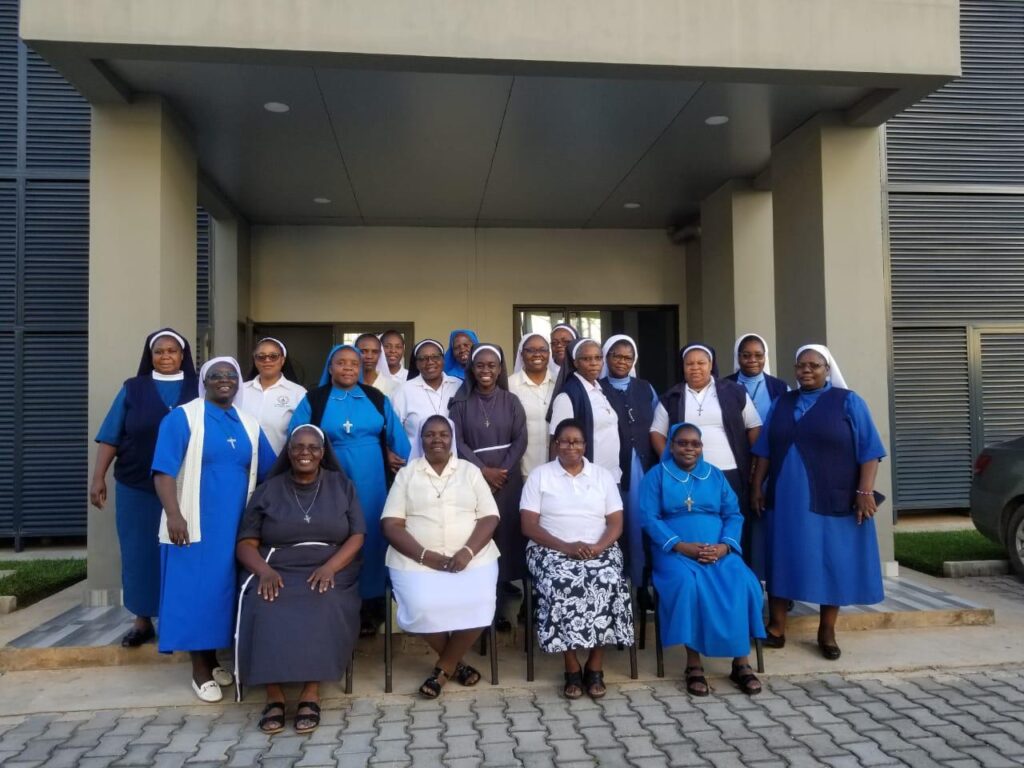
LUSAKA, Zambia – On March 17, 2026, fifteen sisters from seven religious congregations in Zambia completed a week‑long training in chapter facilitation aimed at strengthening leadership and improving the conduct of General Chapters within religious institutes. The workshop, organized by the Association of Consecrated Women in Eastern and Central Africa (ACWECA), took place at the Kalundu Conference Centre in Lusaka and focused on equipping participants with both spiritual and practical skills needed for effective facilitation. The General Chapter of a religious institute is much more than a mere business meeting or a periodic administrative duty; it is a sacred moment of grace, an ecclesial gathering, and a deep celebration of a congregation’s life. The success of this pivotal occasion often depends on the quality of its guidance.  ​The training, specifically designed to bridge the regional gap in the number of skilled facilitators, brought together 15 sisters from seven congregations across Zambia. It was not merely a technical seminar but a holistic formation journey, one that challenged, inspired, and transformed participants both personally and communally. ​The programme\’s curriculum was carefully designed to address the intricacies of contemporary religious experiences. Sr. Theresa Helena Muzeta, a Religious Sister of Charity (RSC), guided the participants in exploring the spirituality of facilitation. She highlighted that a General Chapter serves as a spiritual encounter grounded in discernment, prayer, and mindful listening to the Spirit. ​This was complemented by Sr. Lontia Siakalambwa, a Religious Sister of the Holy Spirit (RSHS), who offered practical tools for conflict transformation, helping participants understand that conflict should not be seen as something to be avoided, but as a reality that, when well handled, can generate growth, new values, and deeper communion. She also reminded the participants that a General Chapter is a spiritual encounter grounded in discernment, prayer, and mindful listening to the Spirit.\” ​Legal and structural integrity remained central to the formation with Sr. Chrisencia Mkume (RSHS), who provided insights from canon law and the five canonical purposes of a Chapter, while Sr. Thérèse Nyoni, the Superior General of the Little Sisters of St. Francis (LSSF), guided participants through the responsibilities of chapter delegates and emphasized the organic relationship between membership and leadership, noting that sound membership naturally gives rise to sound leadership. ​For many participants, the workshop dismantled long-held misconceptions about chapters. Sr. Mutinta of the Holy Spirit Sisters described a profound shift in the perspective, saying: “I was inspired by the fact that the Chapter is a celebration of our life and not a battlefield. It is a time of renewal, where we reflect on what has been and look to the future with hope.” She further reiterated that discernment is not optional but essential, not only within Chapters, but in everyday life. Participants also discovered that facilitation begins within the person. Self-awareness, preparation, and a deep understanding of the group being served emerged as critical foundations. As one insight highlighted, a facilitator must never leave things to chance but must engage deeply with the congregation’s life, charism, and constitutions. ​A recurring theme throughout the workshop was the importance of creating environments where every voice is heard and valued. Sr. Clarina Ndona (LSSF) identified creating safe spaces and active listening as the most valuable skills she has gained. In her own words, she said: “This training has taught me to be impartial and to create a space where everyone feels respected and heard.” She also noted that these skills will be immediately applicable—not only in Chapters, but also in community meetings and congregational assemblies—transforming how dialogue and decision-making unfold at every level. ​The training also touched the participants on a personal level. Sr. Dr. Christine Mwaka Himoonga (HBVM) described the experience as both challenging and enriching, particularly in learning how to guide rather than control discussions: “Facilitation is less about directing and more about guiding conversations in a way that allows everyone to feel heard.” Through role-play and shared experiences, the sisters practice patience, adaptability, and the ability to manage diverse personalities—skills essential for fostering unity in increasingly diverse communities. \”The stronger our facilitation, the stronger our communion; and the stronger our communion, the more credible our witness.\” ​This initiative responds to a long-identified gap in the region. Sr. Christine Mwangi, outgoing ACWECA Coordinator for Leadership for Mission, explained that the lack of trained facilitators has often limited the effectiveness of General Chapters. A well-facilitated chapter, she noted, leads to deeper understanding, stronger unity, and more fruitful outcomes for congregations. More importantly, it shifts the focus of Chapters from merely electing leaders to becoming authentic moments of communal discernment about the future. Going forward, ACWECA is exploring mentorship programmes, follow-up engagements, and a potential “Master Trainers” model to ensure sustainability and continued growth across the region. ​As these sisters return to their respective communities and missions, they carry renewed confidence and strengthened skills to foster unity. ​They also believe in the renewed vision of the General Chapter, not as a procedural obligation, but as a sacred space of listening, discernment, and shared responsibility for the future. In the quiet halls of Kalundu, a new generation of “midwives of communion” has emerged, women ready to guide their congregations towards a future grounded in hope, unity, and faithful witness.

Zambian Religious Sisters Trained in Chapter Facilitation at ACWECA Workshop Read More »

Will Pope Leo’s Africa-First Vision Go Beyond His Pilgrimage to Africa?

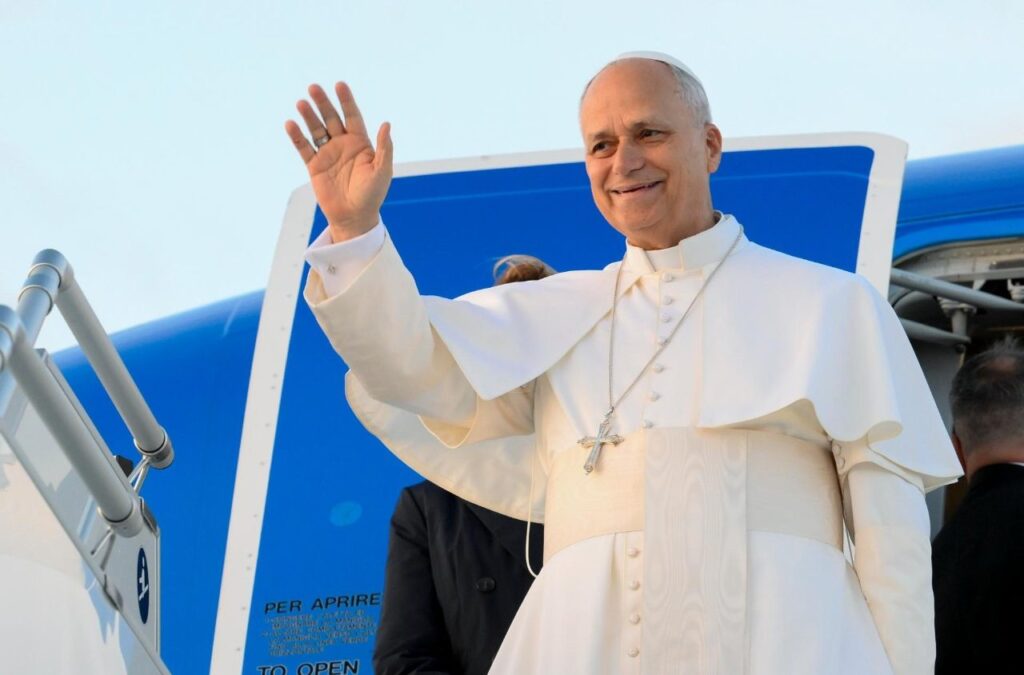
I stood among the concelebrating priests at Pope Leo’s Palm Sunday Mass in St. Peter’s Square. There, I watched the choreography of solemn ritual, spiritual power, and papal presence unfold. What caught my attention, as a Black Catholic priest, was the quieter symbolism at the altar. Two African priests were among the principal masters of ceremony at the Mass, which marks the beginning of Holy Week, the most sacred time in the Christian calendar. One sat at the Pope’s right hand, directing the rhythm of the liturgy. Another coordinated the concelebrating cardinals, bishops, and priests. These were positions of trust, proximity, and visibility. For me, this was not a passing detail—it was something I had never witnessed in any previous papacy. At many papal audiences now, an African priest also sits beside the Pope as one of his closest collaborators. These signs may seem small. But they are not small for African Catholics. They suggest a shift. They point to what I can only describe as the early contours of an Africa-first sensibility in the young papacy of Pope Leo. Despite what was often said about Pope Francis’s love for Africa, it remains striking that by the time he died, no African cardinal headed a dicastery in Rome. Africans made up barely 12 percent of the College of Cardinals, and key commissions often lacked African representation. Pope Leo has already begun to address this imbalance by appointing Africans to positions of real influence, including Monsignor Anthony Ekpo as assessor in the Secretariat of State and Father Edward Daleng, O.S.A., as Vice Regent of the Prefecture of the Pontifical Household, as well as other appointments across dicasteries and consultative bodies. It is, therefore, no surprise that Pope Leo’s longest and most consequential journey so far begins in Africa. The question is not only where he is going, but why and what it reveals about Africa’s place in the Church and in a world increasingly defined by fracture and violence. We live at a time when global attention is once again fixed on the Middle East, where fragile ceasefires conceal deeper and expanding conflicts. In such a moment, Africa risks being pushed to the margins of the world’s moral imagination, even as its own wars continue to displace millions and devastate communities. Pope Leo’s decision to begin his most ambitious journey on the continent is thus not accidental. It is a statement. Africa is not peripheral to Christianity—it is one of its birthplaces.\” Stan Chu Ilo First, Pope Leo recognizes that Africa is not peripheral to Christianity—it is one of its birthplaces. Long before Christianity took root in Europe, North Africa was already one of its great theological laboratories. In Algeria, he will walk in the footsteps of Augustine of Hippo, whose reflections on grace, freedom, unity, and the ethics of war helped shape the Church’s intellectual architecture. The debates that defined early Christianity were forged on African soil, in societies grappling with division, violence, and competing visions of the good life. Algeria itself tells a complex story. Once a center of vibrant Christian life, it is now a place where Christianity is a minority. This is a sobering reminder that demographic growth does not guarantee enduring presence. Europe, once the heartland of Christianity, now faces a different reality: empty pews, declining vocations, and widespread disaffiliation, especially among younger generations. Cultural Catholicism remains but often detached from institutional belonging. Many African Catholics, encountering this reality for the first time in Europe, are stunned. In Rome, even on Sundays, parishes are often sparsely filled. In Africa, by contrast, churches overflow. Seminaries and convents struggle to accommodate the growing number of candidates for the priesthood and religious life. But the question remains: will Africa’s current growth endure, or will it follow Europe\’s trajectory? Secondly, by choosing to visit Africa at this moment, Pope Leo is making a bold claim: Africa matters. Not only for the Church, but for the future of the world. With its demographic expansion and youthful population, Africa holds a key place in global development. African Christianity itself embodies immense cultural diversity, youthful energy, and the world\’s fastest-growing Catholic population, with 8.3 million new African Catholics recorded in the 2025 Church Book of Statistics. When Pope Paul VI visited Africa in 1969, he spoke of the continent’s deep spirituality and declared that the time had come for “an African Christianity.” That moment marked a turning point: an invitation for Africans not merely to receive the faith, but to shape it. Subsequent popes reinforced this call, urging African Christians to become missionaries to their own continent and to the wider world. Today, that vision is bearing fruit. African churches are now major sources of missionary vitality. Countries such as Nigeria, South Africa, and the Democratic Republic of Congo rank among the leading missionary-sending nations worldwide according to the State of the Great Commission’s Report. The faith that was once received from Western missionaries in Africa is now being reciprocated by African missionaries to Europe and North America. As Archbishop Fortunatus Nwachukwu of the Vatican’s Dicastery for Evangelization has described it, this is a “Church of the Sheaves,” a form of gift exchange and reverse mission in which the fruits of earlier missionary efforts sustain Christianity in regions where it is declining. And yet, this remarkable growth conceals a deeper paradox. The expansion of Christianity in Africa has not consistently translated into spiritual and cultural renewal and integral human development. Many African countries remain marked by fragile institutions, corruption, economic exclusion, and persistent insecurity. Across refugee settlements from East to West Africa, millions live in prolonged uncertainty, suspended between survival and hope. Religious life reflects this tension. Many Africans move between churches and other religious traditions, seeking healing, meaning, prosperity, and stability. The rise of Pentecostal and charismatic movements speaks to this hunger. They offer what has been described as a “factory of hope” for those abandoned by both state and society. This is not simply a challenge for the Catholic Church;

Will Pope Leo’s Africa-First Vision Go Beyond His Pilgrimage to Africa? Read More »

Why Psychosexual Integration is no Longer Optional in Formation

In an era marked by histories of abuse and secrecy that afflict the Church, a religious sister bears an ethical obligation to disclose the truth regarding humanity. For an extended period, the notion of the \”spiritual self\” has served as a veneer concealing a fragmented \”human self,\” thereby fostering an environment in which repression is erroneously equated with holiness. Nevertheless, as the Church in Africa confronts a modern era that demands transparency and safeguarding, traditional approaches to religious training are under scrutiny. In a recent webinar hosted by the Pan-African Catholic Theology and Pastoral Network (PACTPAN), in collaboration with the Association of Religious Formators of Kenya (ARFK), Sister Linah Siabana, MSOLA, a Zambian psychologist and Missionary Sister of Our Lady of Africa currently serving on the front lines in Northern Uganda, presented a compelling challenge to the prevailing status quo. She contended that psychosexual integration is no longer a matter of luxury but a fundamental necessity for the sustainability and integrity of ministerial responsibilities. It is no longer appropriate to require our candidates to forsake their human qualities upon entry. Vows do not negate our biological nature; rather, they necessitate a more profound integration of it, she stated. “Vows do not negate our biological nature; they demand a deeper integration of it.” — Helen Kasaka Moving beyond the spiritual bypass Sr. Siabana challenged the long-standing practice of \”spiritual bypassing,\” wherein candidates are encouraged to address profound emotional or sexual difficulties exclusively through extended periods of prayer within the chapel. While acknowledging the significance of prayer as a foundational element, she emphasized to the audience that blood circulates through our veins irrespective of our vows. She distinguished clearly between celibacy and repression, highlighting that celibacy should be characterized by intentionality and regarded as a conscious expression of love, rather than a fearful suppression of one’s true self. The participants\’ interventions highlighted the tension between traditional piety and psychological reality. When asked how to handle sexual drive, Sr. Siabana was refreshingly direct, stating that we must move toward \”emotional literacy.\” This involves teaching candidates to name their loneliness, attraction, and frustration without the paralyzing grip of shame. She emphasized that sexuality is a God-given energy for love and service; when it is ignored, it becomes a shadow that manifests as addictions, secret lives, or boundary violations. “Silence in the name of purity is a breeding ground for abuse.” — Helen Kasaka Confronting trauma and the misuse of authority A crucial aspect often neglected in traditional formation is the recognition of past trauma. Sr. Siabana pointed out that many candidates who join religious life carry unresolved wounds or histories of abuse. Failure to reconcile these fragmented aspects of identity may lead to their reemergence via the misuse of authority—where ministry is exploited to fulfill unmet emotional needs. Furthermore, it is important to note that \”Silence in the name of purity is a breeding ground for abuse. When we refuse to name the reality of our bodies, we leave the vulnerable defenceless.\” The dialogue became particularly pointed when addressing the cultural taboos that treat sexuality as a \”sacred silence.\” In many African contexts, silence is equated with purity, but Sr. Siabana argued that this silence is a breeding ground for abuse. She cited a heartbreaking case where a sister’s report of inappropriate touching was dismissed by a superior as \”provocation.\” To counter this, she called for robust safeguarding frameworks in which reporting mechanisms are transparent, and whistleblowers are protected, insisting that we must value the truth over institutional optics if we are to heal. A mandate for professionalized formation The pathway ahead requires a radical shift in how we form our brothers and sisters. In collaboration with organizations such as the ARFK, PACTPAN aims to help formators become not mere disciplinarians but mentors proficient in fundamental human development skills. This approach includes structured workshops employing role-plays to address real-world boundary situations, such as managing attraction to a colleague or navigating power dynamics with senior authority figures. It also requires a commitment to professional referrals, recognizing when a candidate needs a psychologist rather than a confessor. Furthermore, the ministry must ensure authentic accompaniment, in which one-on-one direction is a safe space, free from conflicts of interest that arise when formators act as both judges and guides. \”The goal of formation is not to produce \’perfect\’ people, but to foster honest, self-aware persons who live their vocations with integrity,\” she said. “The goal of formation is not to produce ‘perfect’ people, but to form honest, self-aware persons who live their vocation with integrity.” — Helen Kasaka Our lifelong journey of integrity Psychosexual integration is not simply a goal achieved at the time of final vows; rather, it constitutes an ongoing journey towards becoming \”authentically growing and self-aware individuals.\” For the Missionary Sisters of Our Lady of Africa and the broader Church, the message is clear: we can no longer expect our trainees to set aside their humanity. By cultivating a formation environment that is both psychologically informed and spiritually profound, we help our religious live out their vocations with joy and authenticity. Following a challenging past, the silence is ultimately being broken, paving the way for a more honest, human, and sacred Church to emerge.

Why Psychosexual Integration is no Longer Optional in Formation Read More »

Why Are African Young Men Being Lured to Die in the Russia-Ukraine War?

The Foreign Minister of Ghana, Samuel Ablakwa, on a recent visit to Kiev, Ukraine, asked his Ukrainian counterpart to help secure the release of two Ghanaians held as prisoners of war. According to a report by the BBC, of the 272 Ghanaians said to be fighting in the war, more than 55 young men have been killed. Another investigation by TV5 Monde in a special report titled All Eyes on Wagner, Le Business du désespoir estimated that there are currently 1,417 young Africans fighting in the war, of whom 316 have died. From the African Sahel to South Africa, from Nigeria to Ghana, and from Kenya to Ethiopia, hundreds of African young people are being lured to fight in this war through deception, exploitation, and manipulation. The number of African young fighters is not fully known because of the dark world that surrounds the recruitment networks. In South Africa, for instance, the daughter of former President Jacob Zuma, Duduzile Zuma-Sambudla, is standing trial for allegedly recruiting between 17 and 22 young South Africans to fight in the war with false promises, according to reporting by CNN. Seventeen of these South Africans, at the time she was charged, were trapped in the war-torn Donbas region. In Kenya, Festus Omwamba, head of Global Faces Human Resources, is being held on charges of illegally recruiting 22 Kenyans to fight in the war under the pretext of lucrative employment contracts, according to another report by the BBC. The Kenyan National Intelligence Service estimates that as many as 1,000 Kenyans are currently fighting in the Russia-Ukraine war. These nameless and faceless young Africans are our sons and daughters whose future has been sacrificed because they live in a continent where many prefer to expose themselves to death because they have lost hope in the African Motherland. Unlike the World Wars, where Africans were forced against their will by colonial oppressors to fight for the feuding Western powers in wars in which they and their ancestors had no hand and from which they would not benefit, these young people are being sacrificed by their own fellow citizens. “Hundreds of African young people are being lured to fight in this war through deception, exploitation, and manipulation.” — Stan Chu Ilo We are selling our own people to foreigners knowing that they may meet violent death. The greed that drives many a demented soul and poisoned heart stops at nothing in the conscienceless pursuit of filthy lucre. What is happening to our young people today, exemplified in this illegal sale of our young men to die on the battlefields of Ukraine or Russia, reflects a cycle of decay in our continent: corruption that knows no limit; lawlessness and wickedness that know no bounds; and the falsity of the claim that we Africans love life, family, and community. We must wake up to the lie that Ubuntu is alive in the continent if we are selling our own sons and daughters to foreigners to be slaughtered. Africa is now a leading continent for modern-day slavery and human trafficking, according to the United Nations Office on Drugs and Crime. This reality shatters our claims to be the last sanctuary for the finest values and testimony to the primacy of life and a pro-life ethic. We know that these young men face almost certain death in Russia and Ukraine, yet our governments are only now beginning to take notice. In an interview with CNN, the Ukrainian Foreign Minister Andrii Sybiha claimed that more than 1,400 citizens from 36 African countries are fighting for Russia in Ukraine and that “most of them are immediately sent to the so-called ‘meat assaults’ where they are quickly killed.” “We are selling our own people to foreigners knowing that they may meet violent death.” — Stan Chu Ilo As this unfortunate war enters its fourth year, the African Union, African governments, and the Catholic Church in Africa must make a pact to end this shameful and abominable act of selling our young men to die in this needless war. First, with over 70 percent of Africans under 30 years of age, education and employment must become an absolute priority. The second liberation we long for in Africa must be anchored on the shoulders of young people. As the African UN Youth Delegate, Kapwani Kavenuke, said in a recent interview with Africa Renewal, the youth of Africa are “the heartbeat that will carry Africa from potential to prosperity.” But this will not happen without transformative reforms that prioritize youth education, create opportunities for innovation and entrepreneurship, and implement sustainable forward-looking policies that build on the assets and idealism of African young people. Youth unemployment is rising across the continent. In Kenya, unemployment grew from 6.6 percent in 2006 to 15.2 percent in 2026 according to data from the World Bank. In South Africa, where the majority of the unemployed are Black, youth unemployment rose from 43.4 percent in 2002 to 59.9 percent in 2025, also according to World Bank data. Without jobs at home and without government social security to cushion the crushing poverty of joblessness, young Africans become desperate for any route of escape from the suffocating existence in which they live. “Without jobs at home, young Africans become desperate for any route of escape from the suffocating existence in which they live.” — Stan Chu Ilo Finally, the words of Pope Leo XIV on the painful anniversary of four years of this aggression begun by Russia ring with moral clarity: “Every war is truly a wound inflicted upon the entire human family; it leaves in its wake death, devastation, and a trail of pain that marks generations. Peace cannot be postponed.” Africa knows war. Present generations have been marked by wars fought at home and their aftermath. It bleeds the heart that this generation will also live with the enduring pain of young men and women slaughtered in faraway Russia and Ukraine because their fellow Africans lured them into war on foreign soil while

Why Are African Young Men Being Lured to Die in the Russia-Ukraine War? Read More »

Which Way Nigerian Catholics? Can the Church Lead a Nation in Crisis?

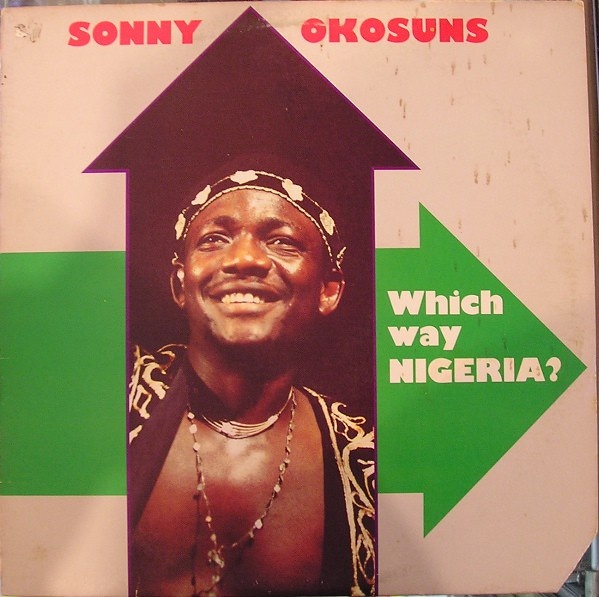
At one of the lowest moments in Nigeria’s history in 1984, when the country faced political instability, economic hardship, and corruption under an oppressive military government, the famed Nigerian musician, Sonny Okosun, sang that iconic protest song, “Which way Nigeria?” asking us Nigerians to reflect on which way Nigeria is heading. Today, that question has become more pressing because the condition of life has become more depressing for the masses of our people. And for me, the Catholic Church in Nigeria is one institution that can help effect an urgent course correction for Nigeria. However, it must also answer the fundamental question: which way for Nigerian Catholics? In other words, are we as a Church capable of leading the country in a different direction, or are we unthinkingly following this precipitous path with the rest of the country into the valley of darkness? Is the Catholic Church in Nigeria led by Catholic doctrine, by Catholic Social Teaching, by Catholic liturgical tradition, by the Catholic intellectual tradition, and by her time-tested principles on the relationship between the Church and the state? Or are Nigerian Catholics heedlessly following the dysfunctional values of a blind and selfish political class, whose extractive appetite has stripped the nation of its material and natural resources, impoverished our citizens, and nailed God’s people to a permanent cross of pain and misery? “And for me, the Catholic Church in Nigeria is one institution that can help effect an urgent course correction for Nigeria. However, it must also answer the fundamental question: which way for Nigerian Catholics?” — Stan Chu Ilo Many Nigerians are watching helplessly as an irresponsible and insensitive political class ravages their beautiful nation. Most Nigerians have disengaged from the political process, and others have sought refuge in different forms of religiosity and religious enchantment as a coping strategy, hoping in God, who, they believe, cannot fail them when everything around them shows signs of instability and decay. Other Nigerians put their hope in a sudden emergence of a saviour, perhaps Peter Obi or any other putative messiah, to rewrite our broken history and heal our wounded land. Yet others, surprisingly, put their hope in external agents, such as Trump, for redemption and liberation. Wherever anyone stands as a Nigerian citizen today, the reality that faces us is shocking and worrisome: how do we unmake the current Nigerian state; how do we radically reform our institutions; how do we cleanse our polluting ethical and social norms, and develop the virtues and practices of an inclusive state that is governed by civic and ethical culture that are transformative and generative of life and social transformation for everyone. The current state of Nigeria continues to shock the conscience as to how a greatly blessed nation with the most extraordinarily gifted citizens can be so poor, so unsafe, and so hopeless because a few thin top layers of religious and political elites have held the country in an internal perpetual bondage for decades now. Nigeria today stands as a troubling paradox of immense potential weighed down by deep structural crises that touch nearly every dimension of our national life. With an unemployment rate hovering around 22.6% and inflation exceeding 30% in recent years, millions of our people are pushed into precarity, reflected in the reality that roughly one-third of the population survives on less than $2.15 a day. This unacceptable manufactured economic fragility is compounded by systemic corruption and patron-client relations between those in power and Nigerian citizens, through an unethical governance structure that has become a transactional cesspool of impunity operated by rogues dressed in agbada, whose extractive leadership is all about the politics of the stomach;emi lókàn—(it is my turn to chop the national cake). According to Transparency International, Nigeria scores just 26 out of 100, ranking about 140th out of 180 countries, a stark indicator of weak institutions and compromised governance. “How do we unmake the current Nigerian state; how do we radically reform our institutions; how do we cleanse our polluting ethical and social norms and develop the virtues and practices of an inclusive state that is governed by civic and ethical culture that are transformative and generative of life and social transformation for everyone.” — Stan Chu Ilo  Insecurity has further eroded public confidence and daily life; the U.S. Department of State maintains a Level 3 travel advisory for Nigeria, with several regions designated “Do Not Travel” due to terrorism, kidnapping, and armed violence, conditions that have normalized fear as part of everyday existence and weakened national and international trade and movements of peoples severely hampering productivity, social innovation, and social connectivity for business and collaborative partnerships. At the same time, Nigeria hemorrhages its most vital resource: more than 100,000 barrels of oil are stolen daily, translating into billions in annual losses in a sector that should anchor national prosperity. Even in moments of global opportunity, such as price spikes linked to conflicts in the Gulf, Nigeria struggles to benefit meaningfully because production shortfalls, subsidy burdens, and theft by conscienceless gatekeepers of our oil wealth offset potential gains. This is not new but part of a troubling continuity. The $12.4 billion Gulf War windfall of 1990, effectively embezzled under the Ibrahim Babangida regime, set a pattern of opaque management of extraordinary oil revenues. The Okigbo Panel noted that this sum alone could have provided water, electricity, and nationwide road and rail links, yet no one was held accountable. Today, a similar dynamic persists: windfall gains from global price shocks remain insufficiently accounted for, while leakages through theft and mismanagement continue, even as Nigeria accumulates rising debt at both federal and state levels despite vast oil earnings. “Nigeria hemorrhages its most vital resource: more than 100,000 barrels of oil are stolen daily, translating into billions in annual losses… Nigeria struggles to benefit meaningfully… ” — Stan Chu Ilo The human cost of this systemic dysfunction is stark. Life expectancy remains low at about 54 to 55 years. In contrast, the disease burden—measured in DALYs—remains

Which Way Nigerian Catholics? Can the Church Lead a Nation in Crisis? Read More »

War of Choice: Why America Must Not Repeat Iraq in Iran

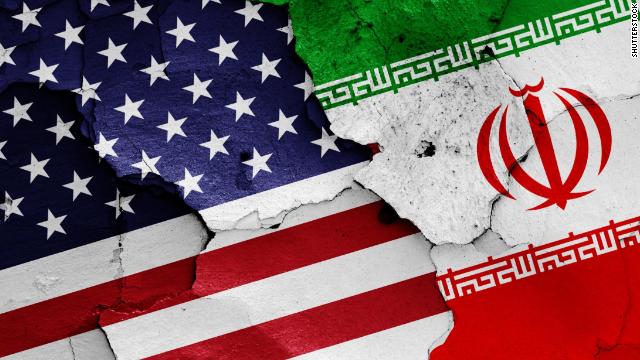
President Trump is dragging the U.S. into an unnecessary war without any national conversation or the approval of Congress. This military operation is both ill-advised and wrong-headed. President Trump is going into it alone without the consent of any of America’s allies in the Middle East, the G20, NATO, or elsewhere, except Israel. Iran was already negotiating in good faith, and the Omanis and other third parties were invested in allowing diplomacy and negotiation to work. But with the U.S. arms buildup in the region, it seems President Trump never really wanted to give diplomacy and peace a chance, believing in gunboat diplomacy and in leveraging military might over the long, patient path of jaw-jaw rather than war-war. \”President Trump is dragging the U.S. into an unnecessary war without any national conversation or the approval of Congress.” — Stan Chu Ilo War is the solution that lunatics prefer to peacemaking and nonviolence. It is anachronistic. The world has no appetite for war because we have found better ways to resolve our conflicts as a human family. War destroys everything. No American, Iranian, Israeli, Palestinian, or any other human being deserves to die needlessly in this senseless war of choice that President Trump has just begun. Americans did not elect Donald Trump as their President because they desire the continuation of these endless wars that America chooses now and again in the Middle East or other regions. A greater majority of Americans have learned from the calamities in Vietnam, Iraq, Somalia, Afghanistan, and many other places where America went in, driven by a superpower syndrome, that an imperialistic pursuit of America’s interests or regime change in other people’s lands, motivated solely by America’s security, geopolitical, and economic interests, always ends in failure and more chaos. Just look at Iraq! However, the reasoning for the United States, as Noam Chomsky writes, regarding America’s global influence is straightforward: “What we say goes!” However, I say that any attempt to dictate to other nations or impose America’s version of governance on them through military means always ends in failure and more misery for the people, the region, and the world. President Trump is attacking Iran not because of the interests of the Iranian people but because of Trump’s narrow version of America’s interests as of today. That might change tomorrow. “Any attempt to dictate to other nations or impose America’s version of governance on them through military means always ends in failure and more misery.” — Stan Chu Ilo President Trump is dragging America into another irreversible mistake in the Middle East, and Americans must stand up to this President. Indeed, all men and women of goodwill throughout the world must say “no” to this violation of Iran’s sovereignty by the U.S. and Israel. War against Iran is not the solution to the needed surgical change in Iran, whose government has brought so much misery and pain to its own people and has made this proud nation a pariah in the world. No nation can survive by repressing its own people, undermining its neighbours’ security, or pushing for the death of America, Israel, or any other nation through terrorism, sabotage, and subversive acts. Iran needs a new and enduring political dispensation that promotes and guarantees the common good for all Iranians. Still, it cannot be brought about through the current American and Israeli operation. President Bush, like President Trump today, had predicted that after the toppling of Saddam Hussein in Iraq, the Iraqis would greet Americans as liberators. We know how many lives were wasted, and Iraq is still bleeding from that terrible war experiment that America waged with the so-called coalition of the willing. More than 20 years later, we are hearing the same irrational sabre-rattling and rhetoric from another American President. I wonder: What makes President Trump think that America has the solution to other people’s problems when America is struggling to address myriad problems and challenges in its crisis of democracy, going back to the storming of Congress on January 6, 2021? What makes anyone believe that America can bring about in Iran or any other country what it is struggling to uphold in its own country, with what we are experiencing as Americans today: the dismantling of the rule of law and separation of powers, the crisis surrounding the Epstein files, government by retribution, executive overreach, and autocracy under the Trump regime in the U.S.? I long for a world where God’s people can live in peace and prosperity. I long for a world where the lives of God’s children are no longer sacrificed so cheaply by our political leaders to advance their limited perception of reality, insatiable greed, and unredeemed power to dominate. Power today, whether locally or internationally, should be exercised in concert to address human and global problems, especially to reduce human suffering and the pain of the poor, who are often the non-grievable victims of these forever wars. War should no longer be an option on the table because the just war theory was not developed with these massive weapons of destruction in mind. Who is the unjust aggressor in this surprise development in Iran today? Where is the proportionality in the destruction already inflicted on Iran and other Gulf states? An urgent meeting of the U.N. Security Council and the U.S. Congress, respectively, is needed to stop this calamitous experiment from expanding into a regional conflict and a river of blood for our fellow human beings. “War should no longer be an option on the table.” — Stan Chu Ilo With Pope Leo I, I say: “Every war is truly a wound inflicted upon the entire human family; it leaves in its wake death, devastation, and a trail of pain that marks generations. Peace cannot be postponed. It is an urgent necessity that must find a home in our hearts and be translated into responsible decisions.”

War of Choice: Why America Must Not Repeat Iraq in Iran Read More »

Unmasking the “Foreigner”: Xenophobia and the Crisis of the African Soul

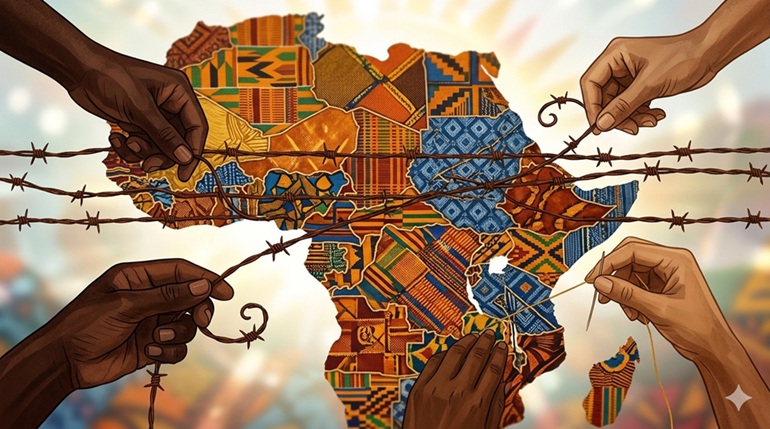
The periodic flares of xenophobia in South Africa—most notably the 2008 riots and subsequent attacks on Somali, Zimbabwean, and Nigerian nationals—are often viewed as isolated incidents of local frustration. However, these eruptions reveal a deeper fracture within the African continent. To understand the violence, we must examine the history of intra-African divisions, the artificial borders left by colonialism, and the urgent need to reclaim an African ethic of solidarity, dignity, and belonging. A Recurring Pattern of Intra-African Expulsion South Africa is not unique in its hostility toward “foreign” Africans. Post-independence Africa has repeatedly seen nations turn against their neighbors during times of economic or political stress. In 1969, Ghana’s Aliens Compliance Order led to the expulsion of hundreds of thousands of Nigerians, accused of dominating retail trade. Nigeria, facing its own economic crisis, retaliated dramatically in 1983, expelling over two million migrants, mostly Ghanaians — an event that popularized the bitter phrase “Ghana Must Go,” referring to the checkered bags carried by those fleeing the country. Equatorial Guinea and Gabon have similarly deported West Africans and Cameroonians, citing job protection and security. Even within countries, divisions persist, such as the anglophone-francophone tensions in Cameroon. The pattern is clear: when internal pressures mount, fellow Africans across the border (or across ethnic lines) become the first scapegoats. “The ‘foreigner’ in Africa today is largely a colonial hangover that the continent is still struggling to sleep off.” — Jackie Nsom, SST A Division with Deep Colonial Roots This form of institutionalized hostility was largely intensified and formalized through colonial rule and is rooted primarily in the 1884 Berlin Conference, where European powers carved up the continent with arbitrary borders that split ethnic communities and lumped rivals together. Colonial administrations introduced rigid concepts of “indigeneity” and citizenship tied to specific territories, creating the modern legal category of the “foreigner.” Colonialism replaced the African philosophy of fluid movement and shared identity with a rigid, competitive, market-based identity in which neighbours are viewed as “competitors” for scarce resources. In Africa, the stranger was often welcomed as a potential source of skills and trade, and integration followed respect for local customs and contributions to the community. Frontiers were ecological and social rather than hard political lines. “Foreignness” was temporary, not a permanent barrier. Newly independent states inherited the borders and the jurisprudence of exclusion. The attitude toward migrants shifted from pre-colonial hospitality, through colonial segregation, to post-colonial political scapegoating. The “foreigner” in Africa today is largely a colonial hangover that the continent is still struggling to sleep off. Political Entrepreneurship and the Scapegoat Strategy Contemporary politicians have further weaponized the colonial “foreigner” for short-term gain. When governments fail to deliver jobs, housing, or services, it is politically easier to blame visible outsiders than to admit systemic shortcomings. Rhetoric about ‘our people first,’ reclaiming cities, or militarized border operations often becomes political theatre designed to redirect public frustration. This marks a troubling shift away from the Pan-African vision of leaders such as Kwame Nkrumah and Julius Nyerere toward narrow micronationalism. Such rhetoric ignores the deep interdependence of African economies. Attacking a Nigerian trader in Johannesburg or a Zimbabwean worker in Limpopo undermines the regional stability on which all nations depend. “When internal pressures mount, fellow Africans become the first scapegoats.” — Jackie Nsom, SST A Christian and Moral Response Catholic Social Teaching offers a powerful framework for healing. Pope Leo XIII’s 1891 encyclical Rerum Novarum placed the dignity of the human person and the common good above narrow national interests. Later popes developed the principle of the “Universal Destination of Goods” — that the earth’s resources are intended for all humanity, not just those within a specific border. The Church affirms the right of nations to regulate borders but insists on a prior duty to welcome the stranger, especially those fleeing poverty or violence. Every person bears the “Imago Dei” — the image of God. Violence against a migrant is therefore an offence against the Creator. Pope John Paul II described xenophobia, when embedded in laws and systems, as a “structure of sin.” He reminded Africans that baptismal identity transcends national passports and that solidarity is a commitment to the good of others. In an African context, this mirrors the philosophy of ‘Ubuntu’ — “I am because we are.” Pope Benedict XVI warned that globalization without ethics turns neighbors into strangers and called on governments to protect the right of others to flourish. For South Africa, this means moving beyond “tolerance” to “integration.” Pope Francis’ 2020 encyclical, Fratelli Tutti, directly confronts the “culture of walls” and criticizes the populist rhetoric that uses fear of the “other” to gain political power. “Africa cannot reclaim its soul while Africans continue to fear and reject one another.” — Jackie Nsom, SST The Way Forward: Spiritual Reparation and Practical Change Overcoming xenophobia demands both policy reform and a conversion of heart. It also demands more than border control or political speeches. Governments must confront the structural realities of poverty, unemployment, corruption, and exclusion that fuel resentment. African leaders must also reject colonial definitions of belonging, recover a more authentic Pan-Africanism, shift political discourse from competition to complementarity, and ensure regional accountability by speaking out against xenophobia. Churches, schools, and civic institutions have a responsibility to form consciences capable of seeing migrants not as threats to fear, but as neighbours to welcome.

Unmasking the “Foreigner”: Xenophobia and the Crisis of the African Soul Read More »

This Must Not Become Another Forgotten African Tragedy: PACTPAN Calls for Urgent International Solidarity in Response to Ebola Outbreak.

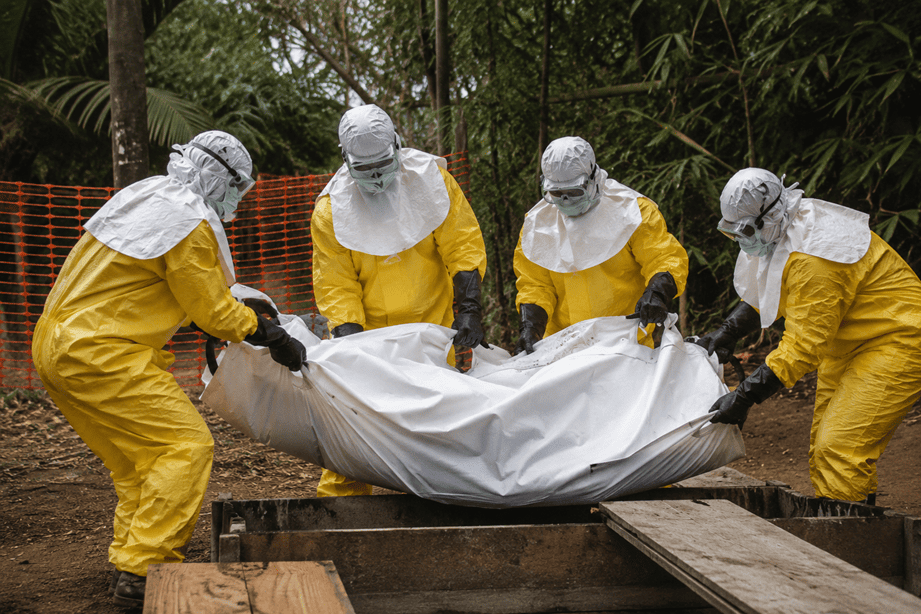
“Carry each other’s burdens, and in this way you will fulfill the law of Christ.” — Galatians 6:2 “The suffering of one people can never be treated as the problem of others alone. Our humanity is tested precisely in whether we are capable of solidarity across borders, races, and histories.” — Pope Leo XIV The Pan-African Catholic Theology and Pastoral Network expresses profound sorrow and deep concern over the rapidly escalating Ebola outbreak currently affecting the Democratic Republic of Congo and neighboring countries in East and Central Africa. We stand in prayerful solidarity with the people of the DRC, Uganda, and all vulnerable communities now facing yet another devastating public health emergency marked by fear, suffering, uncertainty, and loss of life. Reports from health authorities and international agencies indicate that the present outbreak involves the Bundibugyo species of Ebola virus, a highly dangerous strain for which there is presently no licensed vaccine or approved therapeutic treatment. More than 150 deaths have already been reported, with many more infections suspected as the outbreak continues to spread in densely populated and highly mobile regions affected by insecurity, displacement, weak health infrastructure, and humanitarian instability. The World Health Organization has declared the outbreak a Public Health Emergency of International Concern requiring urgent international coordination, scientific collaboration, and sustained global attention. This outbreak is unfolding within an already fragile context marked by armed conflict, mass displacement, poverty, inadequate sanitation systems, fragile healthcare institutions, refugee movements, and intense cross-border commercial activity. These conditions create enormous obstacles to disease surveillance, contact tracing, infection prevention and control, PPE use, safe patient referral systems, and community education. The risk of wider regional transmission remains significant if urgent and coordinated action is not sustained. Beyond statistics and epidemiological reports lies the immense human suffering of ordinary African families and communities. Poor and rural populations continue to bear the heaviest burden of infectious disease outbreaks because of longstanding structural inequities that have weakened public health systems across many parts of Africa. Women, who often serve as caregivers within homes, clinics, and communities, remain particularly vulnerable. Children, displaced persons, refugees, and populations living in remote regions face heightened risks because of limited access to healthcare services, clean water, sanitation, and timely medical intervention. PACTPAN is especially mindful of the extraordinary sacrifices being made by frontline healthcare workers and pastoral caregivers. Doctors, nurses, laboratory personnel, community health workers, chaplains, women religious, catechists, and volunteers continue to place themselves at risk in service to the sick and vulnerable. In many Ebola outbreaks, healthcare workers are disproportionately affected because of occupational exposure within hospitals and treatment facilities, shortages of personal protective equipment, weak infection prevention systems, and healthcare-associated transmission, commonly described as nosocomial infections. We commend the many faith-based organizations, churches, mosques, community leaders, and local pastoral agents already engaged in education, accompaniment of grieving families, care for survivors, community sensitization, support for safe burial, trauma healing, and collaboration with health authorities. Experience from previous Ebola outbreaks and the COVID pandemic demonstrates clearly that community engagement and trust are indispensable to effective disease containment. Public health interventions succeed only when local communities are respected, informed, and empowered as active participants in the response. PACTPAN welcomes the invitation from the World Health Organization to participate in consultations on the role of faith communities and pastoral networks in supporting prevention efforts, risk communication, treatment support, and public health education. We reaffirm our commitment to working collaboratively with local churches, faith-based organizations, public health authorities, humanitarian agencies, and international partners to address this crisis with compassion, scientific responsibility, and solidarity. At the same time, we must speak with honesty and moral clarity about the painful historical patterns that continue to accompany major disease outbreaks in Africa. Too often, the international response to epidemics affecting Africa has been shaped by fear, isolationism, and global inequity rather than by justice and genuine solidarity. We repeatedly witness situations in which foreign nationals are rapidly evacuated from affected regions while African healthcare workers and vulnerable populations remain exposed with inadequate resources and insufficient protection. We witness panic-driven travel restrictions, border closures, and flight bans that frequently lack scientific grounding and often deepen the suffering of already vulnerable communities. The lessons from the 2014 Ebola outbreak and the COVID pandemic must not be forgotten. The answer to infectious disease outbreaks is not abandonment, stigmatization, or isolation of affected populations. The most effective response is rapid containment and treatment at the source of infection through strong local health systems, equitable access to medical resources, investment in surveillance and laboratory capacity, protection of frontline workers, community education, and international scientific cooperation. Africa must not continue to remain a clinical desert where preventable deaths occur because of global neglect and structural inequality. We therefore call upon the international community, African governments, multilateral institutions, philanthropic organizations, research institutions, and faith communities to act urgently and decisively. PACTPAN specifically calls for: This must not become another forgotten African tragedy. The lives of African peoples possess equal dignity and equal worth. The global community cannot afford once again to respond only when outbreaks threaten wealthier nations or international markets. Genuine global solidarity demands more than temporary humanitarian concern after a crisis escalates. It requires long-term commitment to justice, equity, healthcare access, scientific partnership, and human dignity. As people of faith, we pray for all those who have lost loved ones, for those currently infected and receiving treatment, for healthcare workers and caregivers risking their lives daily, and for all leaders and scientists working tirelessly to contain this outbreak. May the Lord strengthen the weak, comfort grieving families, protect vulnerable communities, and grant wisdom and courage to all those responding to this deadly hemorrhagic fever. Africa must not be abandoned in its hour of suffering. This is a moment for global responsibility, moral courage, scientific cooperation, and renewed commitment to our common humanity. Sr Jane Waruguru Kimathi, Director of Programs Fr Stan Chu Ilo, STL, GMPH, PhD, Coordinating Servant Sr Jackie Nsom, MD, Public Health Consultant Sr Teresah
This Must Not Become Another Forgotten African Tragedy: PACTPAN Calls for Urgent International Solidarity in Response to Ebola Outbreak. Read More »

The U.S. and Israel are Fighting an Unjust War in Iran

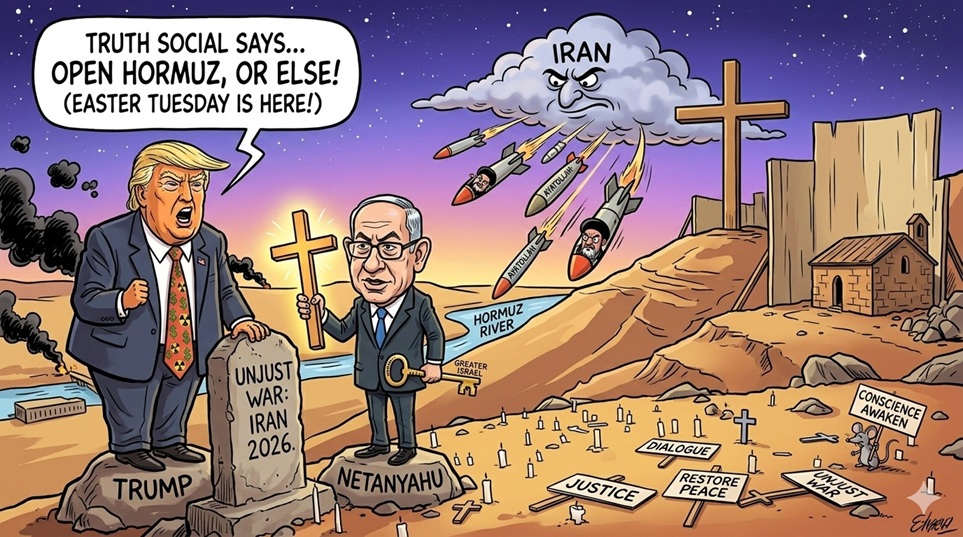
Reading the recent threats issued on Truth Social by President Trump on Easter Sunday, and his public statements on Easter Monday, threats to completely destroy Iran by Easter Tuesday, to blow up bridges, to dismantle power plants, if the Strait of Hormuz is not opened by Iran, were not only disturbing; they were heartbreaking. It forces one to ask, with a heavy conscience: how did America and the rest of the world arrive at such a perilous moral moment, where the language of annihilation is normalized and even baptized using Christian categories and language as a strategy? President Trump’s threats are not a sign of strength. Rather, it shows some sign of desperation, impatience, incohesion that has characterized his justification of this war from the beginning of this unfortunate war, and a lack of any prudence or sound judgment. This is a dangerous abandonment of the ethical restraints that govern the conduct of war and preserve our common humanity and could constitute a war crime and a violation of the U.S military’s rules of engagement. “When the language of power abandons justice, it becomes recklessness dressed as authority” — Stan Chu Ilo We may call it negotiation. We may call it deterrence. But when the language of power abandons the discipline of justice, it becomes recklessness dressed in the garments of authority. It becomes, in truth, a grave moral failure. What we are witnessing today is deeply troubling. The current war started by the United States and Israel against Iran does not, in my judgment, meet the conditions of a just war and is thus an unjust war. It lacks moral clarity, proportionality, and credible evidence of imminent threat. Preventive war, dressed up as necessity, remains ethically indefensible in international law. It is even more ethically flawed when it is driven by fear, speculation, or geopolitical ambition and economic interest rather than demonstrable and imminent danger. The unnecessary loss of innocent lives cannot be reduced to a strategy or collateral damage, particularly since this is an unjust war. The life of an American soldier is as sacred as the life of an Iranian child. The tears of a Palestinian mother, the grief of an Israeli father, the anguish of a Lebanese family, these are not inevitable collateral realities. They are the very measure by which history will judge us. And what shall we say about the systematic destruction of civilian infrastructure? Of universities, hospitals, power systems, and bridges reduced to rubble? What shall we say of targeted assassinations that erode every moral boundary? These are not signs of justice or strength but acts of cowardice driven by fear. These are wounds inflicted upon the fragile body of our shared humanity. “The Cross reveals sacrificial love, not domination; the Resurrection proclaims life, not destruction.” — Stan Chu Ilo One day, a future generation, perhaps wiser, perhaps more humane, will look back upon this moment in 2026 and ask: how did reasonable people remain silent while an architecture of violence was constructed before their very eyes? How did nations, endowed with reason and conscience, allow themselves to be carried by the winds of fear, power, and vengeance? They will ask how leaders, intoxicated by power, mistook domination for security, and destruction for peace. As a Christian leader, I must speak with prophetic clarity and humility. The Gospel does not bless war. It does not sanctify vengeance. It does not anoint the language of annihilation. As Pope Leo XIV reminded the Church on Palm Sunday, “God does not walk with those who sow death, but with those who build peace with patient hands.” And again, he teaches us: “The Church has no enemies to destroy, only brothers and sisters to embrace.” This message has landed on deaf ears and hardened hearts because the dramatis personae in this ongoing conflagration have a different agenda, which sadly they have not articulated, particularly Trump. I guess for President Netanyahu, it will serve his political interest and desire for a Greater Israel if Iran becomes a failed state and is reduced to rubble by the U.S., repeating what Israel did in Gaza, and then setting up a Board of Peace after the destruction. Let’s pray that this does not happen. This is the scandal of our time that the name of God is invoked in the service of violence, that the Cross of Christ is misappropriated to justify the machinery of war. To compare acts of military power to the death and resurrection of Jesus Christ as the U.S. Defense secretary does repeatedly is not only theologically misguided but a form of idolatry; it is a profound distortion of the Christian mystery. The Cross reveals sacrificial love, not domination. The Resurrection proclaims life, not destruction. As Christians, we must reclaim the robe of righteousness from those who would stain it with the language of war. We must remind the world that Christianity stands on the side of life, dignity, justice, dialogue, and peace. The God of life and the God of Jesus Christ, who came to give us life in abundance, is not the patron of war and vengeful people or nations, but the source of reconciliation. Therefore, the world must not remain silent. Conscience must awaken. Religious leaders, especially those who claim proximity to power, must speak truth, not flattery, as was the case last week when the Religious Freedom Committee met with President Trump at the White House. They must preach restraint, not aggression; humility, not hubris; dialogue, not destruction. They must call leaders to conversion, not reinforce their illusions of invincibility and the superpower syndrome, which largely drives the President. May we be reminded that peace is not weakness.  Peace is the highest expression of moral courage and the greatest longing of human beings. Dialogue is not futile; it is the best expression of our human capacity to reason together and walk towards the promotion of our common good. “Peace is not weakness; it is the highest expression of moral courage.” — Stan

The U.S. and Israel are Fighting an Unjust War in Iran Read More »

Secret Link